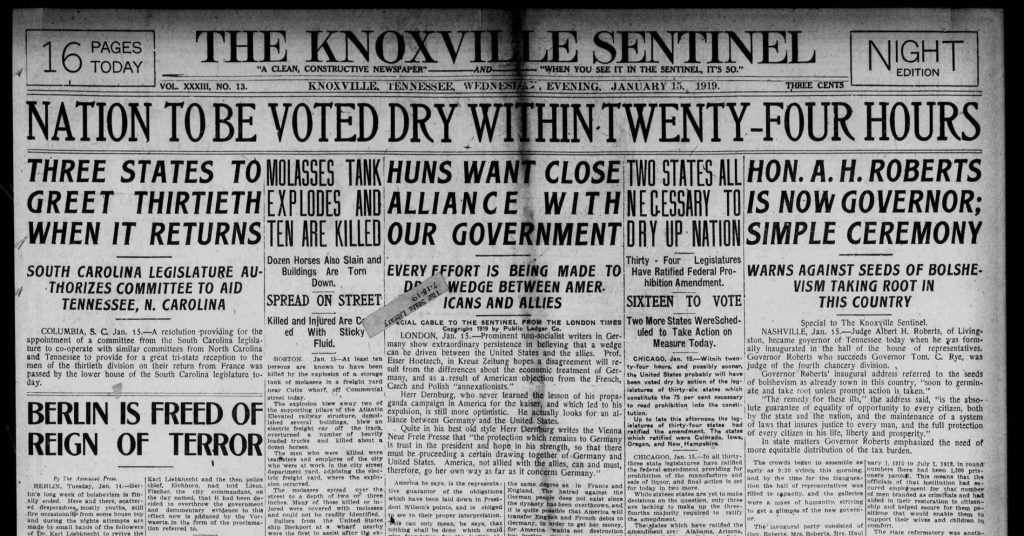



The iconic adage “a riddle, wrapped in a mystery, inside an enigma” coined in 1939 by Winston Churchill, the famous British statesman, has been used to describe all sorts of mysteries over the years. In fact, there’s no shortage of mysteries in Great Smoky Mountains National Park, where long-standing stories of vanished persons or the locations of old cemeteries persist. One unsolved Smokies mystery involves an 80-year-old piece of government art.
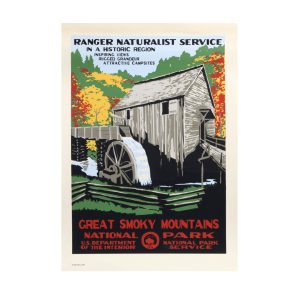
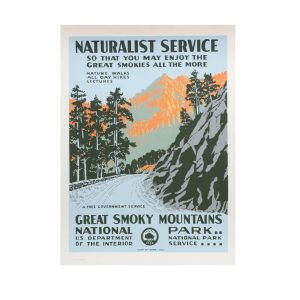
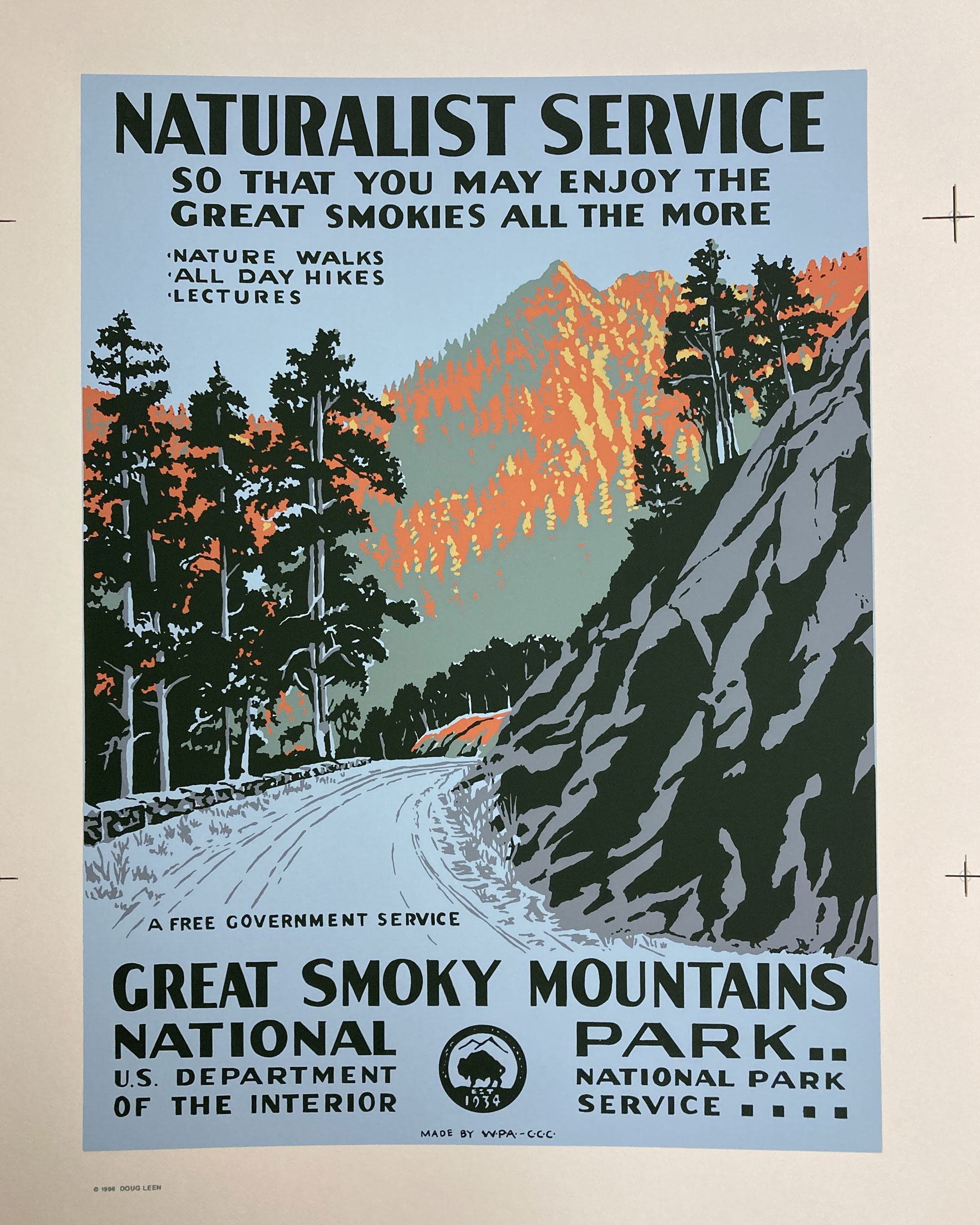
During the Great Depression, the Federal Art Project, a Works Progress Administration program designed for unemployed artists, created 14 beautiful posters featuring iconic scenes from several national parks and monuments. One of the posters featured Great Smoky Mountains National Park and was entitled “Naturalist Service—So That You May Enjoy the Smokies All the More.” Estimates are that 50 to 100 copies of each WPA poster were printed and shipped to their respective National Park Service sites years ago. Today, originals of most of the WPA posters have been found, but not the Smokies poster—not even in park archives.
“As to why we don’t have a copy in the archives, it’s impossible to say,” said Michael Aday, librarian–archivist at the Collections Preservation Center in Townsend, Tennessee. “Interpretive programming didn’t begin in the park until 1939, so if the posters were received before the park was ready to conduct naturalist programs, they may have been stored and lost, forgotten about, or destroyed.”
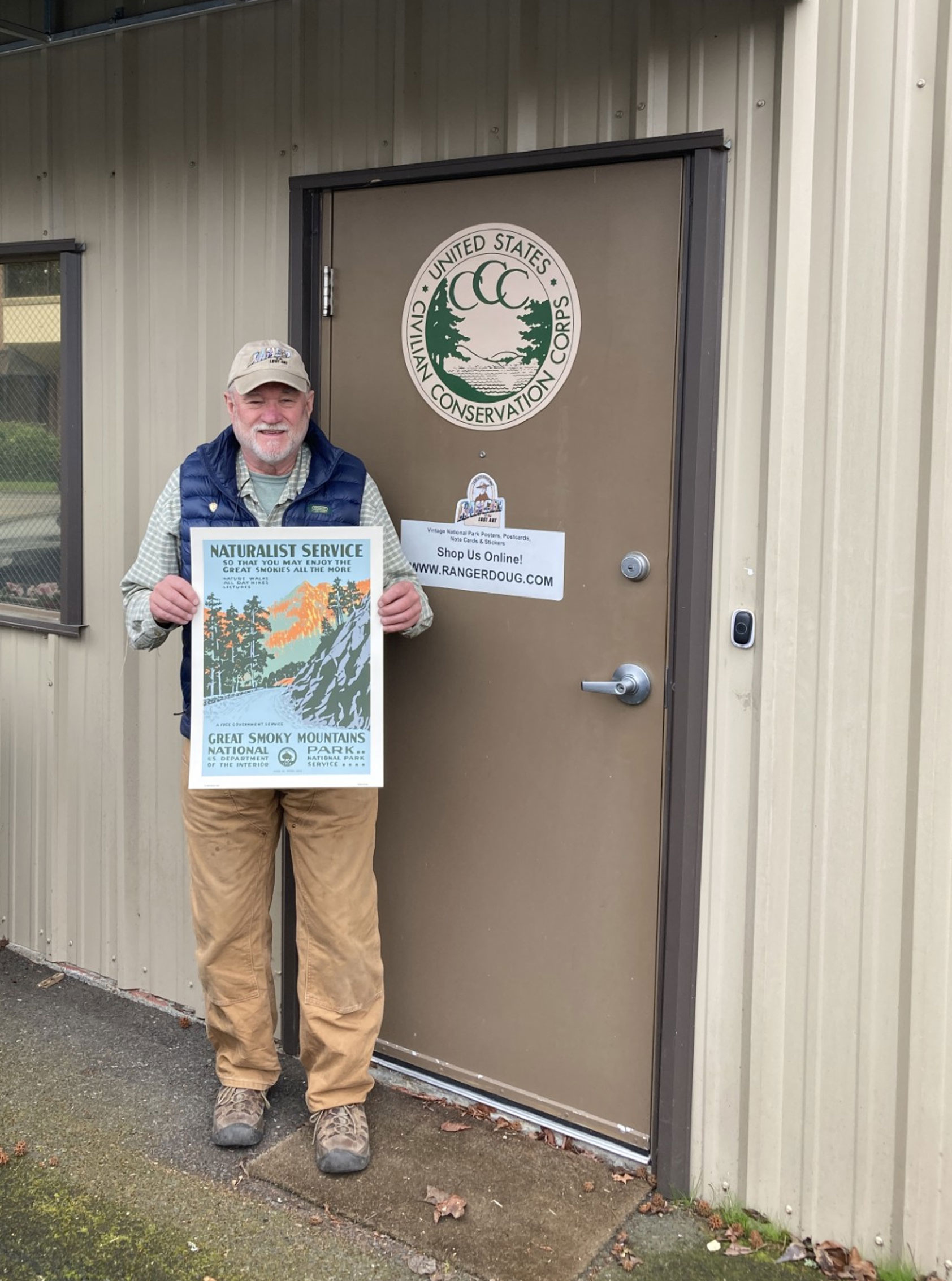
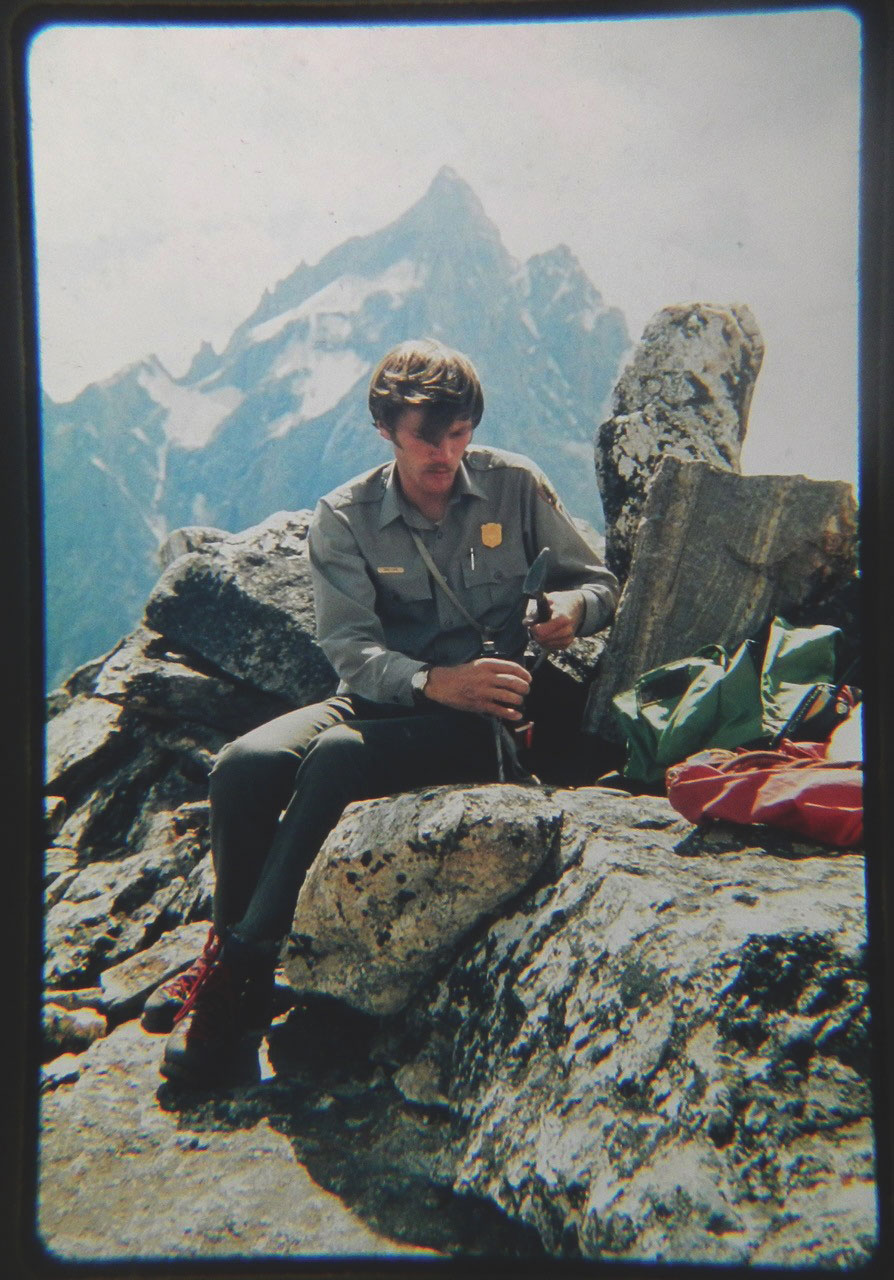
The mystery persists to this day. However, a relentless sleuth has been searching for missing posters from the Smokies and Wind Cave National Park, and he’s been at it since the 1970s. He’s Doug Leen, 79, a retired dentist and former seasonal park ranger at Grand Teton National Park. Leen has made it his mission to find original specimens of all 14 WPA National Park Service posters and donate them to the park service while also making reproductions for the public to acquire and enjoy as distinctive “park art.”
Leen began his search when, as a park ranger, he found an original WPA poster promoting Jenny Lake Museum in a Grand Teton National Park storage building. Learning that it was headed for the trash bin, he took it home, where it has remained framed and displayed in his residence ever since.
“When I first discovered the Grand Teton print, I immediately suspected it was part of a larger collection with more parks,” he said. “But where were they? The design and quality of printing was unique, and I thought there must be more to be found. I immediately became obsessed with this puzzle and began a lifelong journey to find all the prints—to rebuild this set of lost art.”
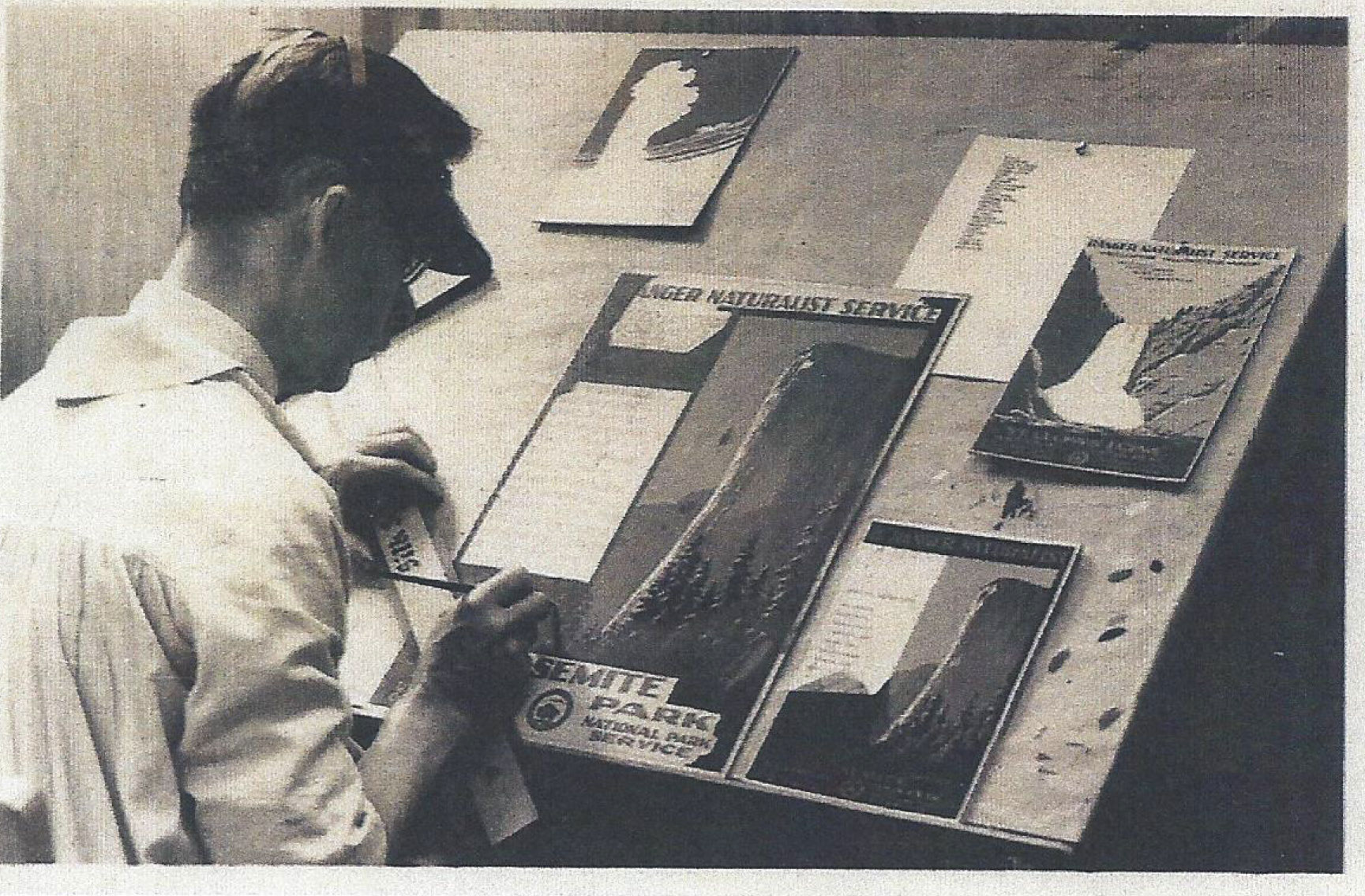
In the 1990s, Leen contacted the curator at the Jenny Lake Museum about an unrelated anniversary event and casually mentioned his old poster. The curator promptly informed him that it was rare indeed, part of the Depression-era poster series. That information led him to research how it had been made and by whom. Through contacts with park service archivists and searches of federal records, Leen discovered that the poster had been designed and produced in an NPS museum laboratory in Berkeley, California, by WPA artists and graphic illustrators. These artists sent offers to park service locations to create publicity posters for them. Fourteen sites agreed.
Designers started work in 1938, using a silk-screening process that produced rich colors and textures showcasing features of the parks and monuments. Upon completion, the posters were shipped to each respective location before production ended during World War II. Extra copies were shipped to the US Mint in San Francisco, and around 1951, the remainder were sent to the participating parks and monuments, becoming their last-known whereabouts.
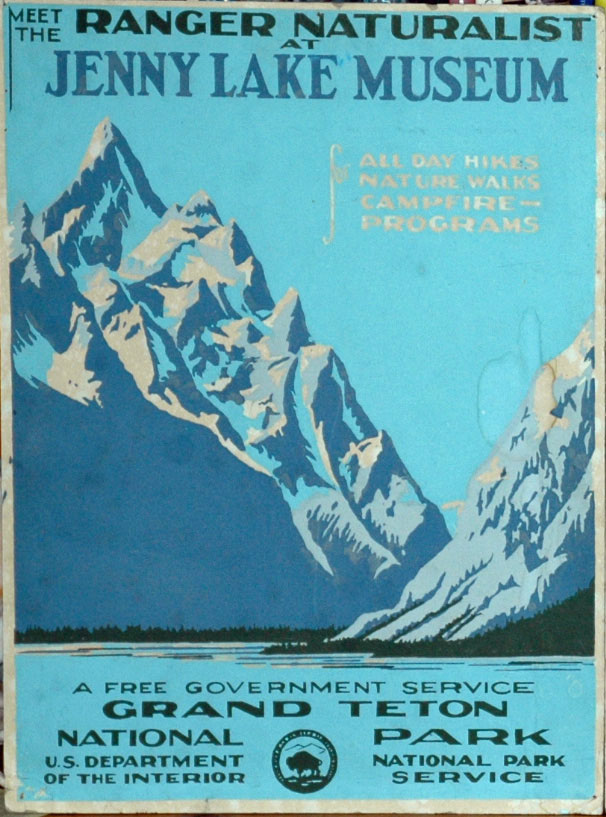
Interestingly, the WPA posters were never intended to be sales items; rather, they were created to promote “ranger–naturalist” talks, walks, and programs. Most of them contained a blank area where information about programs could be added by hand. The posters were silk-screened onto untreated cardboard, so they were subject to deterioration, which no doubt contributes to their scarcity today.
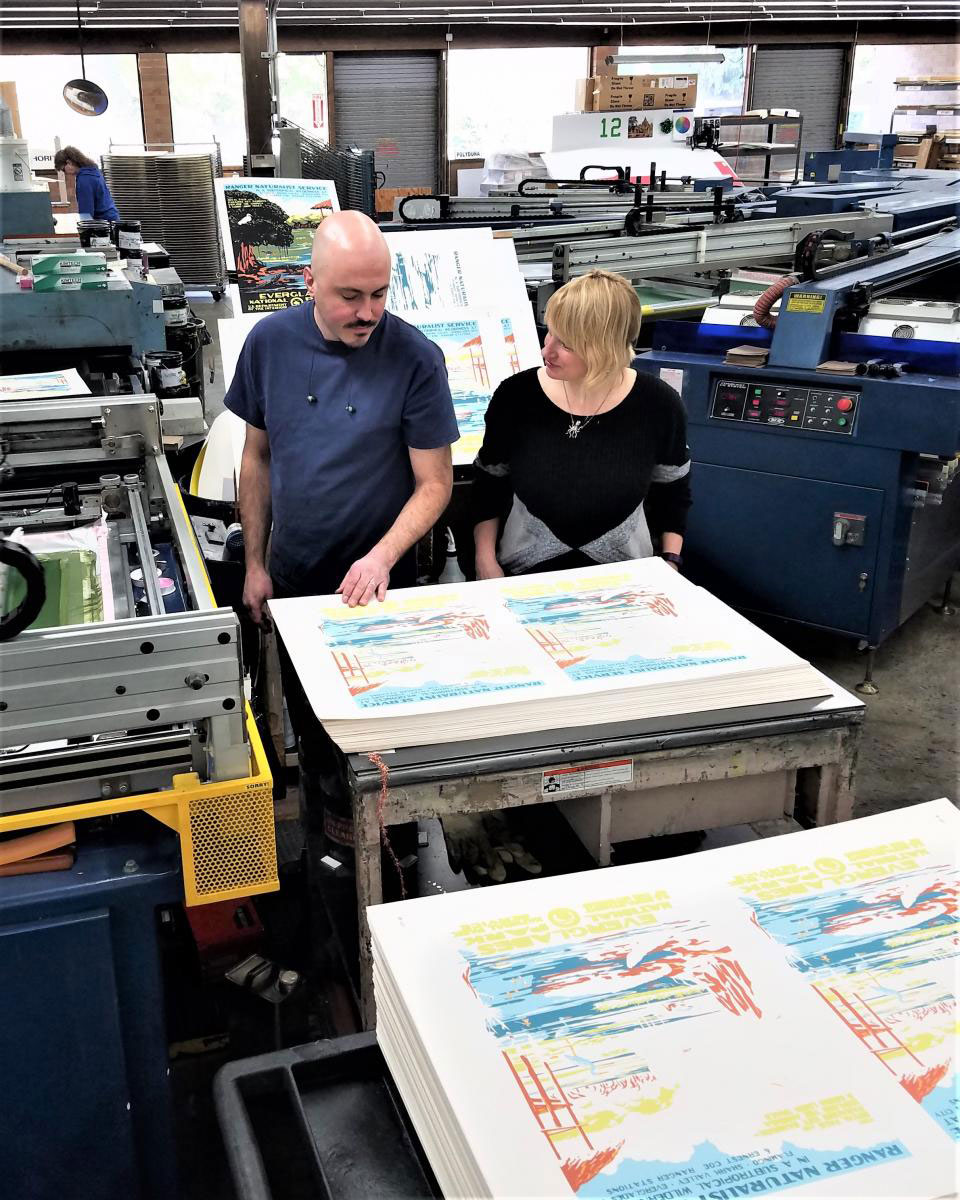
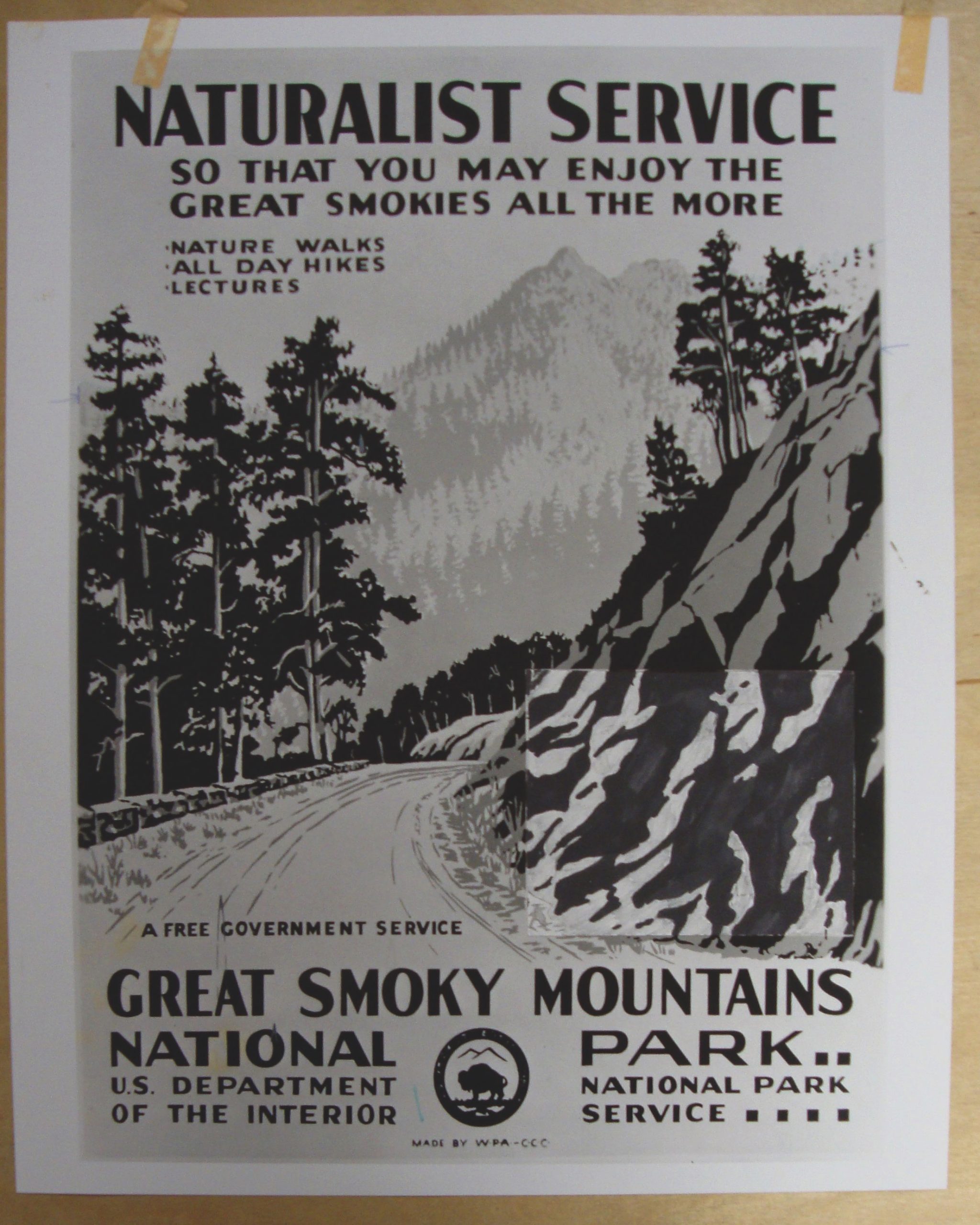
Armed with his research, Leen, then still working as a dentist, began a nationwide search for the posters, a passion project that has led him all over the US. His efforts ultimately resulted in the discovery of 13 black-and-white negatives of the original WPA posters—including a Smokies poster depicting Newfound Gap Road and the Chimney Tops—in the archives of the NPS Harpers Ferry Center in West Virginia. Leen traveled there and got copies, realizing that the negatives could help him reproduce some of the posters. He started a business called Ranger Doug’s Enterprises in Seattle and hired staff skilled in the silk-screening process the original WPA artists used. His company then embarked on making reproduction WPA posters and modern replicas.
In the early 1990s, Leen decided to reproduce the Smokies WPA poster using the black-and-white negative he’d found at Harpers Ferry. He made a print and then pondered how best to add color to the image. Having never been to Great Smoky Mountains National Park, he finally decided he’d have to visit.
“So, I drove thousands of miles to the Smokies to get a feel for the colors on Newfound Gap Road with the Chimney Tops in the background,” Leen wrote in his 2023 book Rediscovering the WPA Poster Art of Our National Parks. “I surmised that the colors would be of a crisp fall day with fog just lifting. I took photographs and, when I got home, used them to select the colorization for my reproduction Smokies poster.”
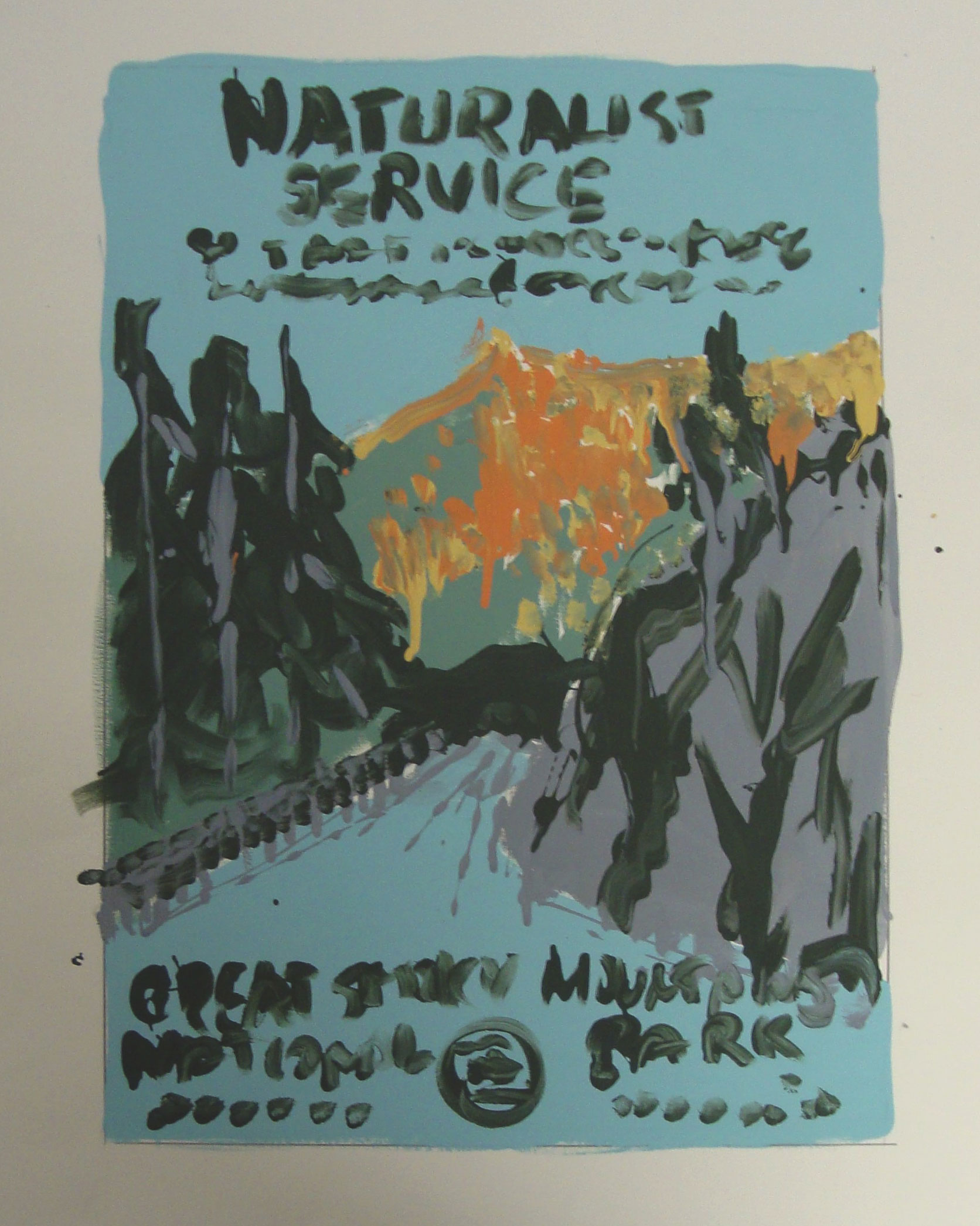
Leen started by making a large print from the negative.
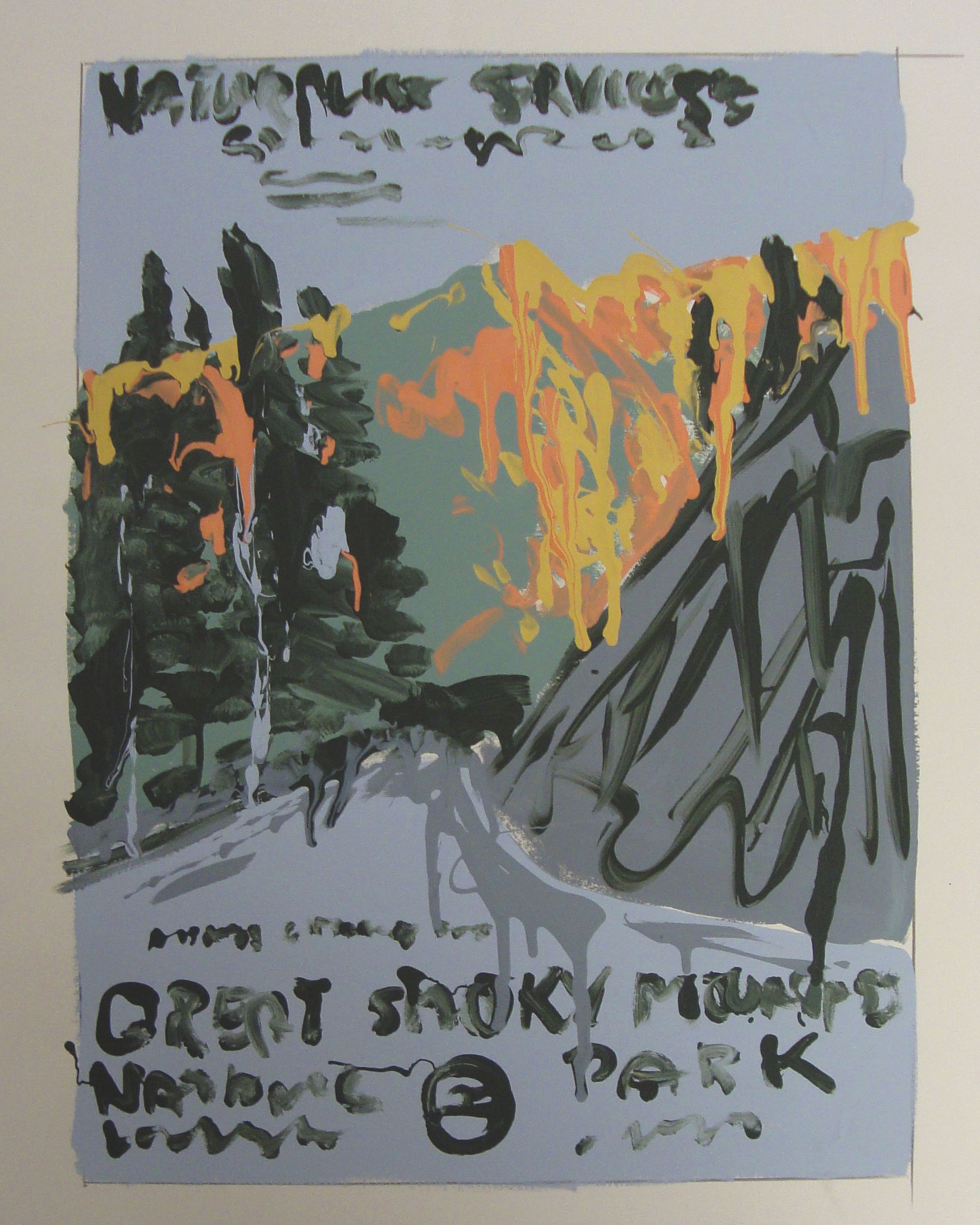
“I needed to visualize how the colors would balance and to see how many silk-screens would be needed for the design,” he said. “I actually ‘finger painted’ the black-and-white print model as the image developed. I would stand back now and then and squint to see how the image looked as I worked in the colors. If everything clicked and the colors worked, my staff and I would complete the painting and write up a ‘recipe’ for the inks to be used on six silk-screen applications. Then it was off to the races with the printing.”
So, what happened to those original Smokies WPA posters? Were they actually shipped to the Smokies? Did they degrade through use, never get used at all, or were they thrown away? Why didn’t even one make it into the park archive?
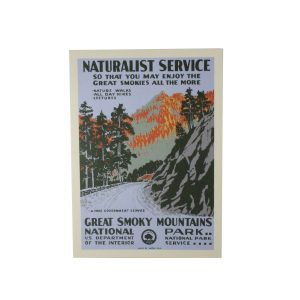
Leen doesn’t know the answers, nor does anyone else, it seems. Leen and his staff created a stunning, blue-and-orange-tinted copy of the Smokies poster, but he’s still itching to find an original, offering a $10,000 reward to any person who can deliver a good-quality, authentic Smokies or Wind Cave WPA poster.
That kind of dogged dedication has earned Leen considerable attention. He’s been profiled in numerous periodicals over the years, and even The New York Times ran a feature story about him in 2020, dubbing him “The Ranger of the Lost Art.” Today, his business creates and publishes over 65 poster designs and other products, including the reproduction Smokies poster, which is available at park visitor centers and the Smokies Life website.
And still, Leen keeps searching, following the advice of famous Smoky Mountain writer Horace Kephart—himself a seeker—who, 112 years ago, titled the first chapter of his classic book Our Southern Highlanders: “Something Hidden; Go and Find It.” Ranger Doug is out there trying.
Learn more about Doug Leen and how to purchase his work at RangerDoug.com. Two Smokies posters are available at SmokiesLife.org. An earlier version of this story was originally published in the fall 2025 issue of Smokies Life Journal, a twice-yearly magazine that is the primary benefit of joining Smokies Life. To read more stories like this while supporting Great Smoky Mountains National Park, visit SmokiesLife.org/Membership and become a Park Keeper.
Subscribe to get the latest posts sent to your email.