


In the years leading up to America’s 250th birthday in 2026, a steady stream of inquiries about potential collaborations to commemorate the landmark year flowed through the Museum of the Cherokee People. The team considered each, but none of them felt like quite the right fit.
“We made the decision that it was important for us to be able to tell a Cherokee story, from our own perspective and from our own point of view,” said Dakota Brown, the museum’s director of education and a citizen of the Eastern Band of Cherokee Indians. “And so we began the process of looking at how we were going to do that.”
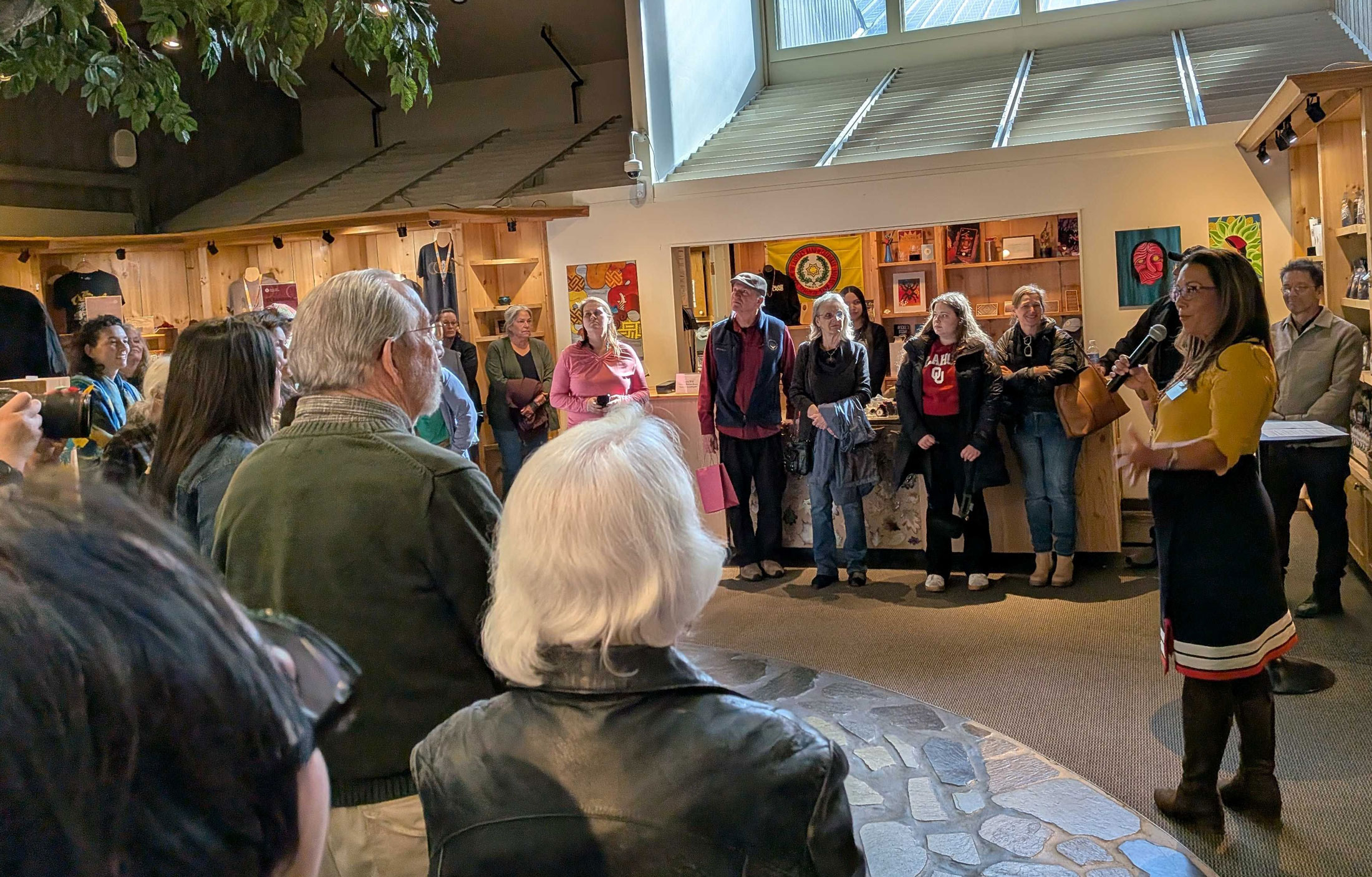
The resulting exhibition, ᏧᏂᏲᏍᎩ ᏂᎨᏒᎾ: ᏣᎳᎩ ᎠᏂᏴᏫᏯᎯ ᏃᎴ ᎠᏂᏴᏫᏁᎦ ᏓᏂᎦᏘᎴᎬ ᎠᏰᎵ ᎤᏙᏒᎲᎢ Unrelenting: Cherokee People and the American Revolution, opened Tuesday, March 17, during a reception attended by tribal officials, community leaders, and residents from both the Qualla Boundary, which borders Great Smoky Mountains National Park, and the wider region. This first-of-its-kind exhibit tells the story of America’s founding through Cherokee eyes, using scholarship, historic objects, and contemporary art to examine this pivotal moment in history.
The Boston Tea Party, Paul Revere’s midnight ride, the Declaration of Independence’s high-minded ideals, and the underequipped colonists’ courageous fight for independence are some of the traditional storylines of 1776. But for the Cherokee people of 250 years ago, the main concern was the continual loss of land to the expanding European population and the search for any possible way to stop it.
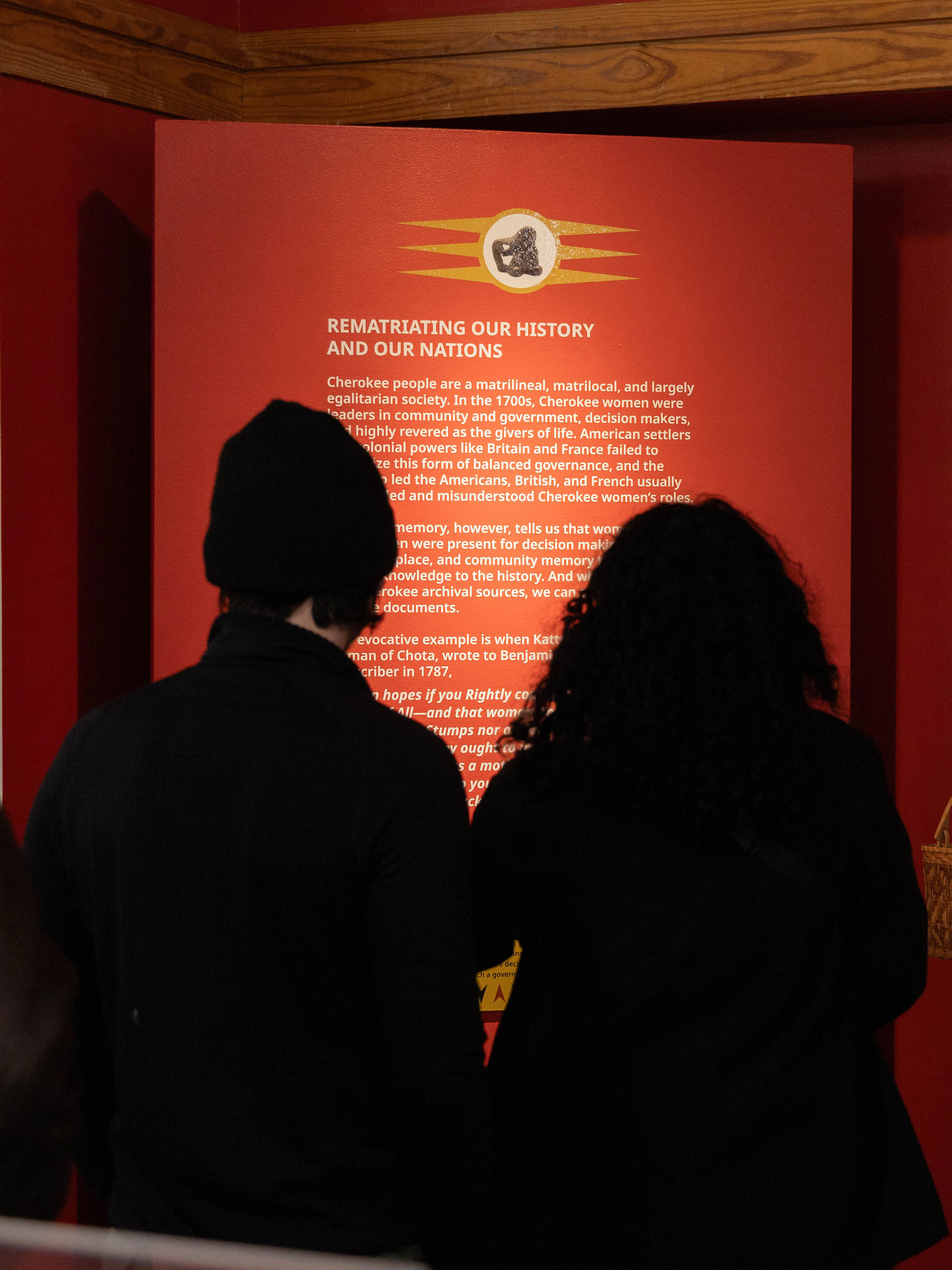
“Many [Cherokees] felt the only path forward was to fight,” reads one panel in the new exhibit. “The British promised to stop the westward expansion of colonial settlement, making the decision of who we would fight alongside a simple choice.”
The American Revolution started in 1775 with the Battle of Lexington and Concord and concluded in 1781 with the surrender of British General Charles Cornwallis at Yorktown, Virginia. But the Cherokee–American War—in which the Cherokee people fought the forming nation for the right to remain on their ancestral land—was far from over. That war kicked off in 1776 with the birth of the new nation and didn’t end until the Treaty of Tellico Blockhouse was signed in 1794. Like all previous treaties, it would eventually be broken, with settlement continuing to encroach Cherokee territory over the following decades. In 1830, the Indian Removal Act mandated that all Native people leave for reservations in what is now Oklahoma, and thousands of Cherokee people died during their forced removal on the Trail of Tears in 1838.
Speaking at the reception, Museum Executive Director and EBCI citizen Shana Bushyhead Condill told the gathered crowd that her staff had been discussing the upcoming 250th anniversary since shortly after her hire in 2021. In general, such commemorations aren’t Condill’s passion—they can turn into celebrations that ignore past harm, she said, and historians often “spend too much time thinking about war anyway.”
“But what I’ve learned in these past five years is that we, as Cherokee people, can tell our stories in ways that we’ve more clearly recognized,” she said. “That we can restore Cherokee cultural knowledge found in language and in place to long-told American stories we find in textbooks and movies.”
Brown and Director of Collections and Exhibitions Evan Mathis curated the exhibit together with guest curator Brandon Dillard, a Cherokee Nation citizen who serves as director of historic interpretations and audience engagement at Monticello, the historic home of Thomas Jefferson in Charlottesville, Virginia. “Maybe more than any other founder,” Dillard told attendees, Jefferson represents the contradictory idealism of the United States’ founding idea that “all men are created free and equal” and the simultaneous reality of slaveholding and violence against Native people.
“It’s a moment to think about, what is American history?” Dillard said. “What does that mean for everyone who lives in this country today? And that includes people all across Indian Country and Native voices. . . . Representative government is not new to Native people, and Native people know that you have to have conversations across difference. Americans seeking to protect their democracy would take some inspiration in that.”
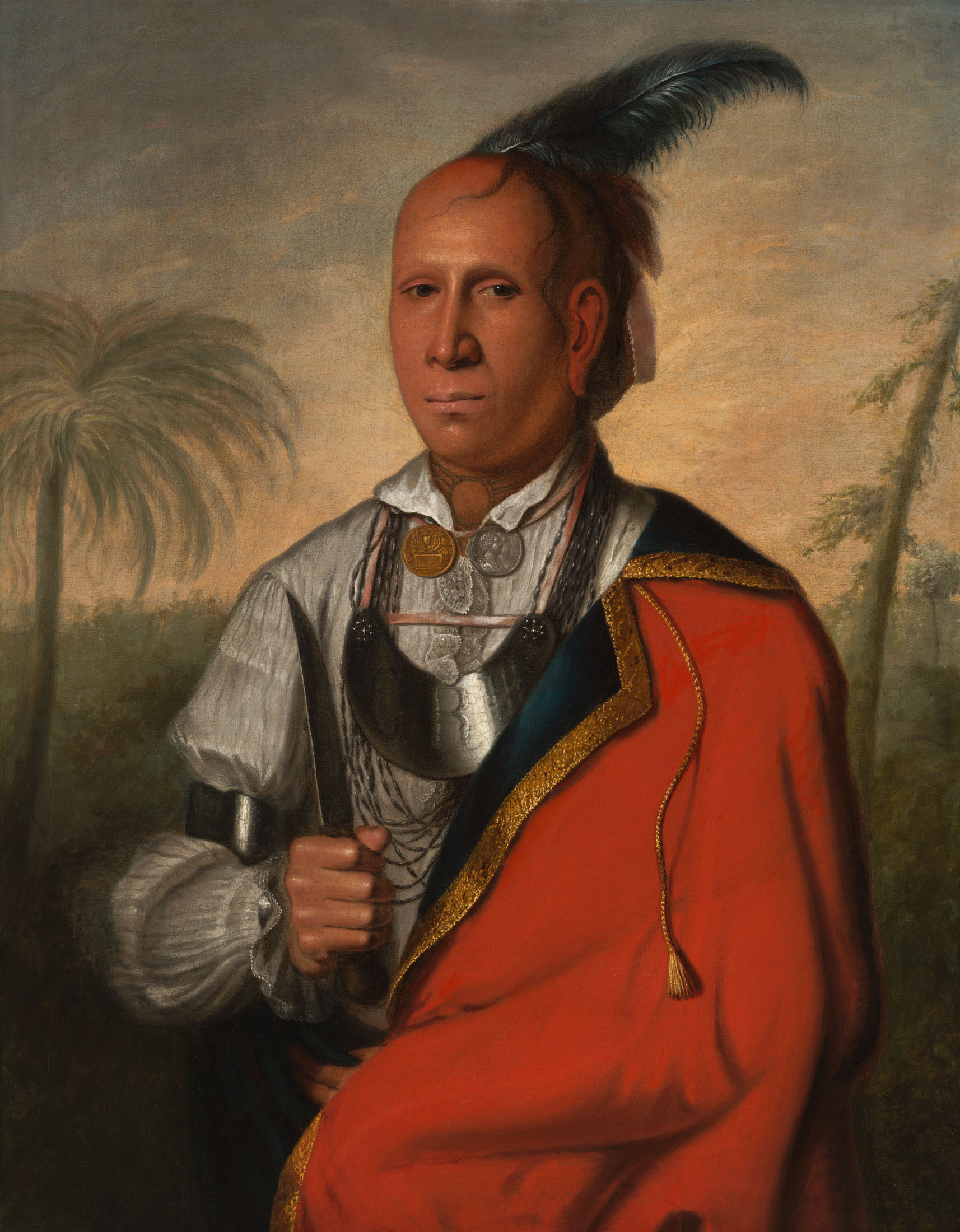
In the exhibit, historical objects help tell the story. An 18th-century Seven Years’ War (French and Indian War) brass British gorget and a trade axe are both examples of objects often given to Native people as diplomatic gifts. An 18th-century oil painting by English artist Francis Parsons depicts Cunne Shote, Cherokee leader during the Seven Years’ War (French and Indian War). But contemporary art is prominent as well.
“One of the things that’s always very important for us here is to bring the narrative forward,” Brown said. “And using contemporary art was a way for us to do that. So talking about the past and talking about those historical events, while also talking about what that means to us today and how that still affects us today.”
The exhibit features a variety of artistic styles and mediums—works in oil, textile, and paper; photography, stained glass, and clay. The pieces speak to the pain of the past, dreams for the future, and the ways Native people reconcile their identities as both Americans and tribal members.
It’s a complex duality. Native Americans have the highest rate of military service of any racial group. They vote in federal, state, and tribal elections. Every year they celebrate the Fourth of July with cookouts and fireworks. But they also continue to grapple with the ongoing impacts of historical events like the Trail of Tears and the boarding school era. They pass along traditional knowledge about language, crafts, and native plants. They advocate for the rights and respect due them as members of sovereign tribal nations.
“Patriotism is complicated,” one exhibit panel reads, “and each individual has a unique relationship with how they feel about tribal and national government—just like people in the 1700s.”
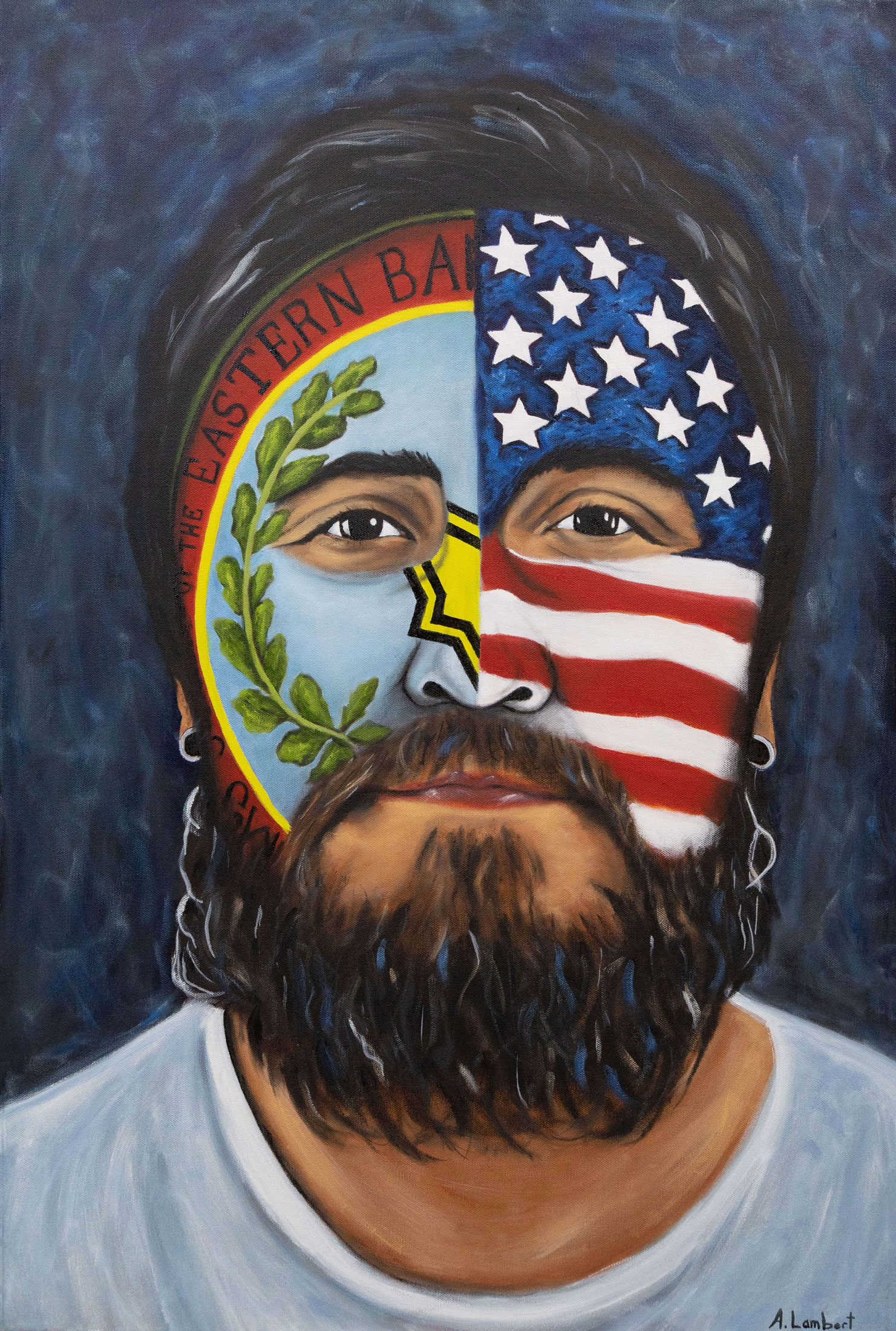
An oil painting by EBCI member Aaron Lambert captures this idea vividly; in his self-portrait, the seal of the Eastern Band of Cherokee Indians covers one side of his face, while the flag of the United States of America covers the other.
“The split is not a division but a fusion: two worlds that coexist in one individual, influencing each other without one overshadowing the other,” Lambert wrote in his artist statement. “My painting invites viewers to consider how identities are layered and multifaceted, celebrating the beauty and strength found in embracing both sides.”
ᏧᏂᏲᏍᎩ ᏂᎨᏒᎾ: ᏣᎳᎩ ᎠᏂᏴᏫᏯᎯ ᏃᎴ ᎠᏂᏴᏫᏁᎦ ᏓᏂᎦᏘᎴᎬ ᎠᏰᎵ ᎤᏙᏒᎲᎢ Unrelenting: Cherokee People and the American Revolution runs through December 30, 2026, at the Museum of the Cherokee People in Cherokee, North Carolina. The museum is open daily from 9 a.m. to 5 p.m. with ticket sales closing at 4 p.m. General admission is $15 for adults, $8 for children ages six to twelve, and free for children five and under as well as for members of federally recognized tribes and museum members.
Subscribe to get the latest posts sent to your email.