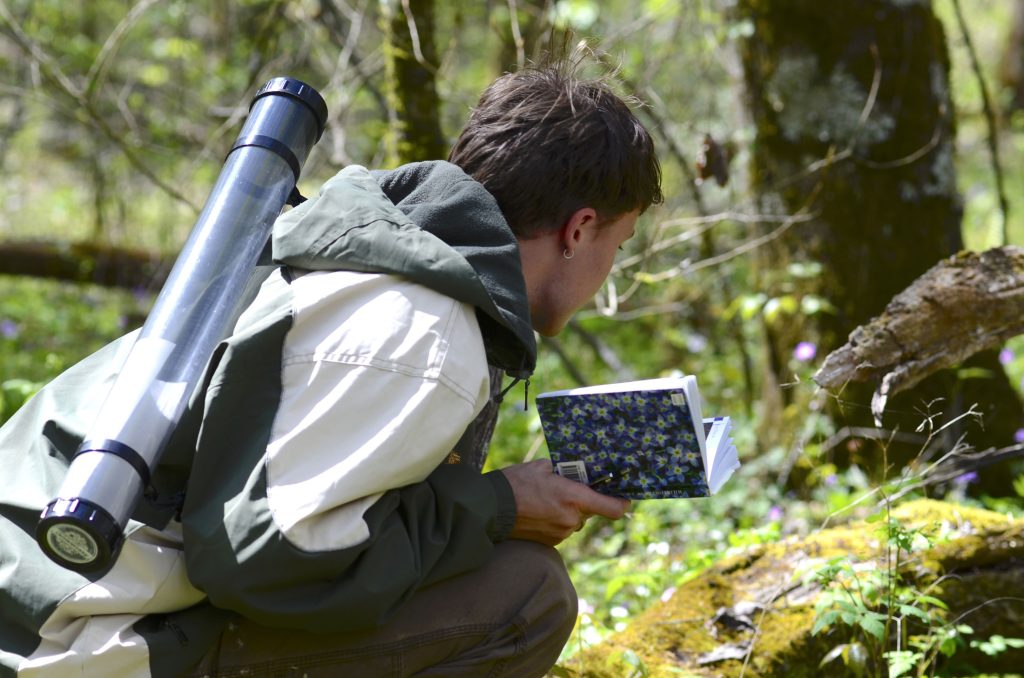




What initially draws my eyes to the tall, stalky plant growing near the Oconaluftee Visitor Center in Great Smoky Mountains National Park is the round, green bulge in a stem near its crown. Called galls, such growths are often caused by insects like wasps and flies, whose larvae use them as safe places to feed and grow. I’m excited to show it to 2025 Steve Kemp writer and illustrator in residence Jim and Leslie Costa, who are leading a Smokies Life Branch Out event exploring the diversity of insects found in the area.
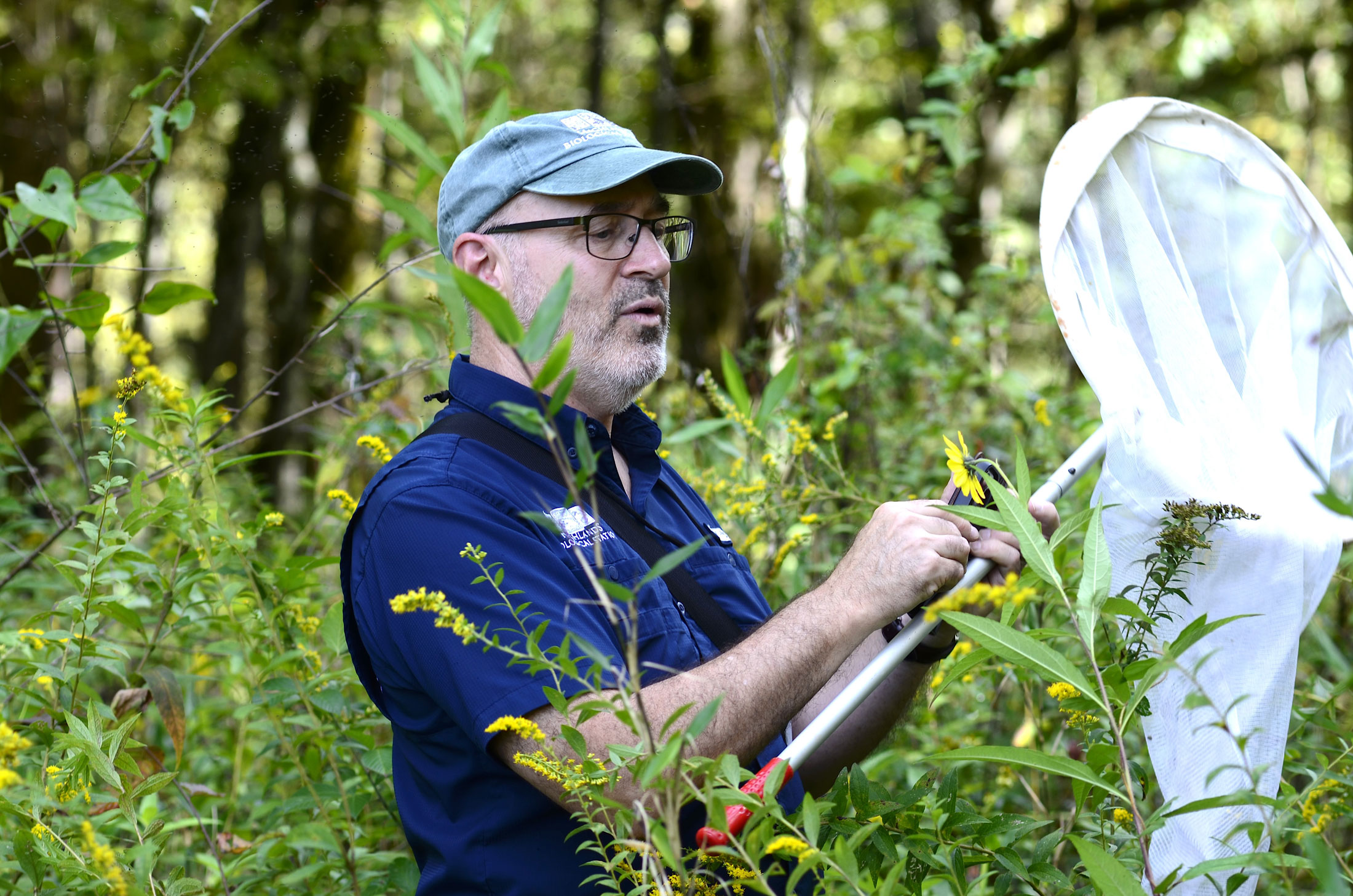
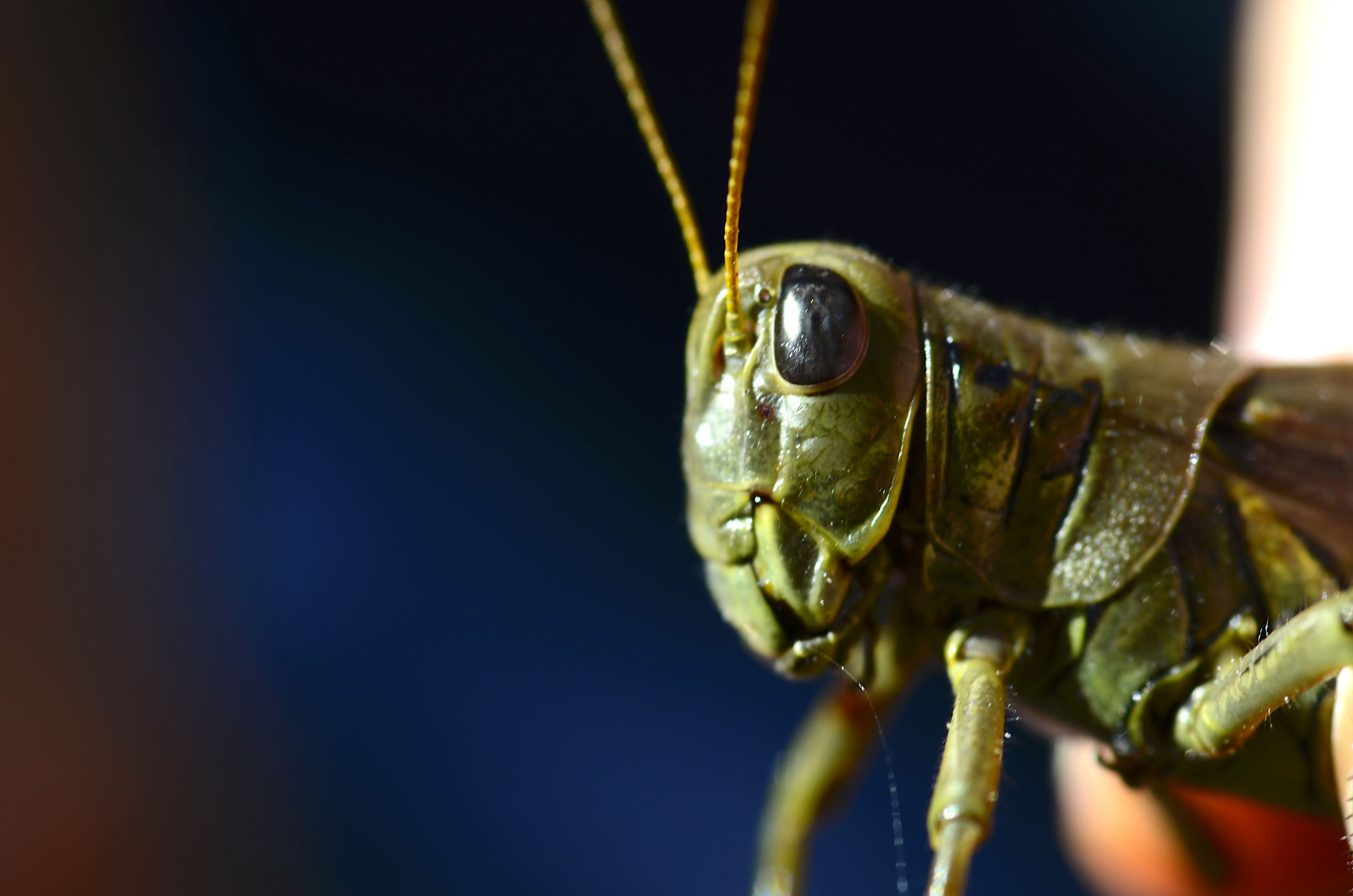
But I’ve barely finished pointing out the find when a new discovery materializes in the tangle of early-fall weeds and grasses. It’s a Chinese praying mantis, six inches long yet easy to miss—its green body blends in perfectly against the wingstem stalk it clings to. The longer I stare, the more creatures I see: a little brown caterpillar disguised as a stem, a green katydid whose wings have the same texture as the tall grasses where it hides, a silver-spotted skipper caterpillar, its wrinkly green-yellow body topped with an absurdly large maroon neck and head.
“People are understandably pretty smitten with large vertebrates, and I get that. We love those things too,” said Jim. “But insects are just orders of magnitude more diverse, and in terms of their ecological impact, more significant.”
From elephants and earthworms to algae and aloe, there are 2.1 million named species on planet Earth—and more than half, 59 percent, are insects. In Great Smoky Mountains National Park, insects account for 48 percent of the 22,795 species documented so far. Though black bears and elk are the favored subjects of photographs and vacation memories, insects are far more numerous and far more foundational to the ecosystems they serve.
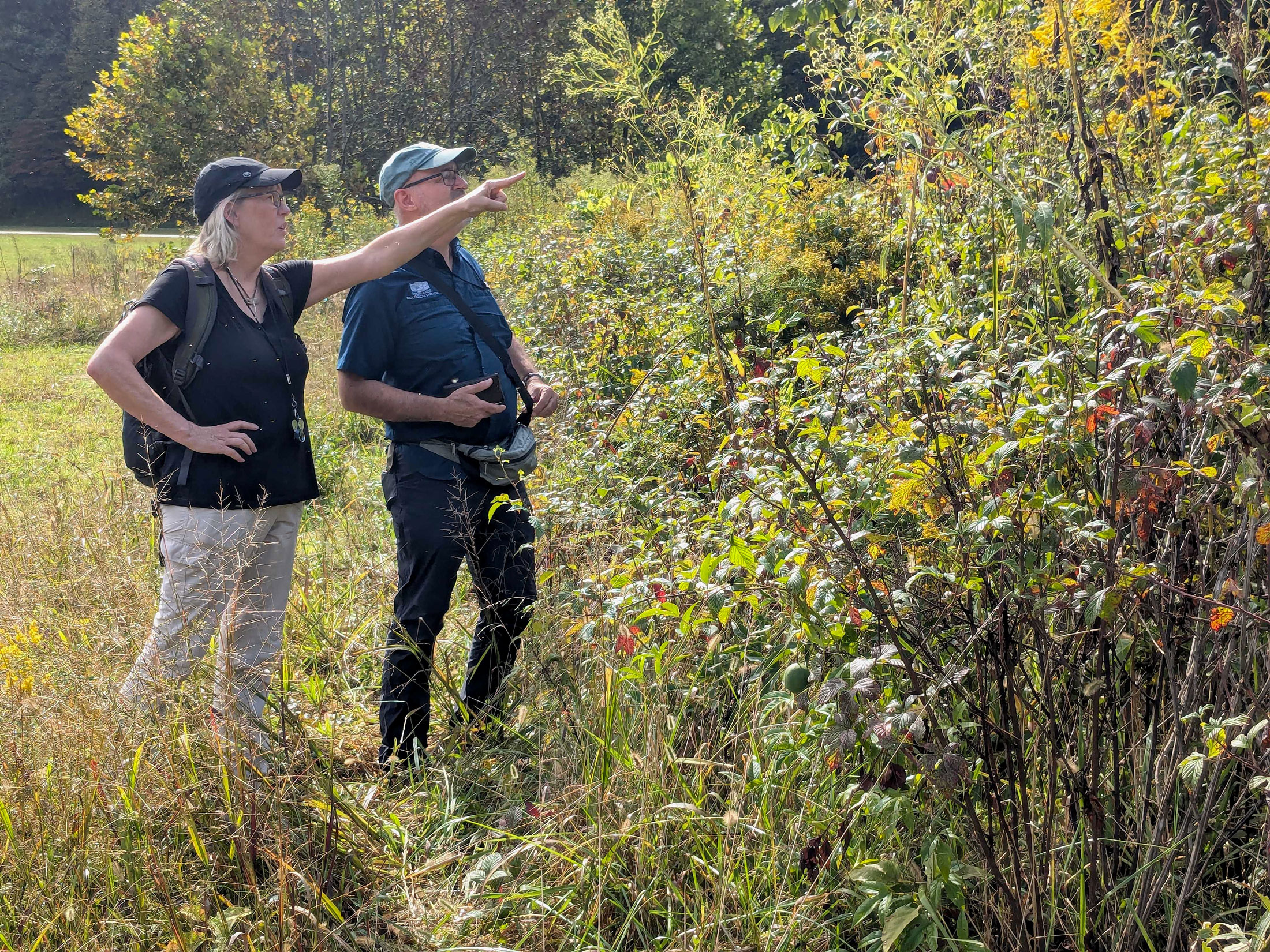
Trained as entomologists, Jim and Leslie Costa both have a passion for insects. Jim is a biology professor and executive director of Western Carolina University’s Highlands Biological Station; his wife Leslie Costa specializes in scientific illustrations. Together, they’ve cultivated a lifelong appreciation for the insect world and the many mysteries it still holds. As this year’s writer and illustrator in residence, they’re bringing that passion to bear on a singular mission: to craft a unique guide inviting others to gain an understanding and appreciation of insects in the Smokies—and by extension, everywhere.
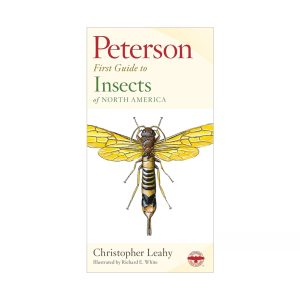
“Insects are such a big part of the ecology here, and it’s such an interesting group,” Jim said. “There’s so much diversity, a lot of really beautiful and cool species. While the park has a wonderful field guide series, with the exception of butterflies and moths there are none on insects, yet that is the largest and most diverse group of animals in the Smokies. I was excited about the prospect of filling that gap and in the process helping park visitors better understand what really is a significant facet of park diversity.”
Each year, the Steve Kemp residency offers a chosen writer the opportunity to spend six weeks living in the park working on the project of their choosing. The Costas, who reside in Cullowhee, North Carolina, split their 2025 residency into three two-week stays, dividing their time between the spring, summer, and fall seasons in order to observe a larger cross-section of the park’s insect species.
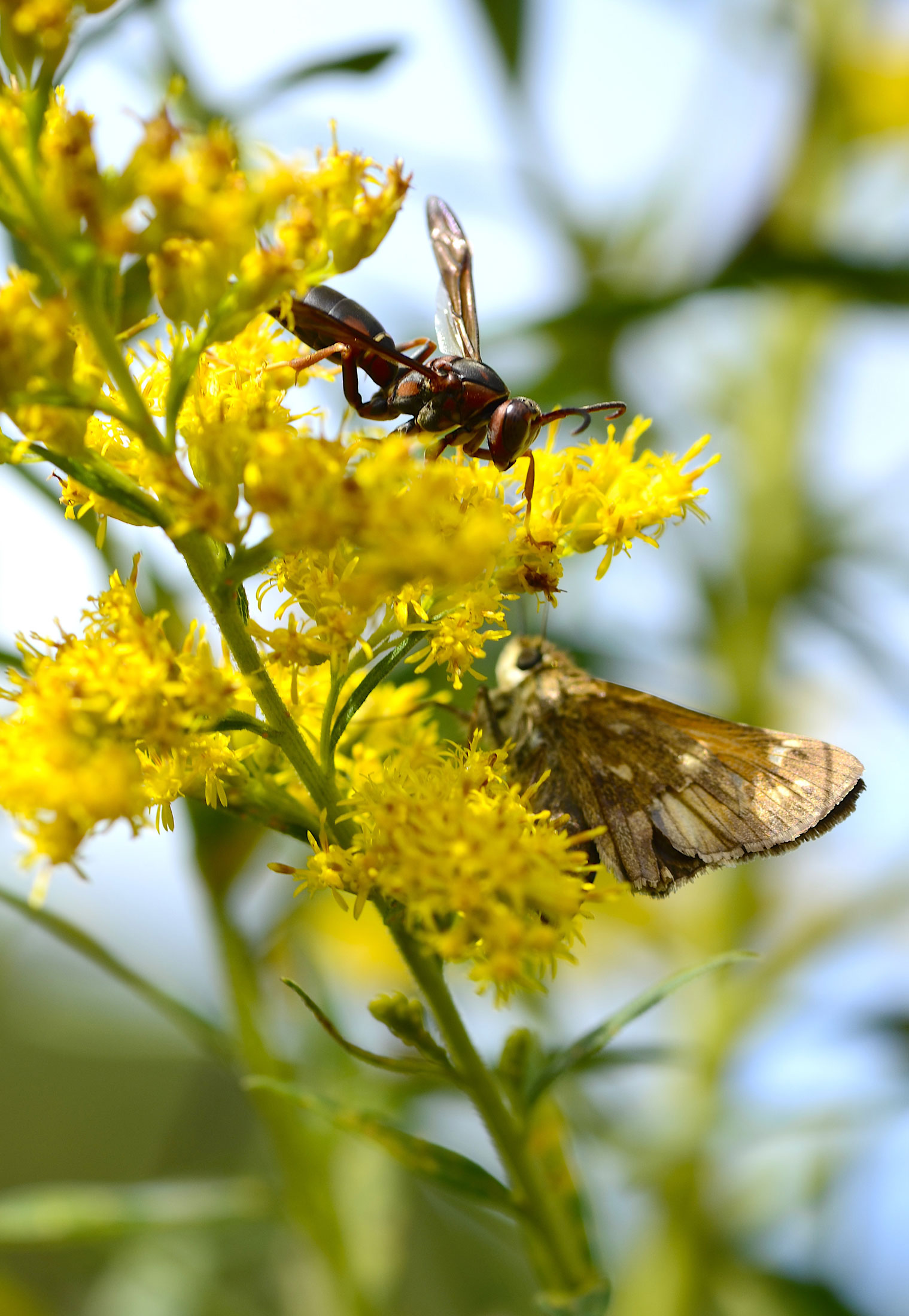
“The best thing for us has been just being out in the park, on the Tennessee side especially, since we live on the North Carolina side and have explored there more—being out and being able to explore trails that we haven’t visited and documenting the incredible insects that we’ve seen,” said Leslie. “Every time we’ve gone out, we’ve seen things on our list that we wanted to see and other things that were a surprise.”
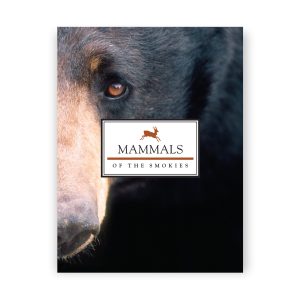
Once complete, the Costas’ insect book will be markedly different from Smokies Life’s existing catalogue of field guides, because while it’s no problem for a single volume to include all 70 species of mammals found in the Smokies or all 85 species of reptiles and amphibians, no printed book would ever be able to describe the nearly 11,000 insect species known to occur there. For the Costas, designing the approach is as important as developing content, and it will take time to pull off—the book is still more than a year away from publication.
“One of the things that we wanted to include in this guide from the get-go was insect signs,” Jim said. “The idea being that people will notice insects to some extent, especially the more obvious groups like butterflies, but to give them a better sense that insects are really everywhere, all around us, we want to draw attention to their signs—insect calling cards, from galls and nests to tracings left on leaves and bark.”
Branch Out participants got a glimpse of some of the material these essays might include during the presentation Jim gave before the bug search moved outdoors. He offered an overview not only of which species might be visible in the park that day, but of how they interact with each other and why they’re important. Insects are the foundation of the food web and perform an array of jobs without which the ecosystem wouldn’t function: pollinating flowers, decomposing fallen leaves, and serving as an indispensable food source for countless species, including birds.

“The base of the ‘Great Pyramid’ of ecology, in terms of biomass, in terms of diversity—the interface between all that energy plants harvest from the sun and the whole world of the animal kingdom—is insects,” Jim said. “It’s pretty amazing to think about how important the group is. And for that reason, I think that we should really take note of what has now been very well-documented as a pretty significant insect decline worldwide.”
Though there are no definitive answers as to why insects are declining, recent studies make it clear that they are—and quite dramatically. A 2017 study in Germany documented a 76 percent decrease in the biomass of flying insects over a 27-year period, while a more recent US study found a 72.4 percent decline in insect diversity between 2004 and 2024 in the “fairly pristine” alpine meadows of Colorado.
“I think that that gives our book a new a sense of urgency, and how we want people in the park but also elsewhere to better understand insect diversity, better understand what is, after all, the biggest proportion of the animal kingdom,” Jim said.
But Jim’s message wasn’t just alarm bells. He encouraged his audience to help support their insect neighbors by landscaping with native plants and shared some of the wonderous ways in which insects interact with plants, predators, and each other. Some species of flowers can be pollinated only by insects that buzz at just the right frequency to trigger a shower of pollen. Certain bee species clip perfect circles out of tree leaves to build nests for their young. And an array of adaptations help various types of caterpillars avoid becoming the snack of a hungry bird. These are all topics Jim hopes to delve into further as he writes the book.
“Programs like Branch Out make me think about how to communicate these ideas to a general audience,” Jim said.
He and Leslie have also written several pieces for the Smokies LIVE blog.
“Ultimately, we hope to inspire visitors to just be curious and learn something about a whole new dimension of the park too,” he said.
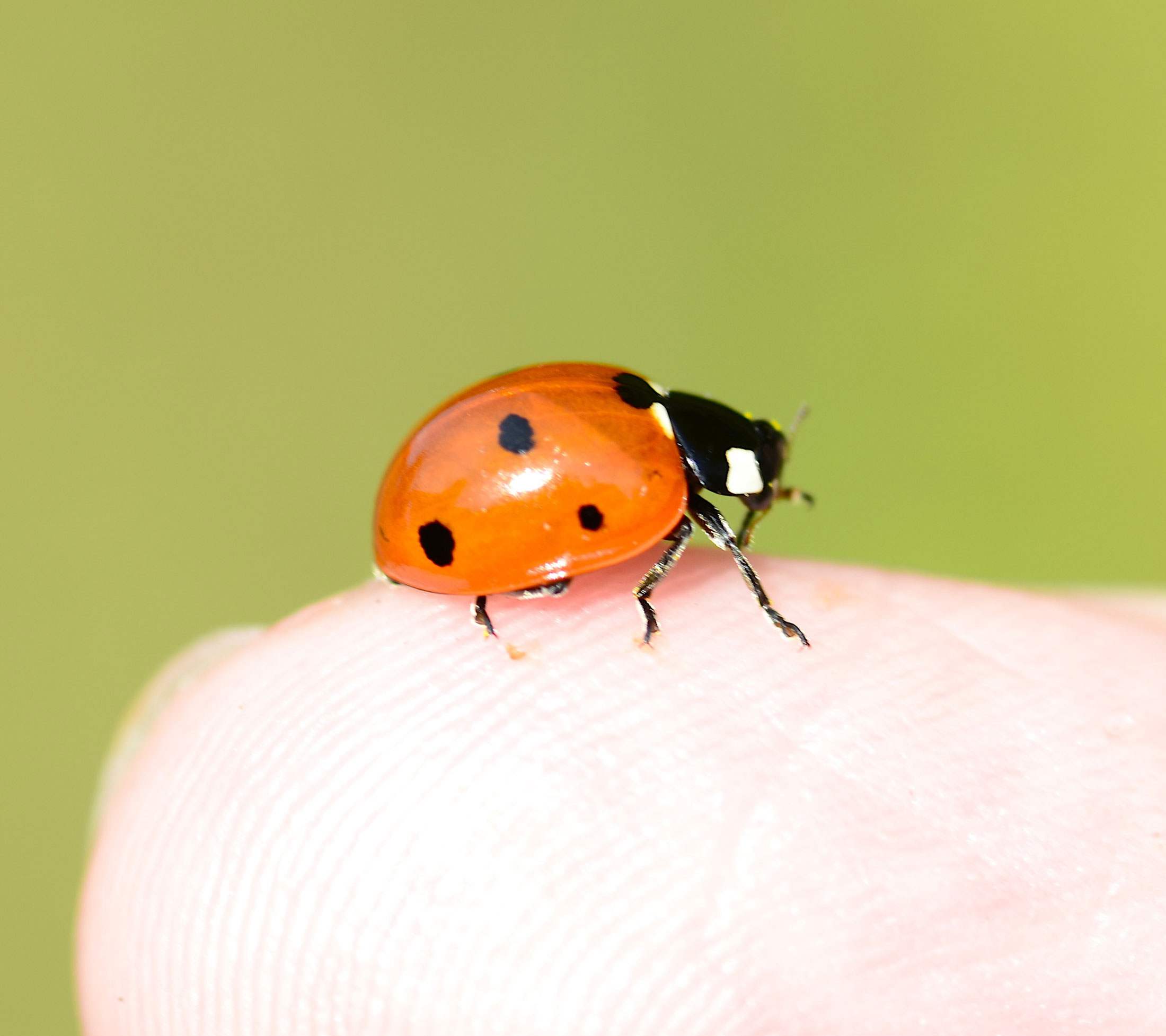
And, perhaps, know the joy of an autumn afternoon spent experiencing it firsthand.
“There’s nothing better,” said Leslie, “than getting out and seeing what insect surprises await you.”
Applications for the 2026 Steve Kemp Writer’s Residency are open until November 1. The selected writer will live in Great Smoky Mountains National Park for six weeks in 2026, learning about the park, working in their chosen genre, and having the opportunity to spend one-on-one time with Steve Kemp. Housing and a small stipend are provided. Visit SmokiesLife.org/the-steve-kemp-writers-residency to apply.
Branch Out events are open to participants in Smokies Life’s Park Keeper membership program. From birdwatching to nature journaling, a variety of programs led by knowledgeable and experienced guides and naturalists remain on the calendar for 2025. Learn more at SmokiesLife.org/membership.
Subscribe to get the latest posts sent to your email.