

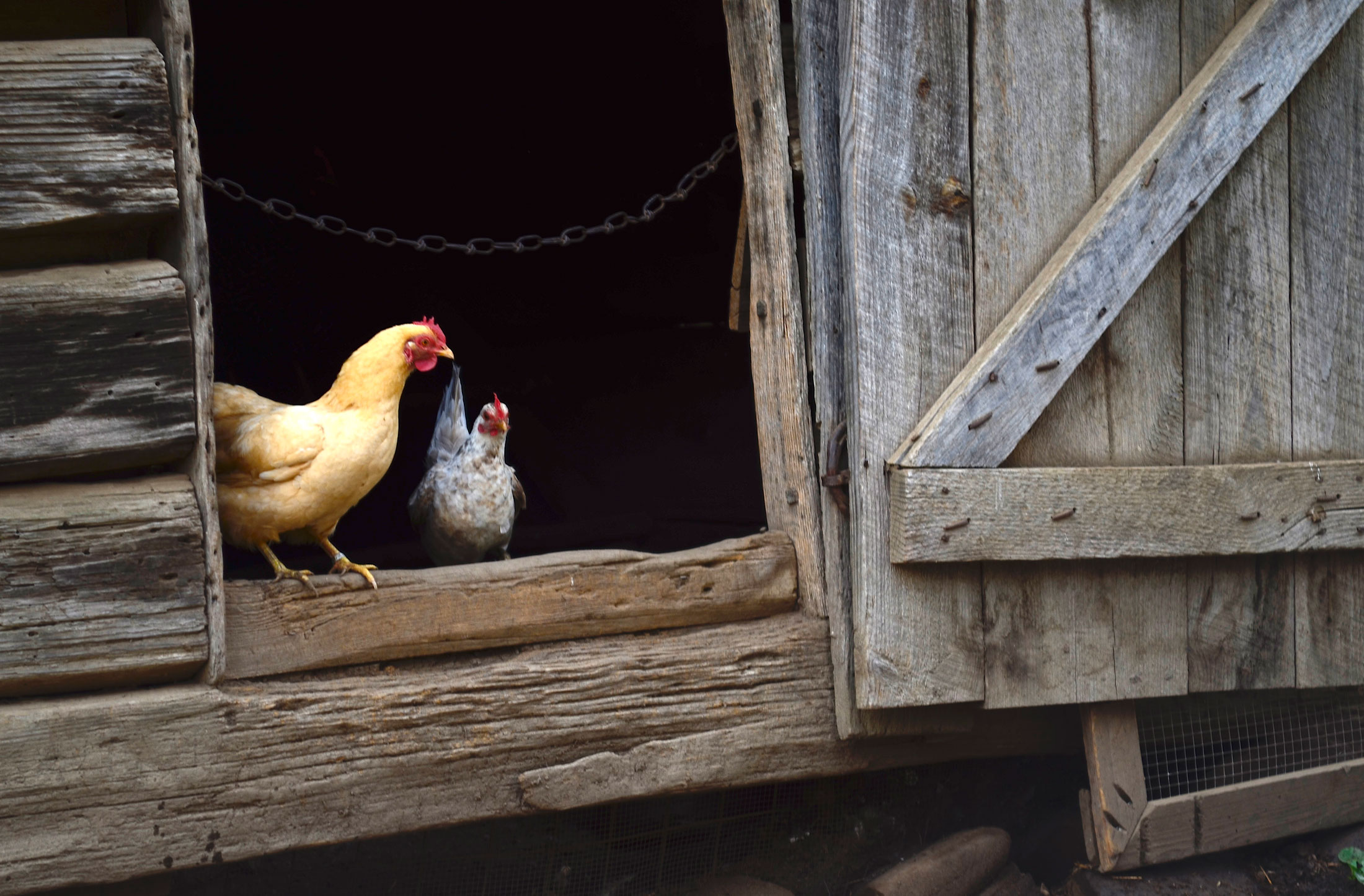
Who’s in charge of the chickens at the Mountain Farm Museum in Great Smoky Mountains National Park? According to the National Park Service, it’s Interpretive Park Ranger Michael Smith. But the chickens themselves recognize the authority of the large, golden rooster that struts among them—the unchallenged leader of the Oconaluftee flock.
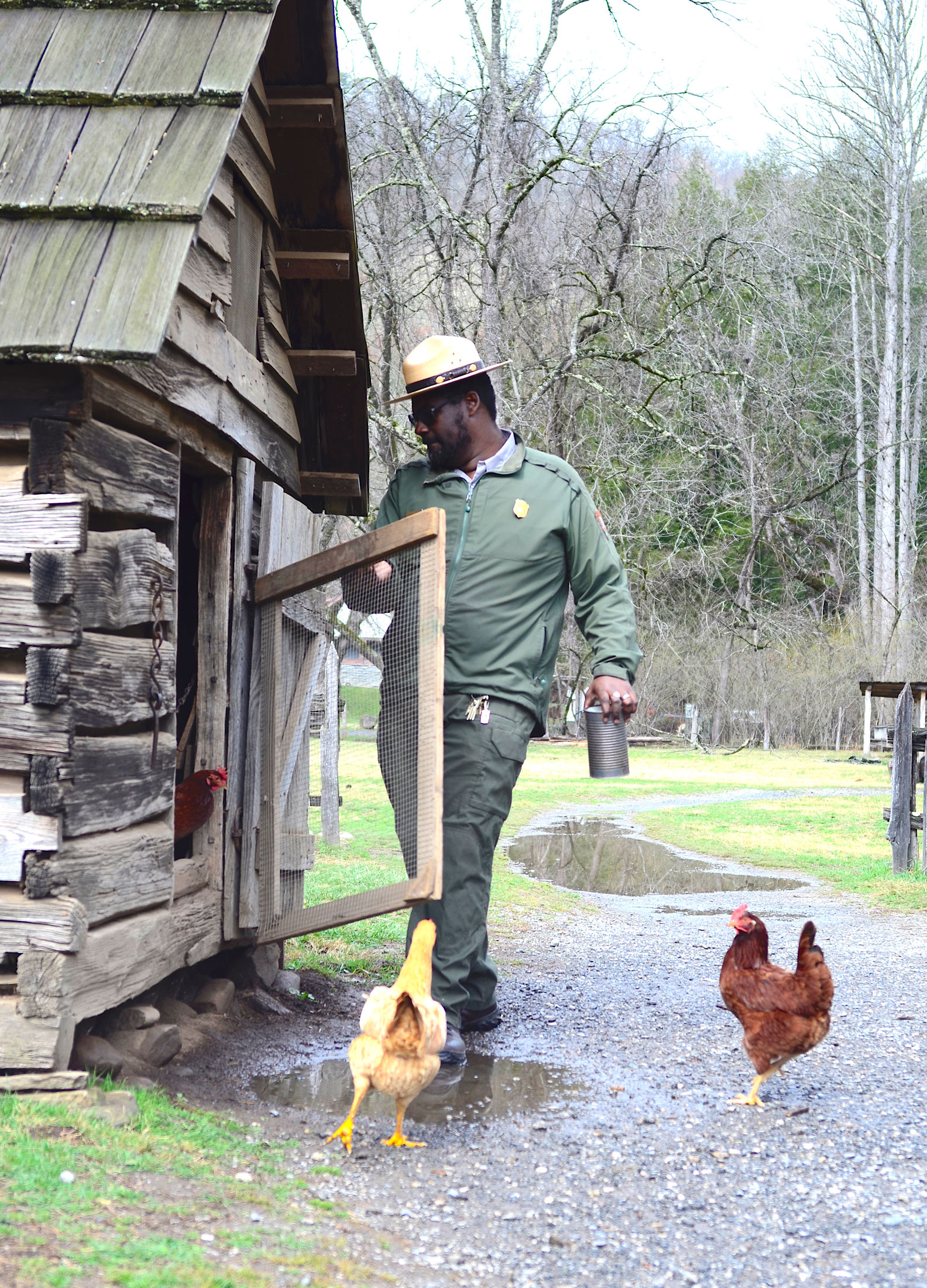
“He’s kind of a little provider,” said Smith.
The rooster helps keep his flock happy and healthy, making a distinctive noise to alert his ladies when he finds an especially tasty food source and also protecting them from danger. One time, Smith said, the rooster intervened when a stray dog found its way onto the farm, keeping the dog away from his hens until rangers arrived on the scene. Several years ago, he witnessed a different rooster kick at a hawk that was attacking one of his hens, forcing the predator to flee.
But Smith also plays an important role in the chickens’ well-being—making sure their coop is secure from predators, that they have access to food and water, and that the flock’s size and hen–rooster ratio is on point. With funding from Friends of the Smokies, Smith rounds out the existing flock every spring with chickens purchased from a local live animal auction. These newly acquired birds are then locked in the coop for about a week, which gives them time to establish their pecking order and understand that the coop is their new home. The park is full of predators, but the coop offers a safe place to sleep each night.
The park keeps a maximum of 30–40 chickens in its flock. Located next to the Oconaluftee Visitor Center, the Mountain Farm Museum exists to show what farm life was like prior to the park’s establishment. To ensure the chickens stay happy and healthy, visitors are asked not to chase or handle them. But as the birds spend their days free-ranging the grounds, searching out insects, seeds, grasses, and flowers to satisfy their omnivorous diet, they serve as living illustrations of what mountain homesteads once looked like.
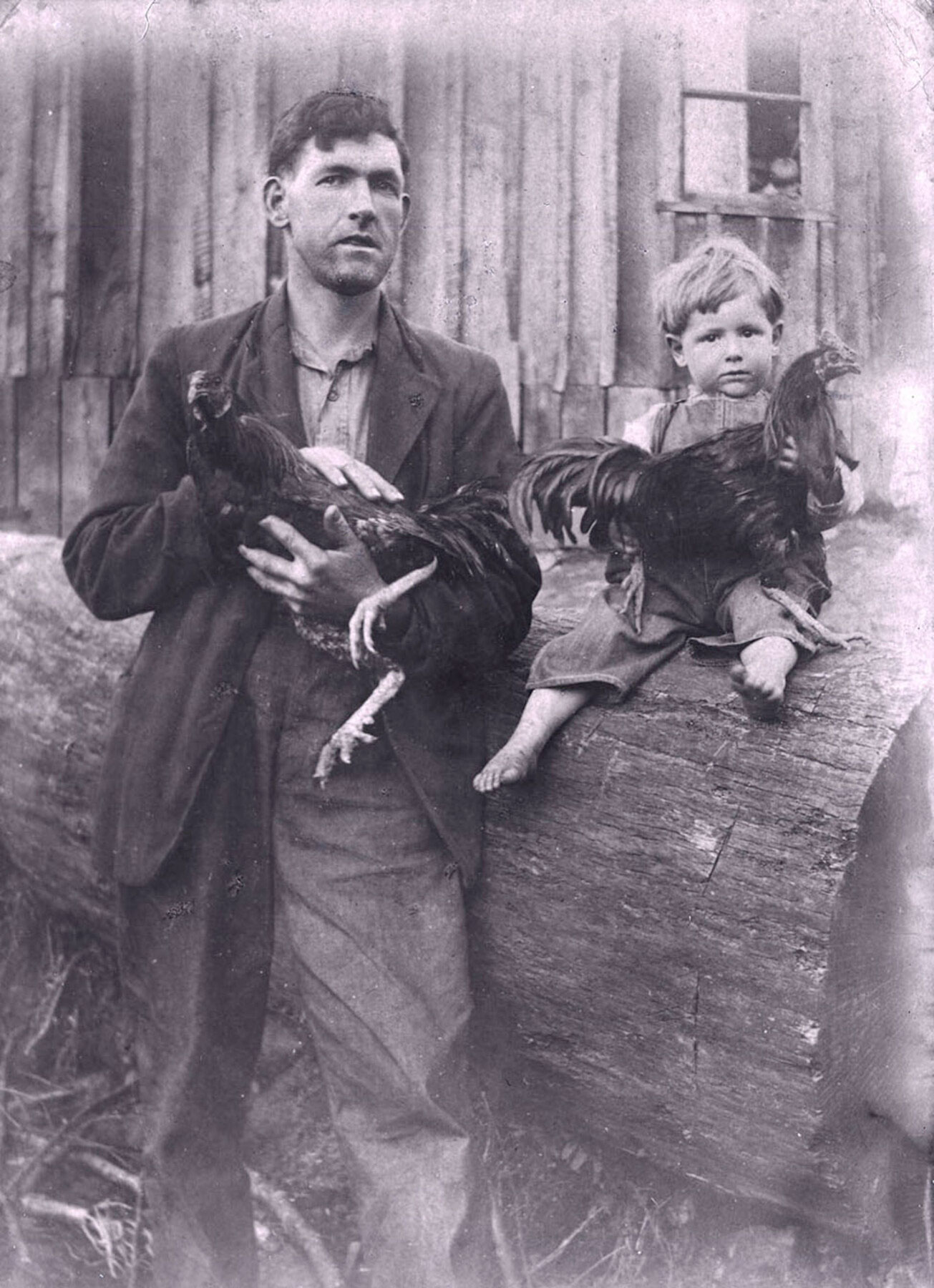
“Chickens were important to family farms here in the Smokies prior to the park establishment because they provided items that families needed to survive,” Smith said. “They provide eggs, but then also they provide meat. Chickens are also pretty hardy. They don’t need a lot of input.”
Journey around the world
By the time the first chicken squawked in the Smokies, humans had already been raising them for thousands of years. Today’s domestic chicken originates from the wild red junglefowl bird (Gallus gallus) that is native to Southeast Asia. Multiple populations of humans are believed to have domesticated this species, with the oldest known bones from a domesticated chicken dating to 5,400 BC in the Hebei province of China.
Despite their nearly nonexistent flying abilities, chickens have since spread across the world through multiple routes of trade and travel, according to a 2012 paper by Alice A. Story, et. al, that used DNA and bone-dating to help trace the chicken’s dispersal from Asian centers of domestication to its current global distribution. The Polynesians, approaching via the Pacific Ocean, were the first to bring them to the Americas, but chickens didn’t arrive on the East Coast of North America until after 1500. Here, European breeds that settlers brought with them met breeds transported from Africa on Dutch and Portuguese slave ships. Today, countless breeds optimize everything from egg and meat production to cold-hardiness and heat tolerance.
For a farm family struggling to scratch out a living, few creatures were more miraculous than this bob-headed, scaly-footed, nearly flightless bird. A healthy hen can lay up to one egg per day, a food rich in proteins and nutrients that arrives in a naturally sealed container. Likewise, chicken meat is a source of vital nutrition that is quick and inexpensive to raise on a small farm compared to other livestock like cows and pigs.
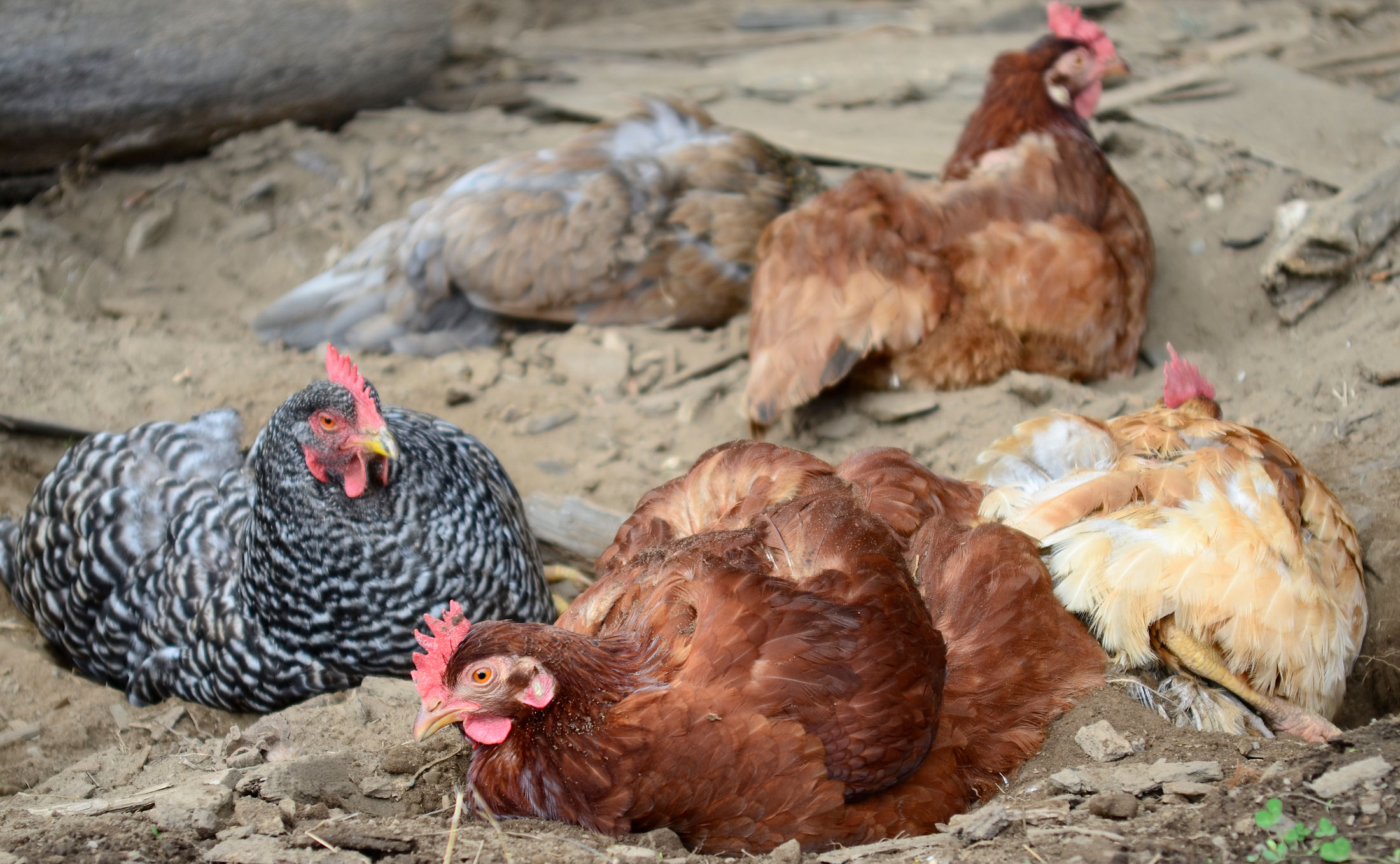
Chickens are also easier to care for. Given enough space to range, chickens can just about feed themselves, and farm families would supplement their flocks’ diets with kitchen scraps and remnants of crop harvests. Behaviors like dust bathing and preening help chickens keep mites and other parasites at bay, and hens can hatch and raise chicks without assistance from their owners. Once composted, chicken waste creates a rich manure, making chickens a natural complement to food crops.
A source of cash or barter
With its rocky ground, steep slopes, and cold winters, the Great Smokies is a challenging place to grow food. Prior to the park’s establishment, most of the families that lived here were subsistence farmers, raising enough to feed themselves with little left over to sell.
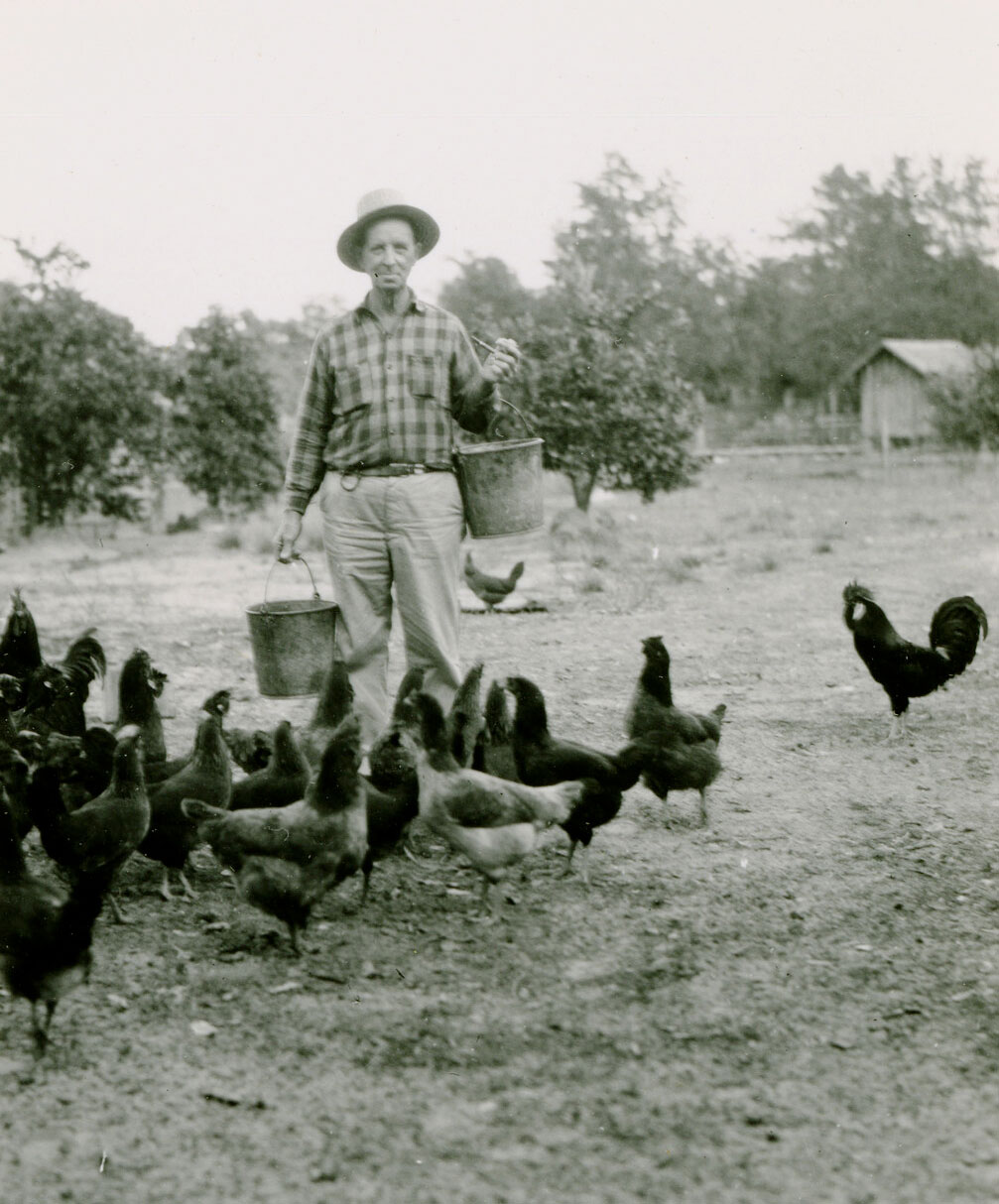
“Families would trade and borrow a lot,” Smith said. “And so if you had excess eggs, you might be able to get butter from a family that had cows and produced more butter than they needed. Families also worked together.”
If a hen took a notion to sit on a clutch of eggs, hoping to hatch them, a farm family might loan that broody hen out to a neighbor who wanted to grow their flock. A specific hen basket existed for transporting such hens.
Chickens could also be a source of cash. In 1915, The Maryville Times reported that Blount County, Tennessee, exported 50 cars of chickens and 50 cars of eggs annually, after the 25,000 people living there at the time had purchased the “thousands of chickens, and thousands of dozens of eggs” needed for their own consumption. In 1919, the paper reported on a Knox County man who had purchased 20 fertile chicken eggs for $20, hatching 15 chickens, which he bred and sold for a net profit of “nearly $2,000” after two seasons in business, equivalent to about $40,000 today. A January 13, 1920, issue of The Carolina Mountaineer and Waynesville Courier reported that chickens were then selling at 20–25 cents per pound—$3.42–$4.28 in today’s dollars, according to the US Bureau of Labor Statistics inflation calculator.
Living history
After a rainy morning melds into a blue-skied spring afternoon, the Oconaluftee chickens burst from their coop as Smith opens the door, releasing them to the day’s important business: pecking and dust bathing. The birds quickly move into the nearby apple orchard to gobble up insects and fresh blades of grass, and visitors congregate around the fence to watch them.
“This is, for me, the reason why we have chickens,” said Smith. “You can have pictures and you can have the coop, but to have the real live animal here walking around is another level of experience.”
Only about 13 percent of households in the US keep chickens, according to a 2024 study citing the APPA National Pet Owners Survey. Like the majority of Americans, Smith didn’t experience these birds growing up. But he always loved animals, recalling when he was five or six how he begged his mother to get him a hamster. Later, he added dogs, parakeets, and even a turtle to his menagerie, electing to study animal science and agriculture at Tuskegee University. While in college, he took a summer job working for the National Park Service at Sugarlands Visitor Center, which inspired him to make it a career. As soon as he found out about the Mountain Farm Museum, he knew that’s where he wanted to be, and it’s where he’s been stationed since 2015.
Most park visitors find the free-range flock a remarkable sight. A visitor might walk briskly past the barn, the smokehouse, or the blacksmithing shop, but when they see the chickens, they slow down.
“I like to share agriculture and animal science with other people,” Smith said. “I’ve had numerous people come and say this was the first time they had actually seen a chicken in person. I’ve had people who are afraid of chickens and had a couple opportunities to actually pick up a chicken and take it to them and let them see that chicken in a different light.”
Subscribe to get the latest posts sent to your email.