

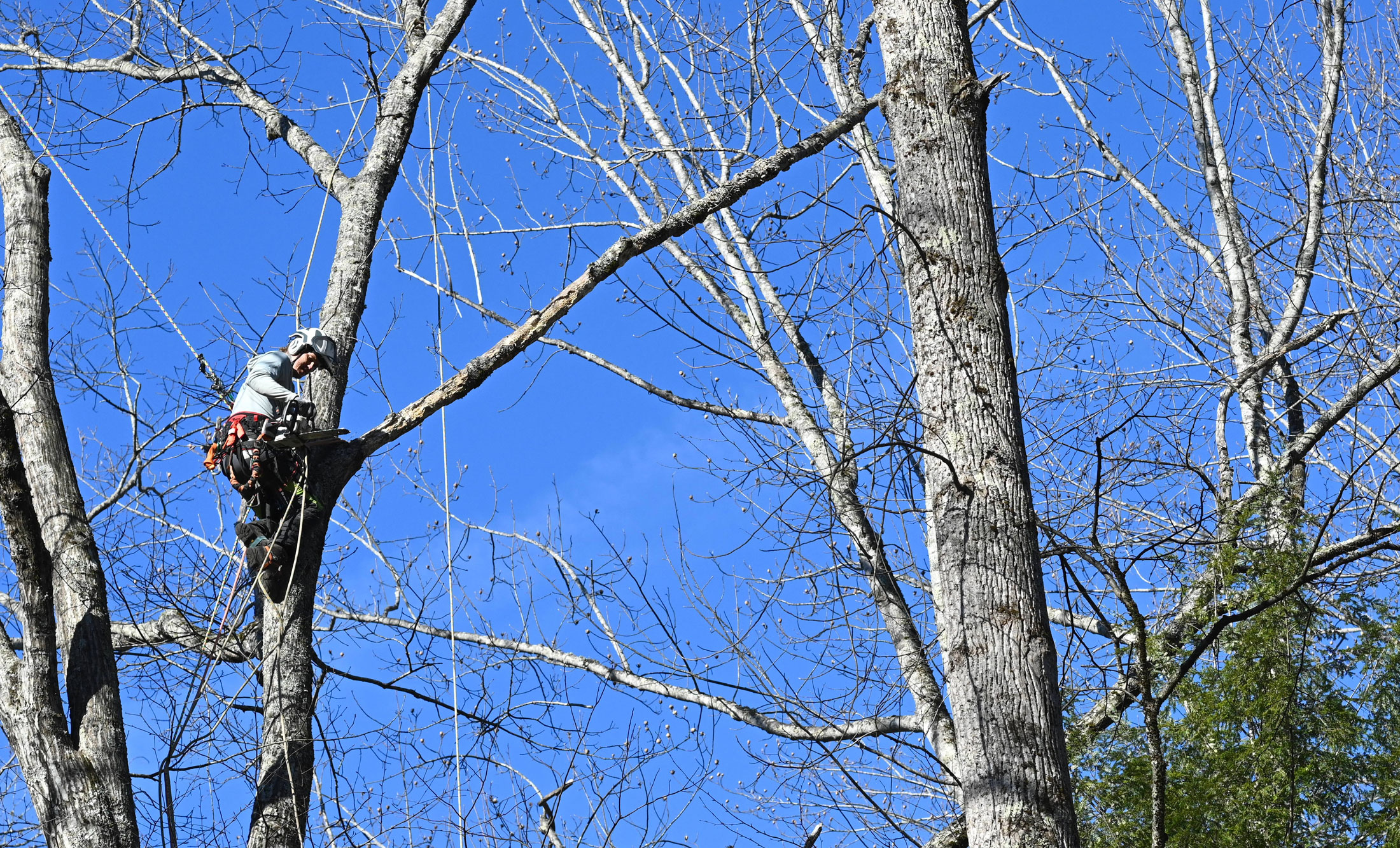

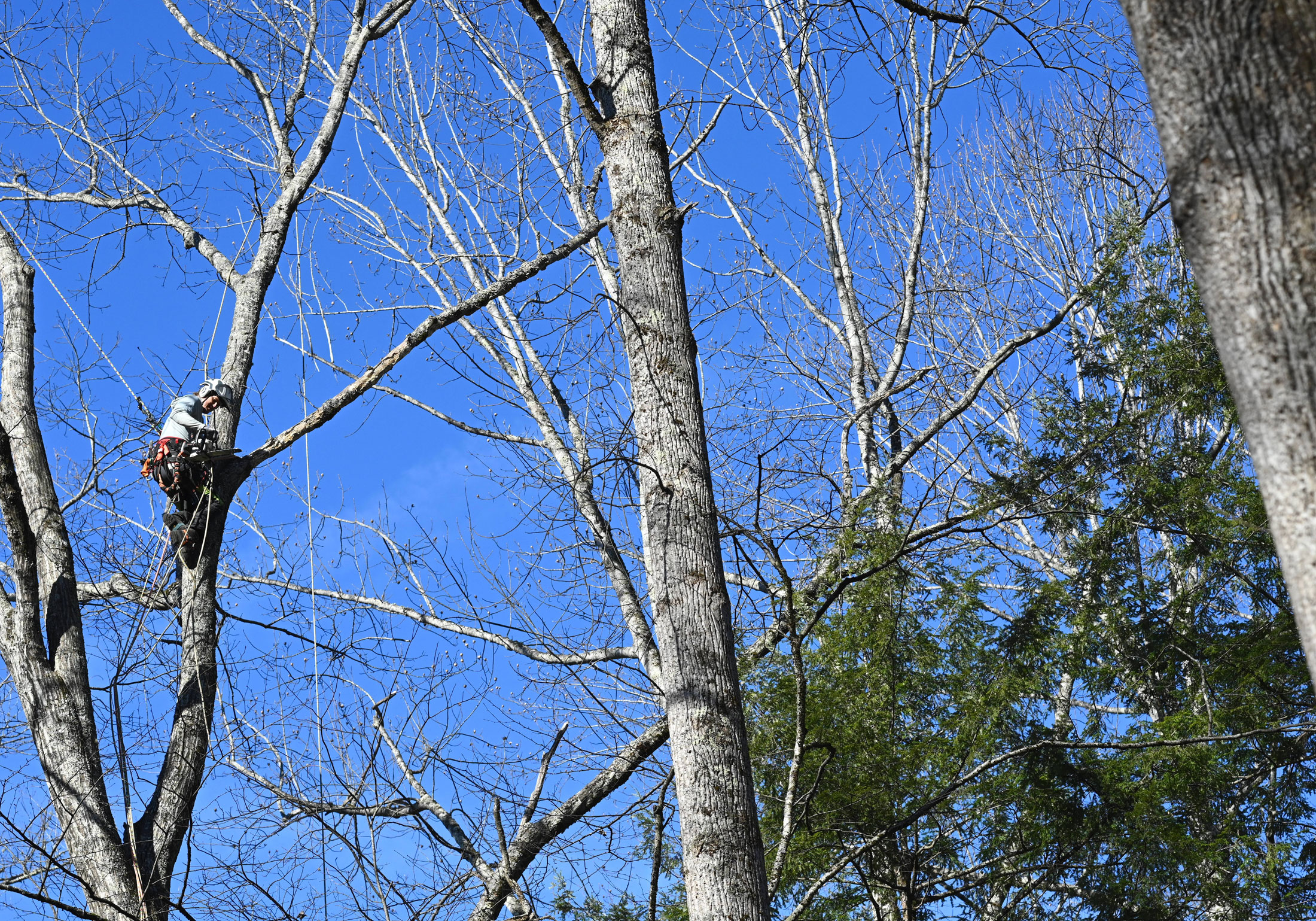
With spikes on his shoes, a helmet on his head, a rope on his harness, and a chainsaw on his belt, Ken Gragg starts to climb. He moves easily up the red maple tree, pausing as he reaches a Y in the trunk. Balancing on his spikes, he assesses his surroundings, draws his chainsaw, and cuts away the smaller half of the Y. It falls to the ground with a crackle and a thump, and Gragg continues climbing.
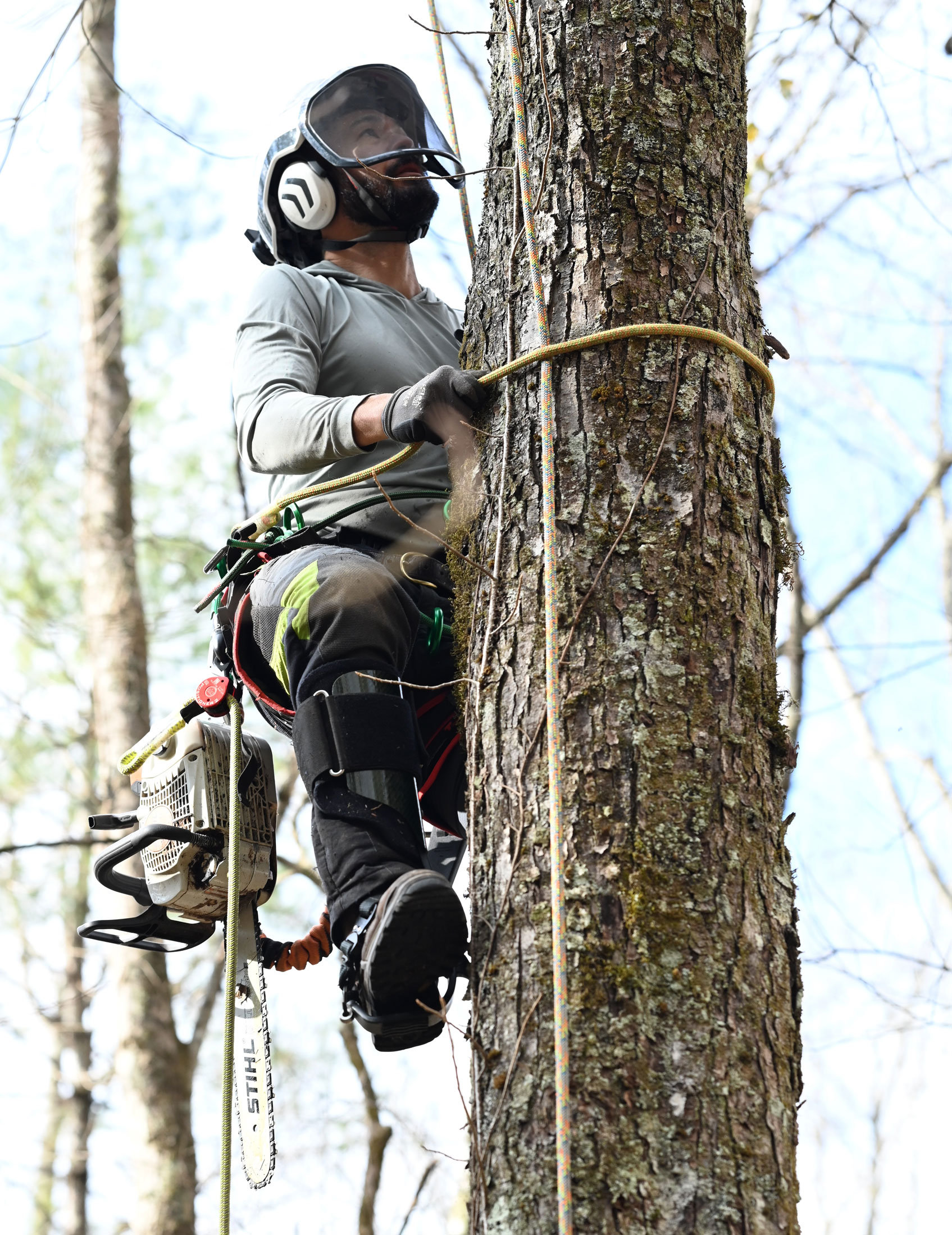
“A lot of people see trees getting cut, and it’s a negative connotation,” says Gragg, supervisor of the recently formed hazard tree crew at Great Smoky Mountains National Park. “But our main goal is just to keep the forest healthy and people as safe as possible.”
Gragg’s team is in week two of four assessing and cutting hazard trees at Elkmont Campground, with 211 sites the park’s largest camping area. The red maple was slated for removal due to its proximity to the bathrooms and the area of rot setting in near its base, creating a risk of failure later.
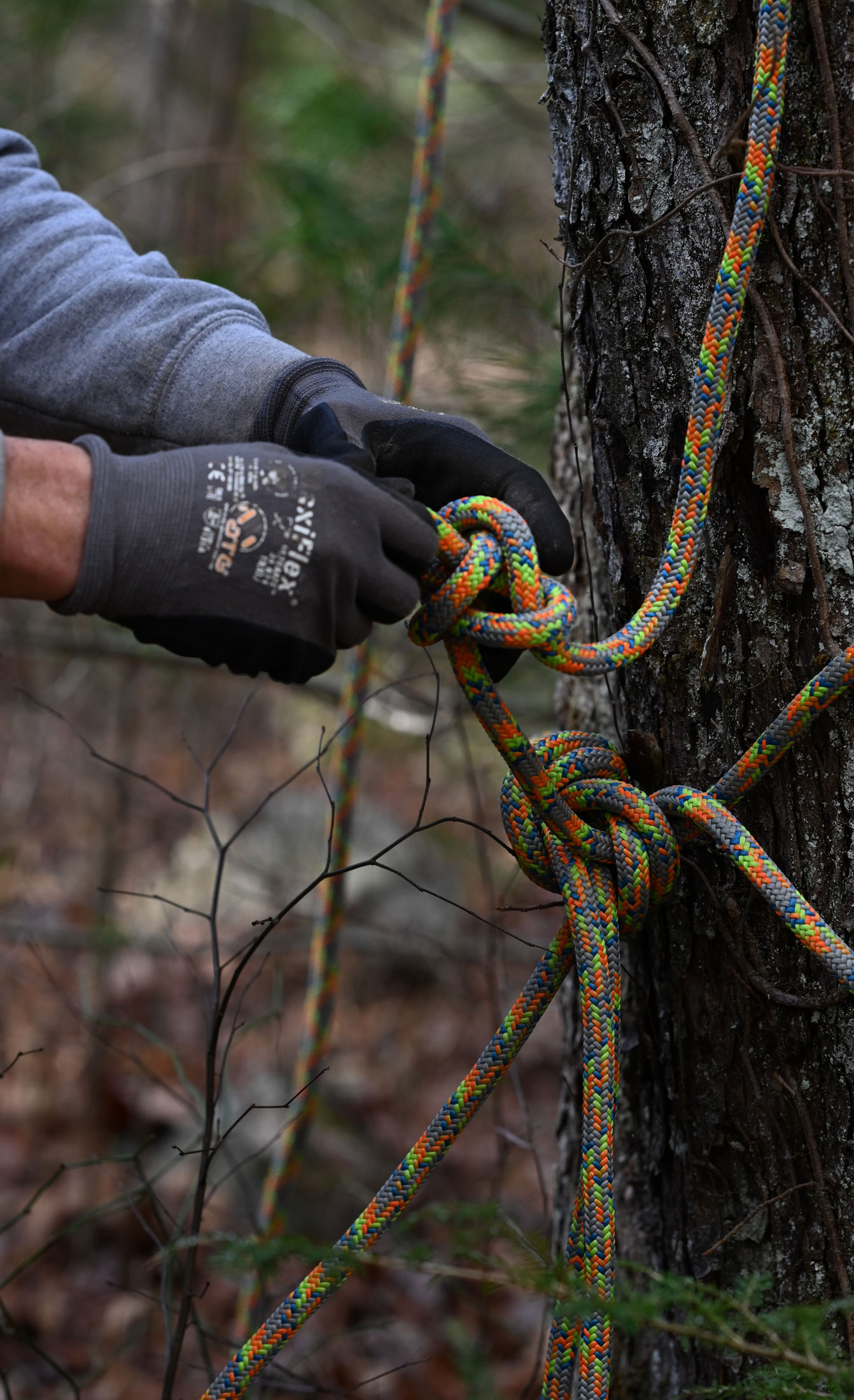
Gragg cuts away branches as he climbs, his footing sure in the spikes and his safety ensured by the rope attached to his harness. The branches gone, he removes the tapering trunk in the tree’s crown, one section at a time. Finally, all that remains is the main stem. Gragg returns to the ground, holding taut a rope he’s tied around the top of the remaining trunk, guiding it in the direction he wants it to fall. His colleague Colyn Petty makes the final cuts, carefully calculating each tap of the axe and slice of the chainsaw. Within an hour of Gragg’s ascent, the tree is on the ground.
“If we can prune a tree so that it’s safer and leave it, that’s our goal,” Gragg says. “But with the age of the forest here, a lot of the trees have reached their average lifespan, and the pressure especially comes from invasive species that are killing a lot of trees.”
Creating the crew
Before forming the hazard tree crew, the park removed dangerous trees primarily by contracting with local companies. But those services are more expensive than in-house labor, with slower response times and less ability to conduct thorough hazard assessments of critical areas like campgrounds.
When the Park It Forward parking tag program was implemented in 2023, the park began planning to use some of the funds to form a hazard tree crew. Gragg was hired as the crew’s supervisor at the beginning of 2024 and selected a team of four to start work that December. Contracted crews still do some tree work—along roads, utility lines, and the park boundary—but the Smokies crew does the rest.
“The goal was to have a professional arborist crew that can do all aspects of hazard tree work and also assess trees that need to be taken throughout the Smokies,” said Gragg. “So the educational background I was looking for is an arborist certification and also the skill set of climbing—so no fear of heights—and then equipment operation. It’s a wide skill set that the four people on the crew have.”
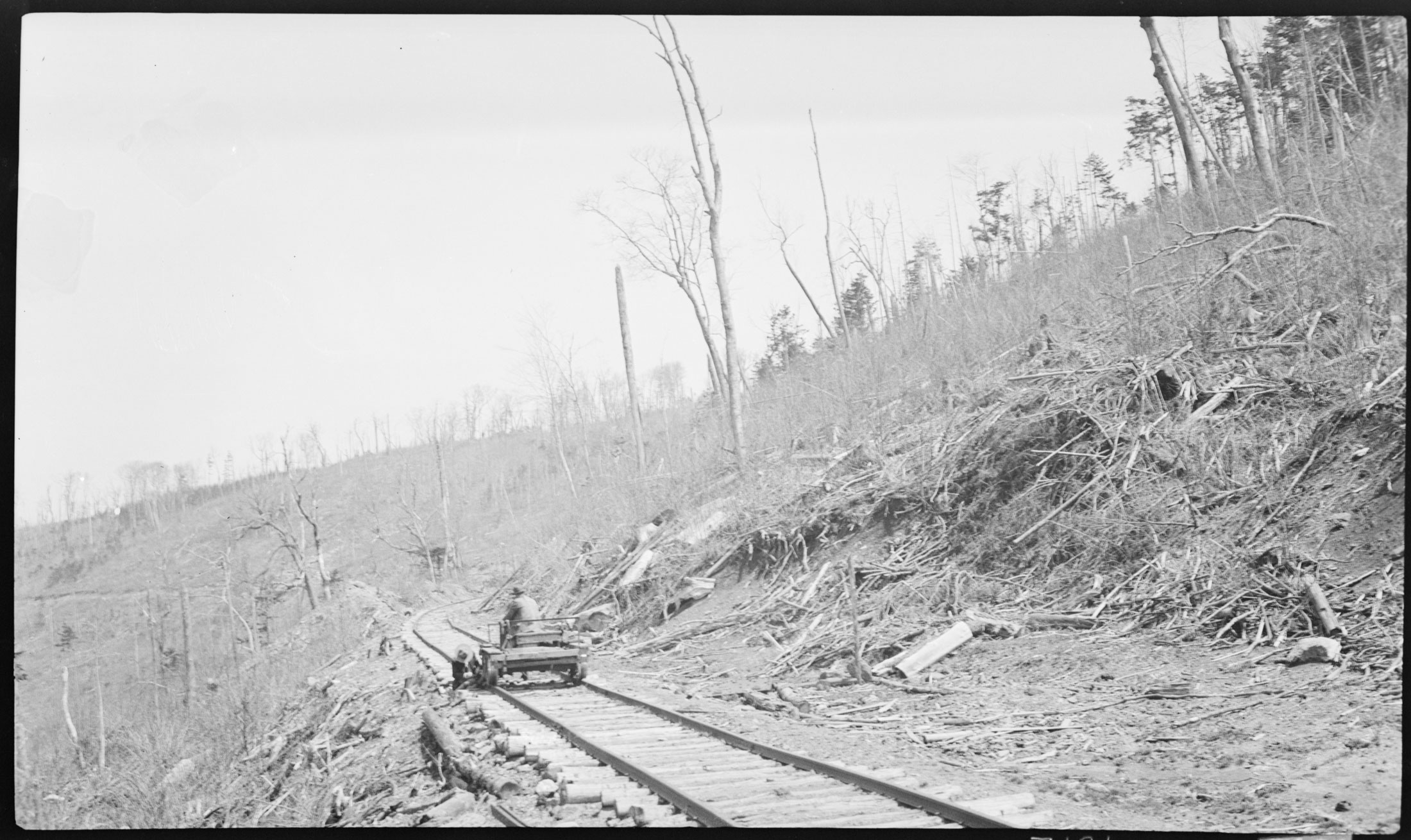
The crew’s formation comes at an apt time in the life of the park. Most of the land that now forms Great Smoky Mountains National Park was logged in the early 1900s, and since then the forest has been regenerating. Now, many of the trees that first sprang up on the newly logged land are reaching the end of their lifespan.
“If you were to clearcut this forest, a lot of what would grow up would be black locust,” Gragg explained. “And black locust has a lifespan, typically thirty to forty years, but they can live to 100. And then they fall over, and that’s the cycle of the forest.”
Other tree species that might pop up on newly cleared land, including red maples like the one Gragg cut down at Elkmont, have similarly short lifespans. Though the longer-lived trees that typically follow as a forest matures can live for much longer—before it died in 2016, a white oak tree in New Jersey was believed to be the nation’s oldest, at 600 years old—their longevity depends on a variety of factors. Soil quality, rainfall, competition from other trees, and orientation to the sun all play a role. Increasingly, so do invasive species.
“We have the hemlock wooly adelgid that’s been taking out the hemlocks, and then also the emerald ash borer that’s been taking out the ash trees,” Gragg said. “So a lot of different factors for hazard trees have culminated in the need for a hazard tree crew.”
The crew has stayed busy over the past year, taking down more than 1,300 hazard trees in 2025 alone. Completing that work with contracted crews would have cost over $1.3 million, more than what the park is paying to maintain the five-person team and specialized equipment.
“Financially it’s a win, and for the safety of the public and the staff, it’s a win as well,” said Gragg. “If somebody calls about a hazard tree endangering the visitor center or a walkway that’s heavily populated, we can run out there and grab it instead of needing to call a contractor in and wait several days for them to arrive.”
Hazards high up
Injuries from falling trees are rare, but they do happen. Between 2007 and 2024, four people died from falling trees in Great Smoky Mountains National Park. Nature is unpredictable, and even healthy trees can fail without warning. To help reduce this risk, Gragg and his crew assess, monitor, and respond to hazardous trees. Their top priority: removing such trees from the park’s ten campgrounds to reduce the risk and make them safer for visitors.
“That’s where people are sleeping,” said Gragg. “If a windstorm comes through, they’re not typically going to get up and pack up camp and leave the campground.”
In the Smokies, the winter months offer a welcome break from the hectic pace of spring, summer, and fall, when visitation is high and the park is most ecologically active. But for the tree crew, it’s the busiest time of the year. This is due both to the fact that it’s safer to fell trees when facilities are closed or more lightly used and to something known as the “bat window.”
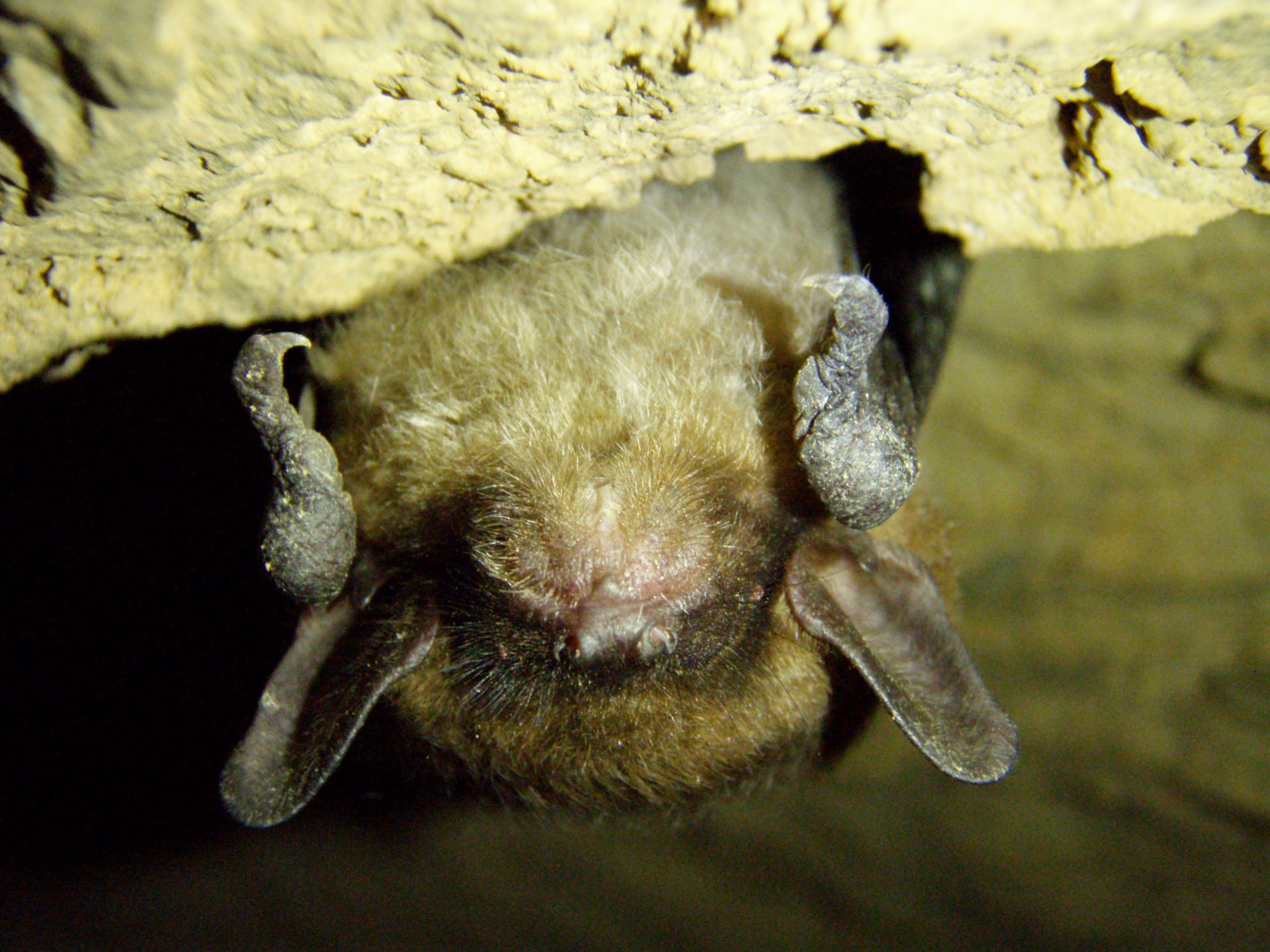
In the wintertime, bats either migrate to warmer climates or hibernate in protected areas like caves or abandoned mines. But in the summer, they often roost in trees. To protect them, the National Park Service is required to assess whether bats are present before cutting any trees in the warmer months. Those restrictions are lifted each year between December and April, so that’s when the tree crew does most of its cutting.
“We come into the campground annually, assess it, mitigate hazards, and for a campground as big as Elkmont it takes us several weeks,” said Gragg. “And when we’re done with Elkmont, we’ll move to Cades Cove, Cosby, Smokemont—all the campgrounds throughout the Smokies.”
The job starts with an assessment. Crew members survey each campground, using their trained eyes to look for dead branches, signs of rot or instability, and proximity to buildings or other areas where people are likely to be. Then they analyze their observations and make a plan.
Outside of the bat window, the team spends more of its time responding to individual hazard tree reports than systematically working through larger areas like Elkmont Campground. In the warmer months, the team often partners with the park’s wildlife crew to determine whether bats are present in target trees.
The tree crew has several tools at its disposal when deciding how to deal with a hazard tree. They can use a tool known as an ascender to quickly climb through the air on a suspended rope, strap on spikes to scale a tree slated for complete removal, or use a bucket truck to get up high and make cuts without climbing the tree itself.
Crew members appreciate the bucket truck, but they love the climbing. It’s a job that requires complete focus, subduing the chaos and stress of daily life to create a paradoxical calm.
“I’m ecstatic that I get to do the job that I do in the Smokies,” Gragg said.
Subscribe to get the latest posts sent to your email.