


If there’s one thing that Ron Rash knows to be true, it’s that writing is a process.

“I think one problem a lot of people have, particularly beginning writers, is that they want it to be too good too soon,” he said.
Rash, who will serve as a faculty member for the 2026 Tremont Writers Conference October 21–25, knows what he’s talking about. The Parris Distinguished Professor in Appalachian Cultural Studies at Western Carolina University, Rash is the author of 20 books of poetry and fiction and the winner of just as many writing awards.
His younger self would likely have been incredulous to hear that such success awaited him. Growing up in Boiling Springs, North Carolina, Rash often struggled in school, failing the sixth grade and nearly failing high school biology. He didn’t begin writing until his second year of college, as an English major at Gardner–Webb University. Even then he spent years producing “very mediocre literature.” But with every new draft, revision, and re-revision, he honed the craft that would later earn him widespread acclaim.
“I believe, personally, that a lot of people who could be really good writers aren’t willing to stay with it long enough,” he said. “They give up too quickly.”
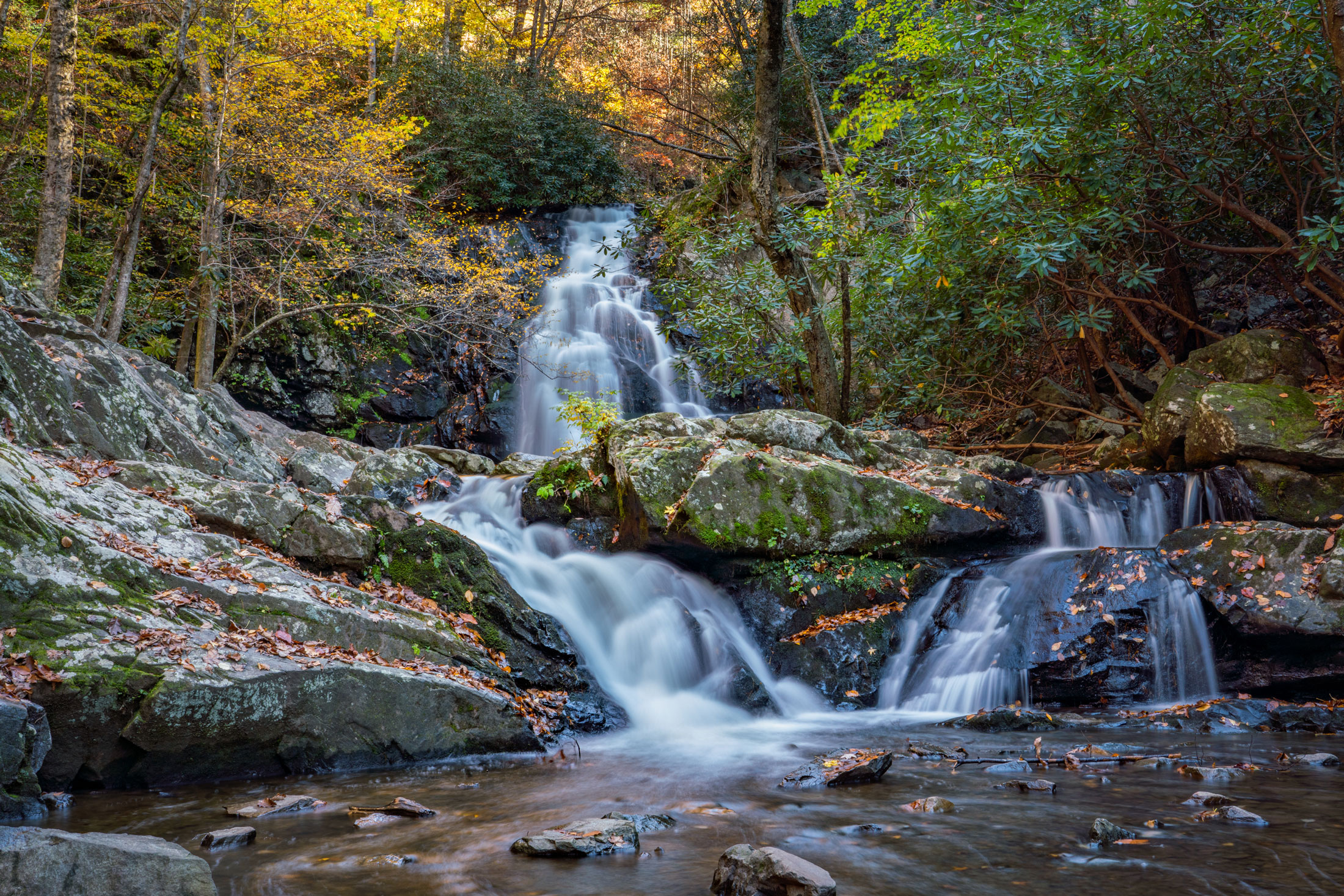
At the 2026 Tremont Writers Conference, slated for October 21–25 at Great Smoky Mountains Institute at Tremont, located in the heart of Great Smoky Mountains National Park near Townsend, Tennessee, participating writers will receive the inspiration and encouragement they need to keep going—by interacting with accomplished authors like Rash, and by living immersed in the breathtaking spectacle of autumn in America’s most biodiverse national park.
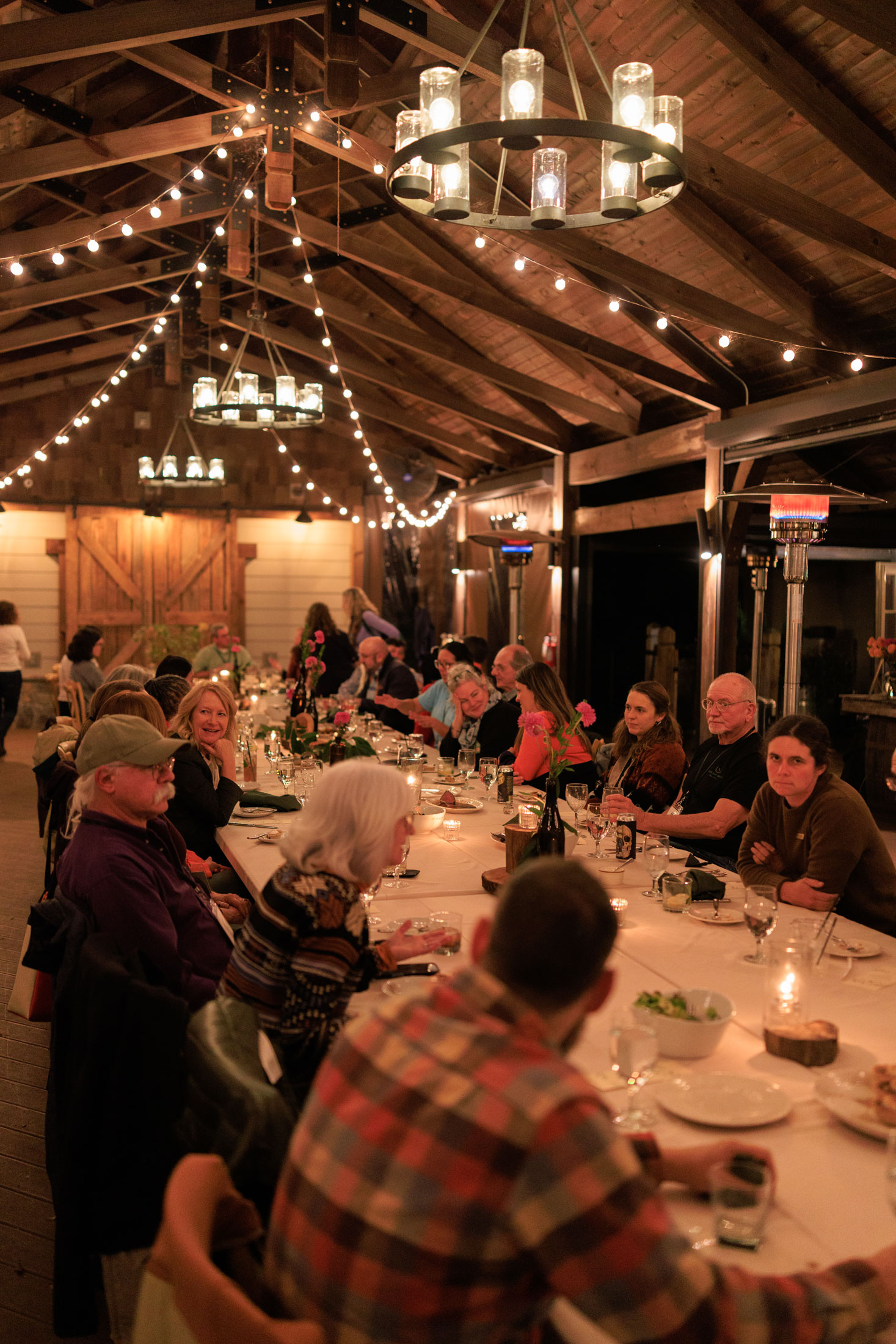
“When Tremont’s Jeremy Lloyd and I first began creating this conference just after the pandemic, I never dreamed that we’d be meeting and talking to dedicated and successful writers like Ron Rash,” said Frances Figart, Smokies Life’s creative director and co-organizer of the conference. “As a writer who is always striving to hone my craft, I’ve been so inspired personally by our author workshop leaders and just as rewarded by seeing how positively the conference participants respond to their coaching and encouragement.”
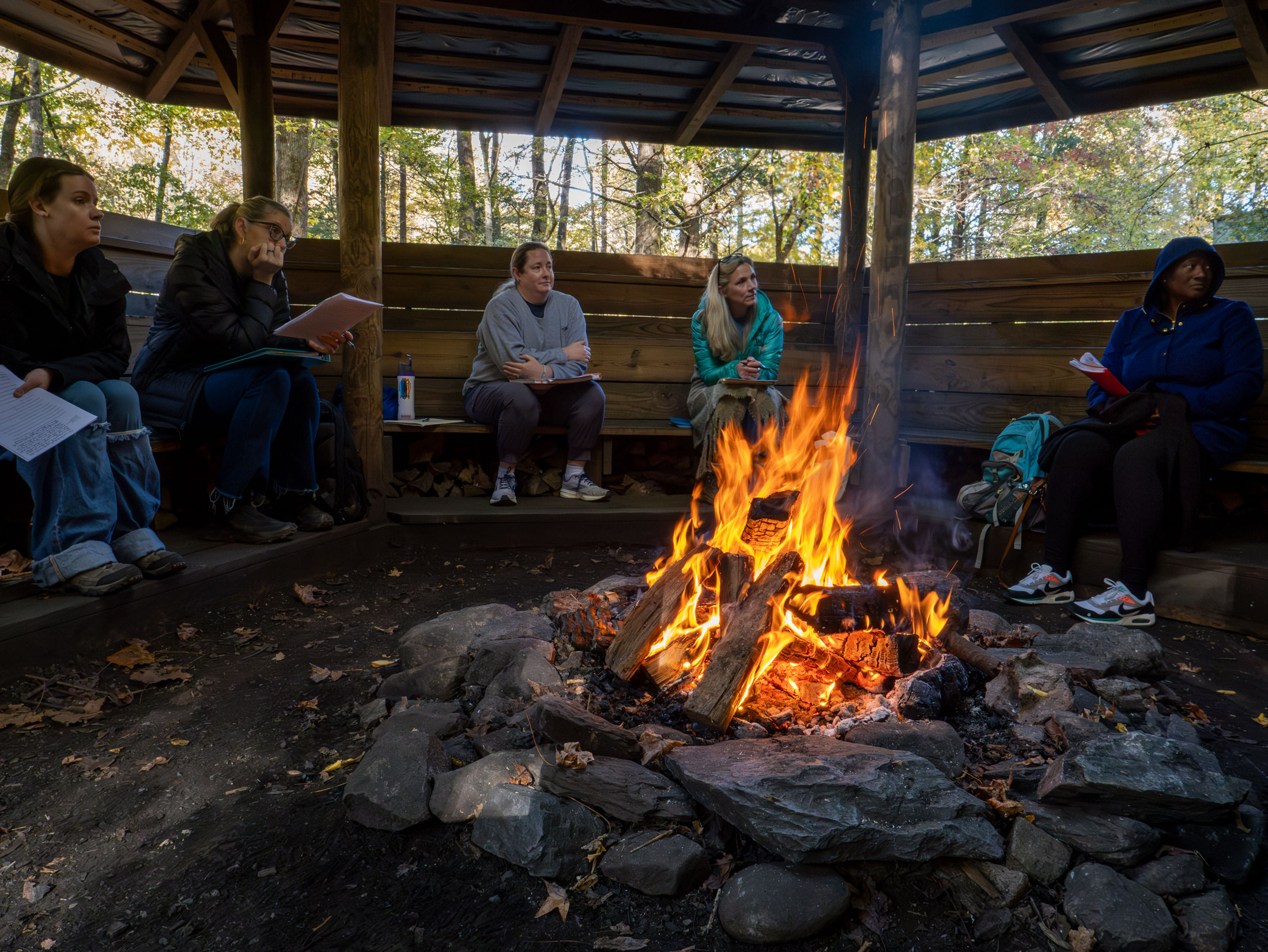
Rash will attend as the conference’s guest writer. Meanwhile, celebrated playwright and Knoxville poet laureate Linda Parsons will lead the poetry cohort; recent Kentucky poet laureate, memoirist, and 2025 conference faculty member Crystal Wilkinson will return to lead the nonfiction cohort; and award-winning Cherokee novelist Kelli Jo Ford will lead the fiction cohort. The conference, co-organized by Smokies Life and Great Smoky Mountains Institute at Tremont, will include daily morning group workshops with faculty members, one-on-one mentoring sessions, afternoon excursions to foster deeper connections with the region’s natural and cultural history, and evenings filled with group dinners, fellowship, and readings by featured authors.
“As a workshop leader I want to facilitate generosity and rigor,” said Ford, a citizen of the Cherokee Nation who teaches writing at the Institute of American Indian Arts in New Mexico. “We come together and we work to grow and learn as writers, and we work together to find what’s shining in our pieces and to help each other bring that out.”
Like Rash, Ford didn’t travel a straight-line path toward her writing career. She was born with a love for reading and journaling but without a blueprint for professional success. A first-generation college student, Ford enrolled at the University of Virginia after high school but quickly found herself overwhelmed, dropping out three semesters later. She didn’t try college again until she was 25 years old and married.
“I learned to be a student and found creative writing classes were kind of my place,” she said. That’s when she began to write more seriously, the gravitational pull of home and heritage quickly asserting its power over her work. Though she’s been a “pretty nomadic” adult, her fiction returns again and again to the landscapes and people of her childhood—Cherokee Nation land in Oklahoma where the sunsets would “light up the sky blood orange and blue and everything in between,” as Ford writes in her 2020 debut novel Crooked Hallelujah, and the “winter wheat and geometric coastal patches dotted with cattle” of north Texas.

“Sometimes I think that the places where we’re formed are the places that feel the most rich in terms of fiction,” she said.
Rash agrees. He is a product of the Southern Appalachian Mountains, as were generations’ worth of his forbears. It’s where he still lives, about two hours from his hometown near his Western Carolina University classroom in Cullowhee. And in novel after novel, poem after poem, it’s where he returns. He’s an admirer of the region’s deep tradition of figurative language (“If it gets any drier, the catfish will be carrying canteens,” a character quips in his 2015 novel Above the Waterfall) and fascinated by how the mountain landscape affects its people’s psyche. To some, it imparts a feeling of womb-like protection—“like the world was wanting to be especially generous before cold winter’s hardships,” Rash writes of autumn in 2023’s The Caretaker. To others, it fosters a sense of ominous overwhelm, as with the stand of white oaks “whose leaves seined out much of the sunlight, the trees themselves pressing close,” creating a dimness “like entering a darkened theater,” in 2006’s The World Made Straight.
Good writing can be of any place—Africa or the Appalachians, Middle-earth or the Moon—as long as it conveys the essence of that place, and the lives formed within it.
“One of the things about the writers I love most is that they give us a sense of feeling like we’ve been there,” Rash said.
For both Ford and Rash, Great Smoky Mountains National Park is an especially meaningful setting. For Rash, it’s the home of cherished memories of fishing and hiking exploits from decades past, the backdrop for his New York Times bestselling novel Serena, and an object of fascination.
“Just the fact that the park was built at all—that story is absolutely miraculous,” he said. “And to have done that in the depths of the Depression, it’s such a heartening story.”
For Ford, the conference is an opportunity to return to the land her people, the Cherokee, called home for thousands of years before most of them were forced to relocate to Oklahoma on the deadly Trail of Tears. Those who remained became the present-day Eastern Band of Cherokee Indians, whose territory, known as the Qualla Boundary with the town of Cherokee as its capital, lies adjacent to the park’s North Carolina side. Ford visited the Qualla Boundary a few times as a kid, but so far only once as an adult.
“It kind of blew me away how moving it was to be there on that land,” she said of the earlier experience, when she was invited to lead a writing workshop at the Museum of the Cherokee People. She hopes her child, also a Cherokee Nation citizen, will be able to join her for a few days at Tremont and a subsequent trip to Cherokee.
A sense of anticipation and connectedness runs deep as these two esteemed authors look forward to what October has in store, and they’re eager to help craft an experience that will inspire participating writers for years to come. Ford frames Tremont as a miniature version of the Master of Fine Arts program she participated in 20 years ago. She still numbers many of those classmates among her closest friends and most trusted readers.
“As a workshop facilitator, I think that’s the real good stuff,” she said. “I want to create a space where people can feel free to be themselves and make connections. I want to facilitate a space that’s encouraging and positive and still rigorous, where we’re pushing each other, but in the spirit of growing and supporting.”
Writing is a solitary vocation, but communal experiences like the Tremont Writers Conference can act like a jumper cable on an empty battery: sparking tired minds with new vigor, reanimating a battered self-confidence, injecting enough energy to climb over the next bout of writer’s block.
“Most writers are introverts, but conferences allow us a chance to be with people who are like us,” said Rash. “I really enjoy it— the sense of fellowship, being in a place where you’ve got this shared sense of something that we not only want to do well but are celebrating too. That’s pretty wonderful.”
The 2026 Tremont Writers Conference, co-sponsored by Great Smoky Mountains Institute at Tremont and Smokies Life, will take place October 21–25 in Townsend, Tennessee. Applications will be accepted through May 15. Visit writers.gsmit.org for more information.
Subscribe to get the latest posts sent to your email.