

Under cloudy skies that soon bore a dripping drizzle giving way to a steady rain, about 200 people gathered February 26 to witness a historic event: the ancient Noquisiyi Mound in Franklin, North Carolina, returning to Cherokee ownership for the first time in more than 200 years.
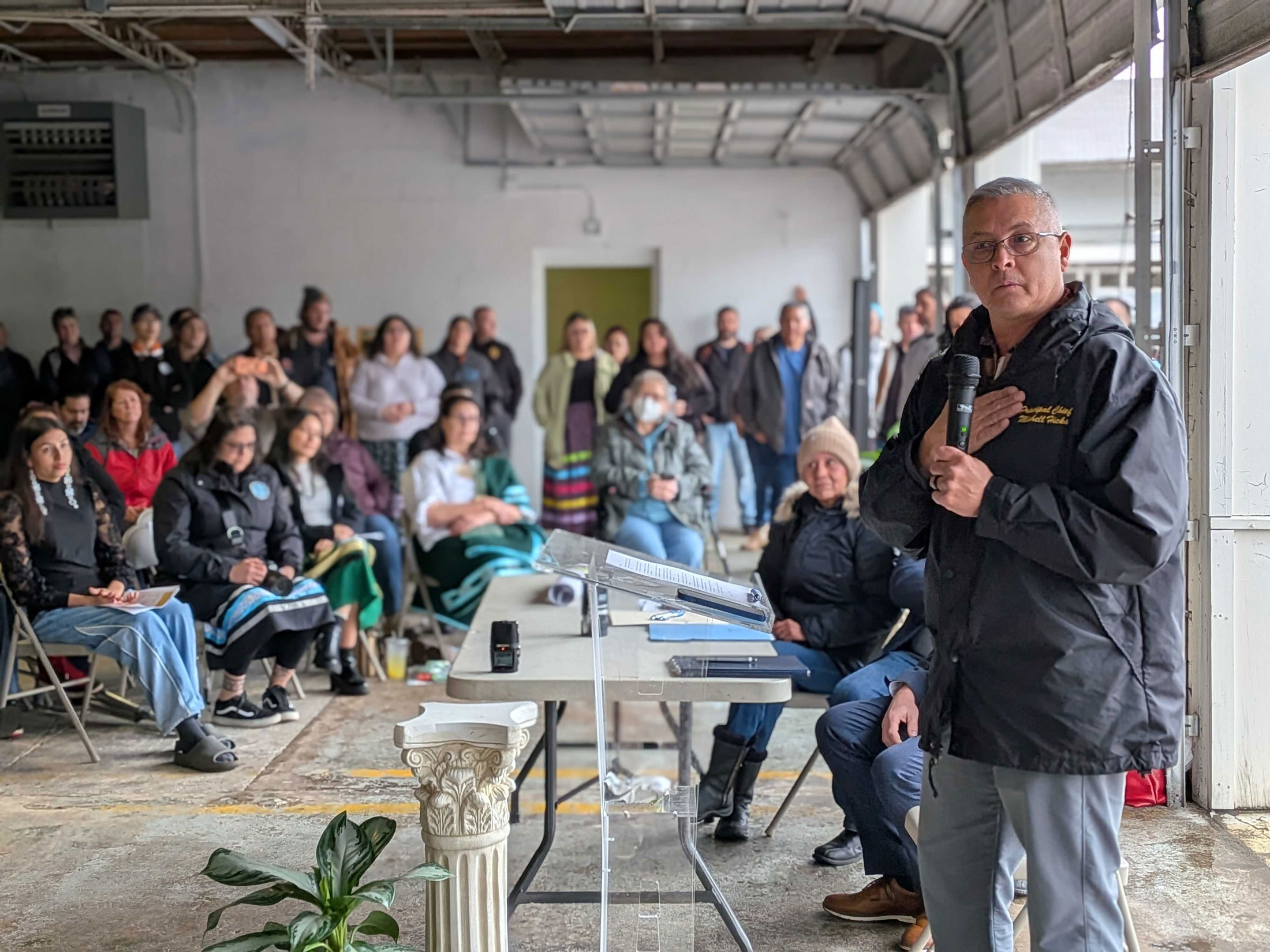
“This was part of the heart of Cherokee territory, this area,” Eastern Band of Cherokee Indians Principal Chief Michell Hicks told the crowd gathered next to the mound. “And so, as we think about the burden of bringing this mound back, it’s not just a piece of land. It’s part of us. It’s part of the Cherokee people.”
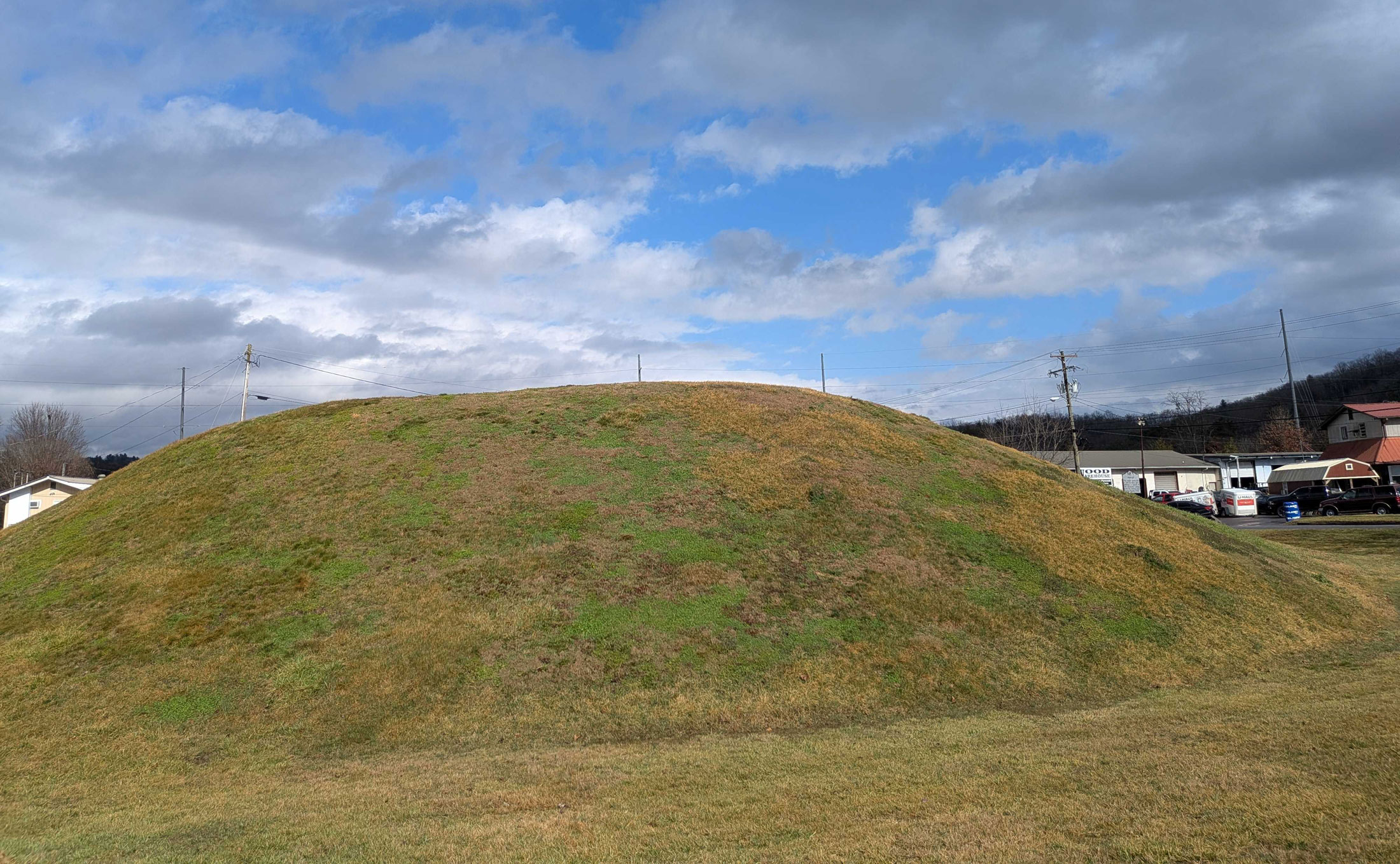
The mound can be easy to overlook while driving the two-lane roads that run on either side of it, the main ingress and egress to Franklin’s nearby downtown. The grassy hump of earth rises from a 0.75-acre parcel, an island of untouched land hemmed in on four sides by roads and parking lots. However, Noquisiyi Mound (pronounced no-KWEE-shee-yee and previously known as Nikwasi) is one of the most culturally significant sites in the entire region. Built about 1,000 years ago, it was the spiritual and cultural center of the Cherokee town that once thrived where Franklin stands today and is the largest unexcavated mound in the Southeast. While not within the Qualla Boundary established in 1876, Franklin sits within the historic Cherokee homeland.
In Cherokee society, mounds were the heartbeat of the community. They were always built on level, riverside bottomlands to allow for dances, ball games, and going to water ceremonies, ethnographer James Mooney wrote in Myths of the Cherokee. According to Mooney, the community’s women piled the earth used to form them one basketful at a time, and the bodies of revered leaders and sacred objects were often buried within the structure. But the first step in creating a mound was to build a fire. A hollow cedar trunk would be inserted around the blaze to protect it as the dirt was piled higher and higher, extending all the way up to a structure known as a townhouse that would later be built atop the mound.
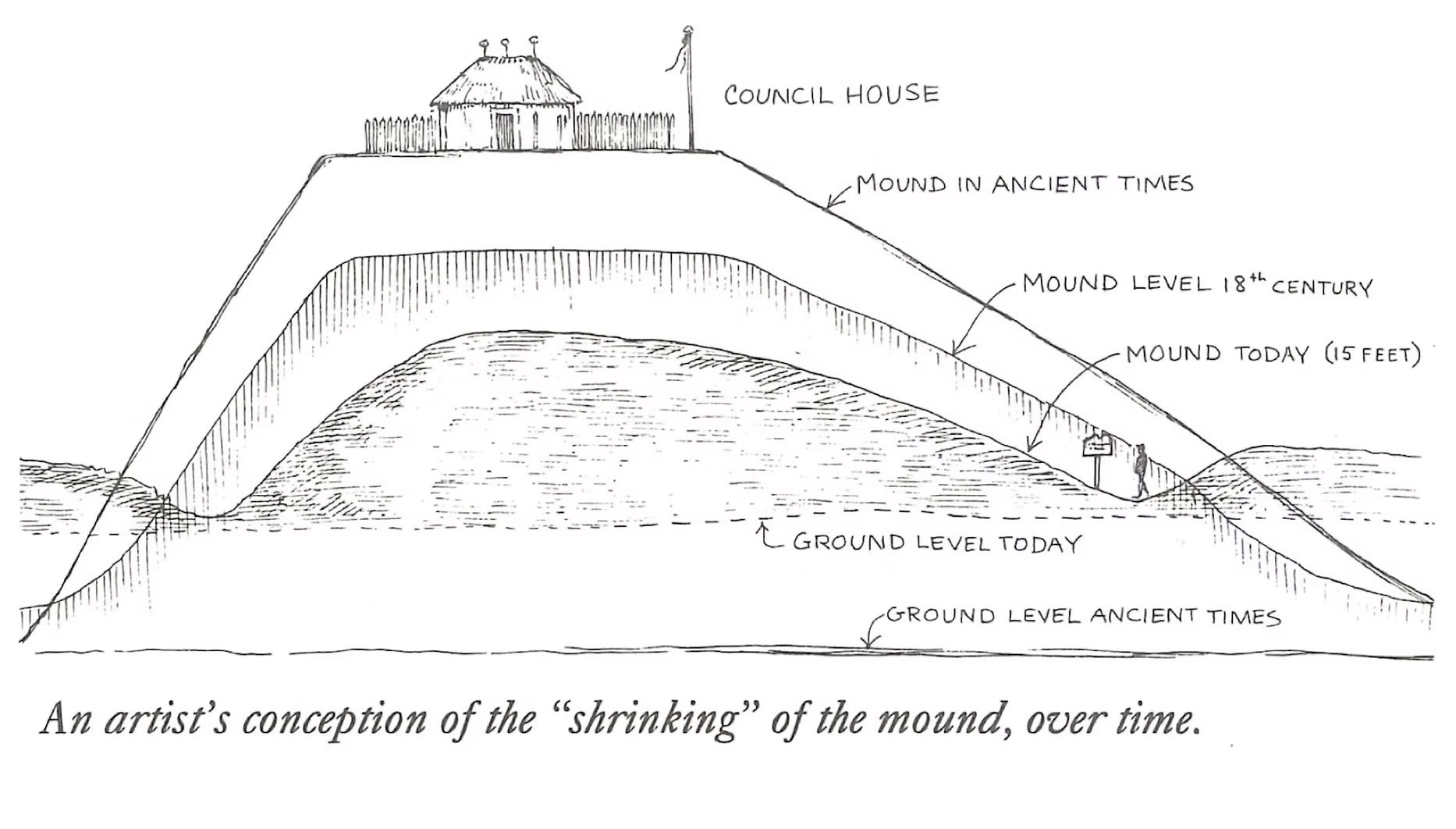
Throughout the Southeast, indigenous cultures practiced mound-building for thousands of years prior to European contact, but most of these sites have been plowed, developed, or excavated over the centuries that have unfolded since the Cherokee people were forcibly removed from their land. But not Noquisiyi. Though it was wrenched from Cherokee ownership in 1819, subsequent owners left the mound intact. The Town of Franklin purchased it in 1946 following a community-wide fundraising effort to save it from development. Even schoolchildren contributed their pennies to reach the $1,500 purchase price.
Heated conversations about the mound’s future began after a town employee sprayed it with herbicide in 2012. The town had wanted to replace the existing grass, which had to be mowed frequently during the warmer months, with a shorter-growing variety that would be easier to maintain. But the action spurred a backlash from the Cherokee community, many of whom saw it as culturally insensitive, especially considering that tribal leadership hadn’t been consulted first. The following year, Hicks—then in his second term as chief—asked the town board to return the mound to the tribe, but it refused.
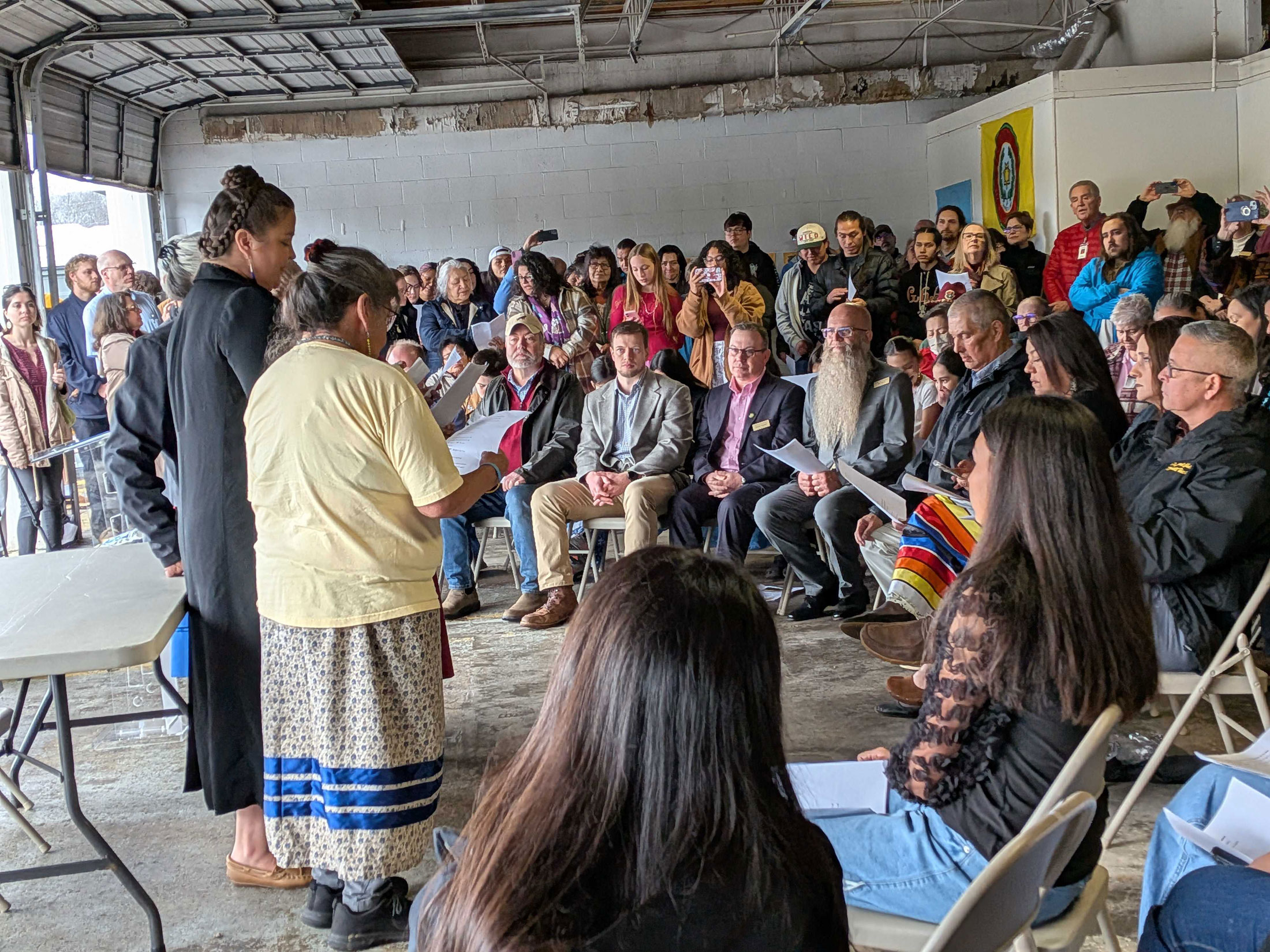
However, the controversy led directly to the creation of Noquisi Initiative (formerly Nikwasi Initiative), and ultimately to February’s deed transfer. Noquisi Initiative is a nonprofit whose board is composed of equal numbers of Cherokee people and Macon County residents. It seeks to preserve, protect, and promote culture and heritage on Cherokee ancestral lands in Macon County, and held the deed to the mound from 2019 until February’s deed transfer. Before becoming an official nonprofit, the organization now called Noquisi Initiative was known as Mountain Partners, a group of people “just trying to figure out how to make this controversy with the mound a good thing,” said Juanita Wilson, a member of the Eastern Band of Cherokee Indians who has served as the initiative’s co-chair since its inception.
“We met and decided that the politics wasn’t for us yet,” she said. “We needed to know about each other. We needed to know our own history with this mound.”
As the group continued to meet and get to know each other, Wilson said, “we learned there was so much love and dedication to this mound” from all sides. In addition to advocating for Noquisiyi’s preservation and interpretation, Noquisi Initiative has spearheaded many other programs and projects over the years, such as establishing a Cherokee Heritage Apple Trail along the nearby Little Tennessee River Greenway and designing and placing interpretive signs at the Junaluska Grave Site in Robbinsville, North Carolina.
Meanwhile, the idea of returning the mound to the Cherokee people gained momentum. Following the November 2025 elections, two new members joined the Franklin Town Council, and on January 5, 2026, the body’s first meeting following December’s swearing-in ceremony, it voted unanimously to deed the land to the EBCI.
“If you ask me, ‘What’s the economic benefit to the Town of Franklin of returning the mound?’ the honest answer is, ‘I don’t know’ and my other answer is, ‘I don’t care,’” said Mayor Stacy Guffey. “Because that was never the point. The reason this council here voted unanimously was to do the right thing, to acknowledge a truth older than our town, older than our state, older than our nation—that sometimes doing the right thing matters more than economics, that sometimes the soul of a place is worth more than the price of a parcel of land.”
That’s a truth Guffey knows in his gut. He told the crowd about his family farm just a few miles outside of town, and how after his great-grandmother passed away it was divided and sold. He saw tears in his great-uncle’s eyes as he stood at the fence, looking at the land he had plowed and the buildings he had built. Money from the sale would be gone in a few months, his great-uncle said, but the land was gone forever.
“That moment settled deep to me,” Guffey said. “It shaped the way I see place and memory and responsibility, and the way mountain people understand who we are. Now that family story is not the Cherokee story. The scale is different. The history is different. The wound is different. But the feeling—that sacred connection to land, the belief that you don’t hold it for yourself, you hold it for your children and their great-grandchildren—that’s something that we can share.”
In his comments, Hicks said that the trauma of the past—a third of the Cherokee people dying on the Trail of Tears, children being taken from their families and forced into boarding schools, ancestral lands being taken piece by piece—doesn’t leave in the space of just a few generations. But the land transfer is a sign of healing.
“You guys are sharing with us part of our history,” he said. “You’re bringing back just a piece of who we were. It’ll never be the same. Never in this future will it be the same, but you have helped to mend that little bit, and that’s why I’m so appreciative of everybody that is represented here today.”
To Adam Wachacha, who represents the Snowbird and Cherokee County communities on the EBCI Tribal Council, the rain that fell from the sky as the speaking program began was a hopeful sign for the future.
“Anytime it rains, it washes away anything that’s out there, so it’s like a cleansing,” he said. “It’s almost perfect weather. This rain is washing away for a new beginning.”
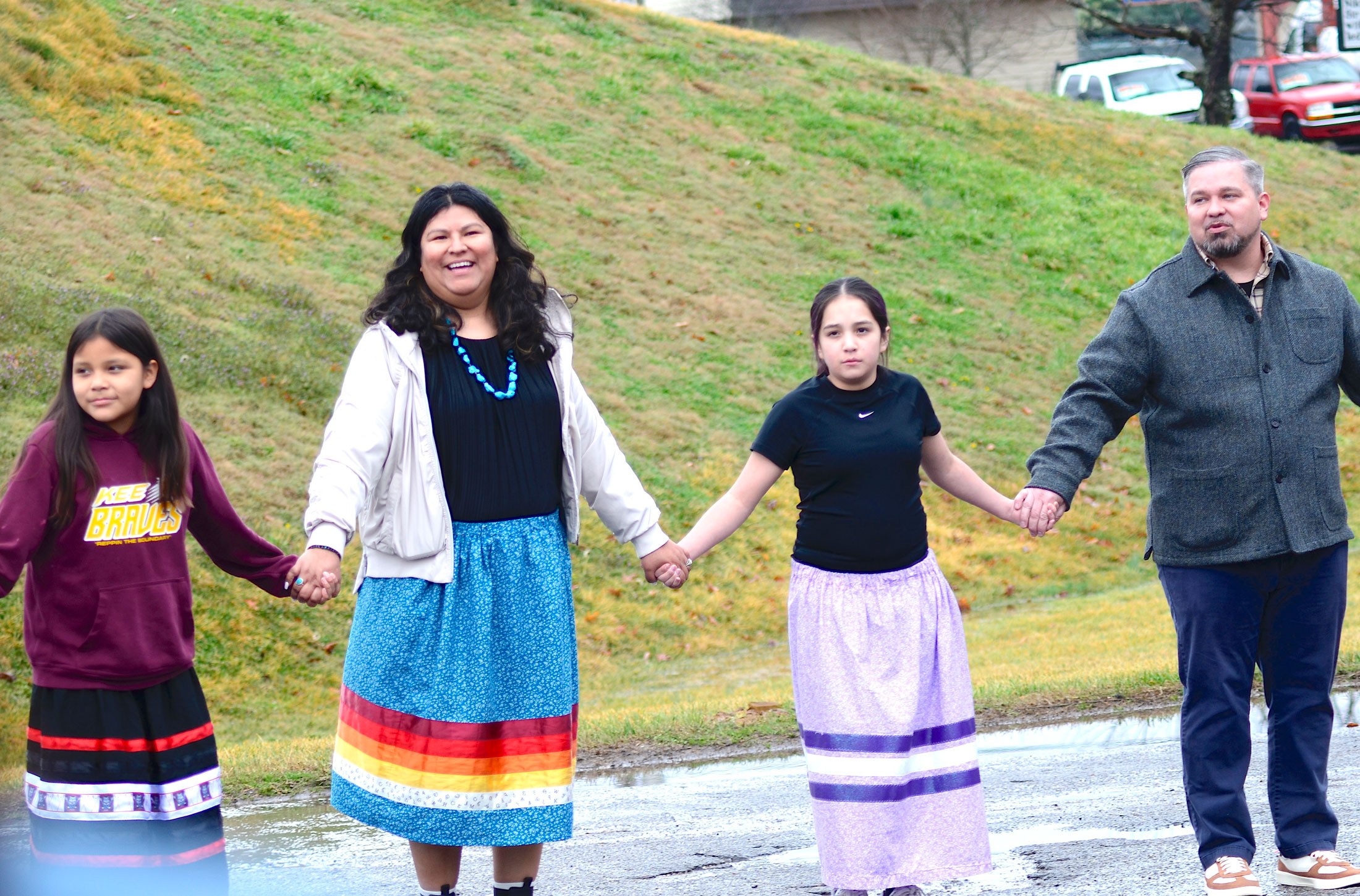
But as the speakers wrapped up and the paperwork was signed, sunlight began to pierce the clouds. A group of Cherokee women led the assembly in the Cherokee-language “Evening Song,” and children from the Aniyvwiyahi Dancers Youth Group performed the Bear Dance. The rain stopped, and the conclusion of the ceremony—the Friendship Dance, led by the children with all attendees invited to participate—took place outside, under an uncharacteristically warm February sky.
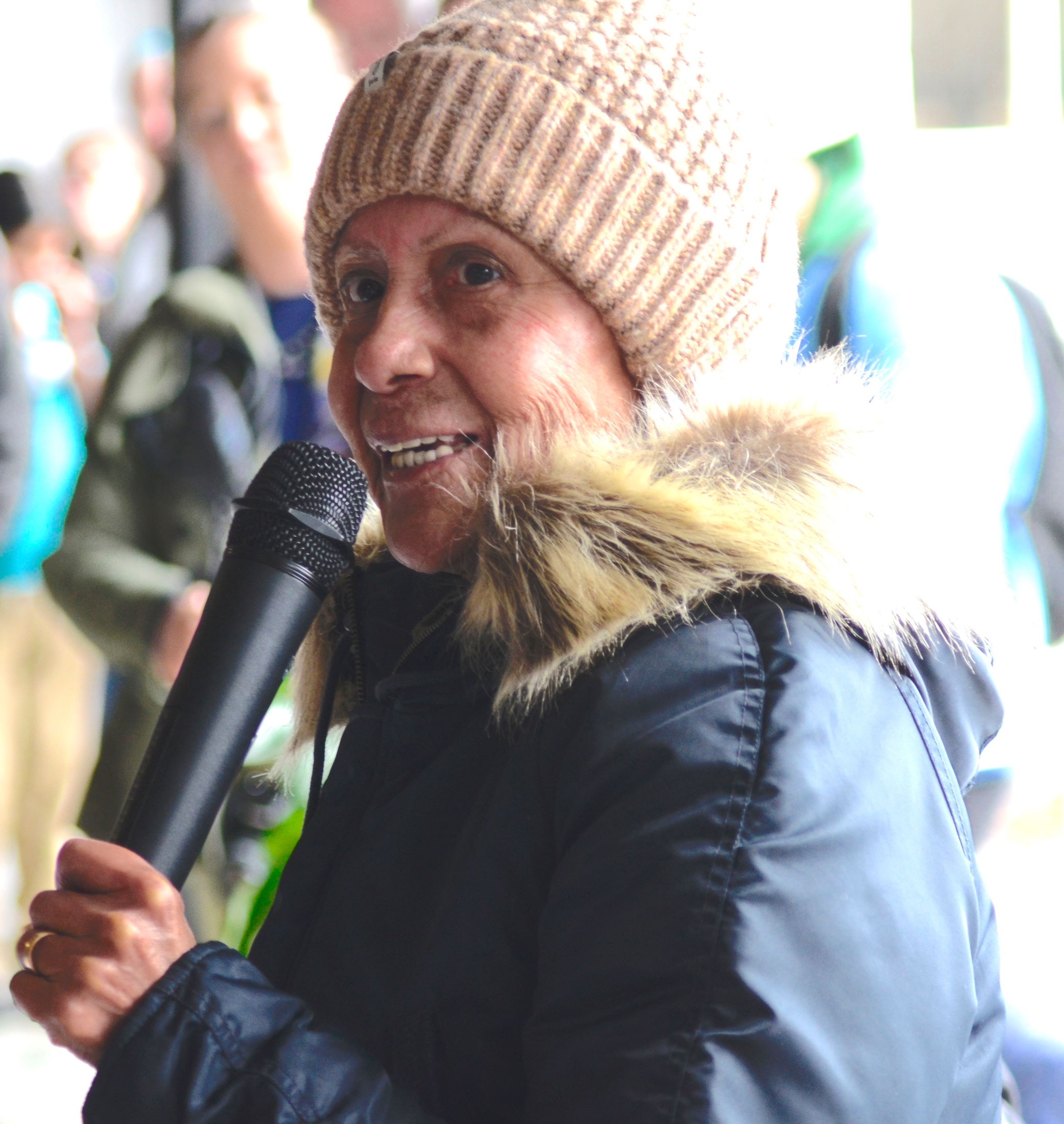
For Wilson, the day was like the beginning of a new life, full of hope and potential.
“It’s almost like giving birth to triplets,” she said. “It’s like the third phase—Mountain Partners, the Noquisi Initiative, and now, what we are going to become, and what do we focus on? I’m not sure what it will entail, but I know it will be great.”
Subscribe to get the latest posts sent to your email.