



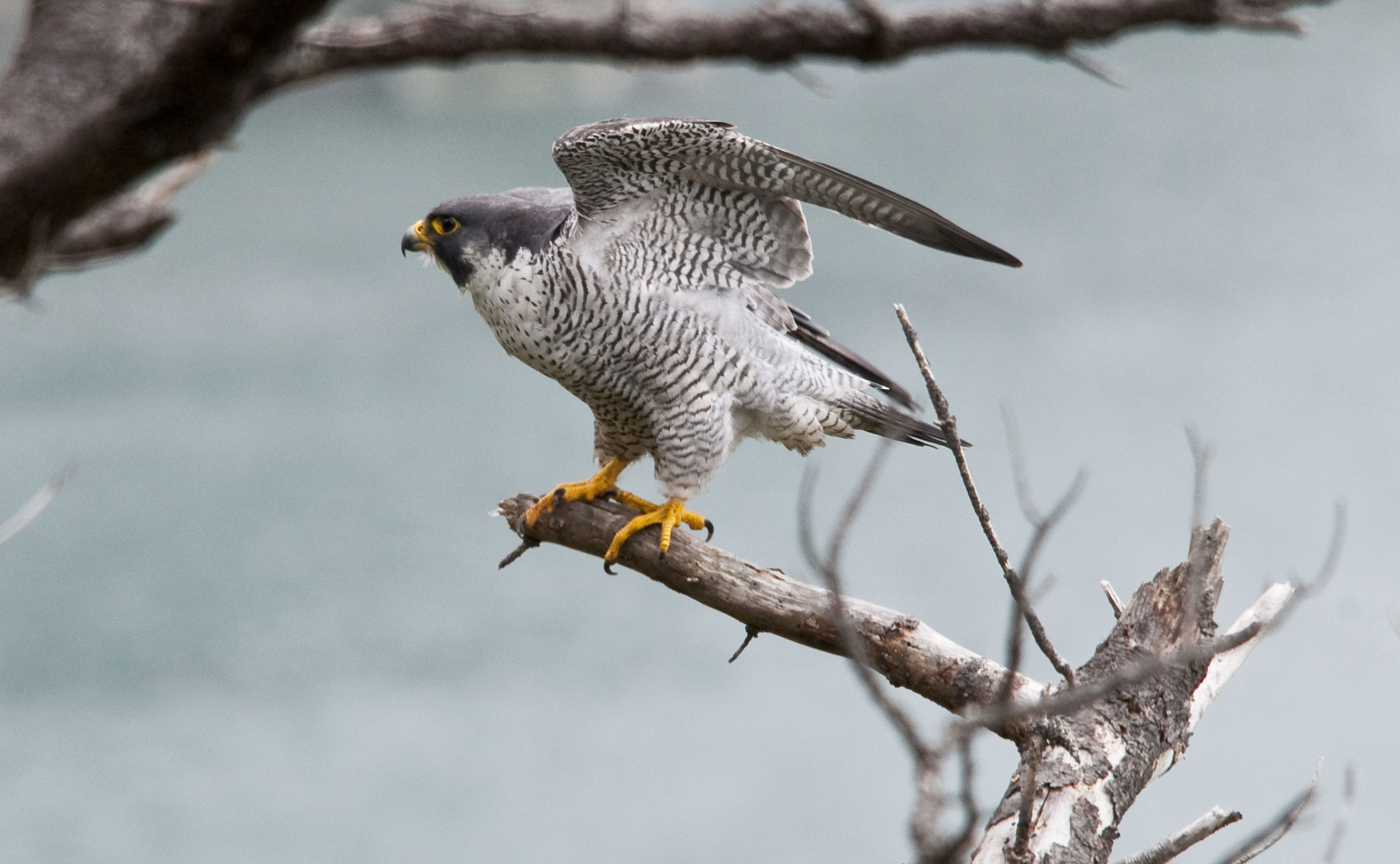

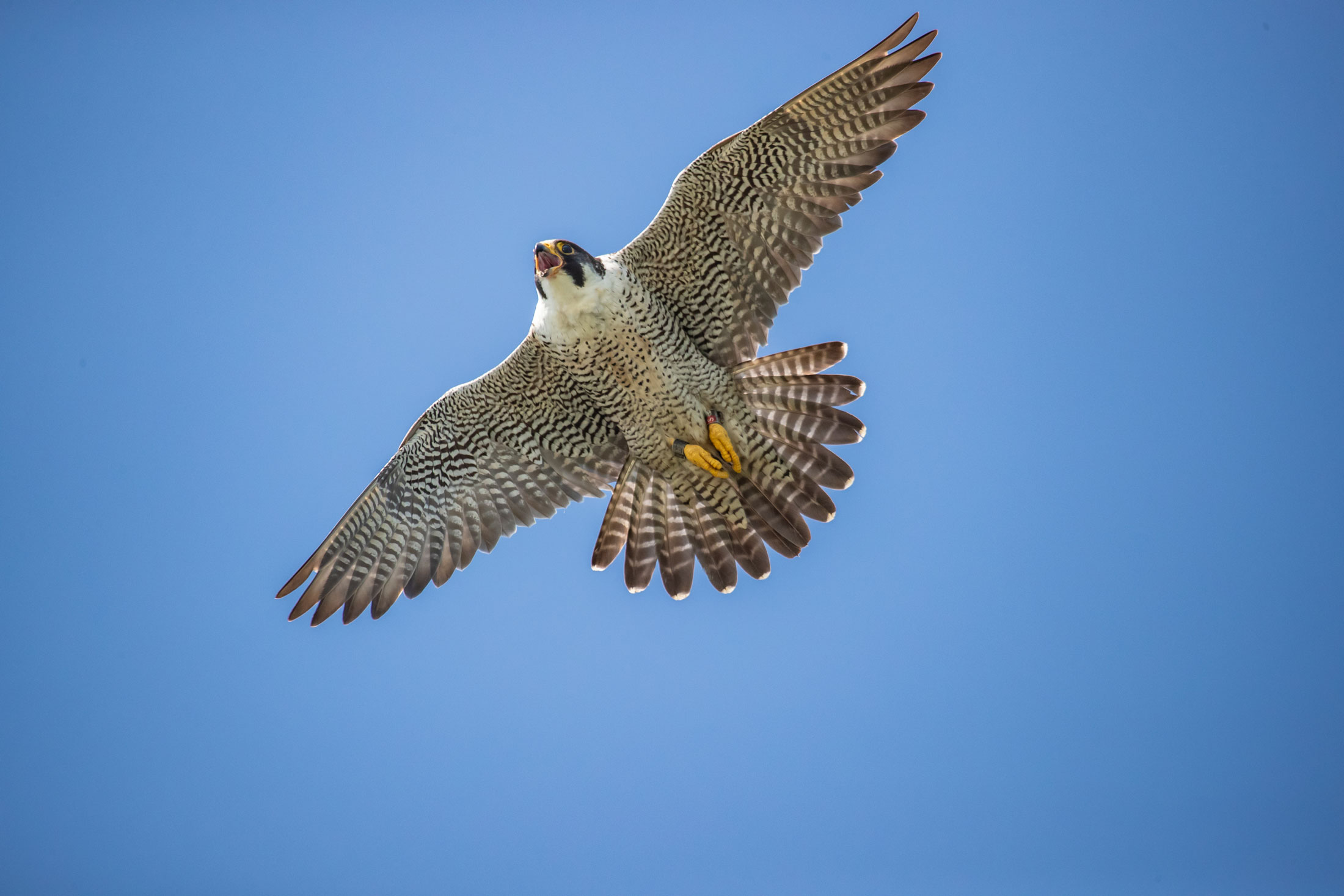
With striking white-and-gray plumage, yellow beaks and talons, and powerfully compact bodies, peregrine falcons (Falco peregrinus) are beautiful birds in any posture. But they’re downright magical in the air—aerial acrobats capable of reaching 200 mph as they dive down onto their prey. For Johnson City, Tennessee, ornithologist Rick Knight, such sightings are especially rich in meaning.
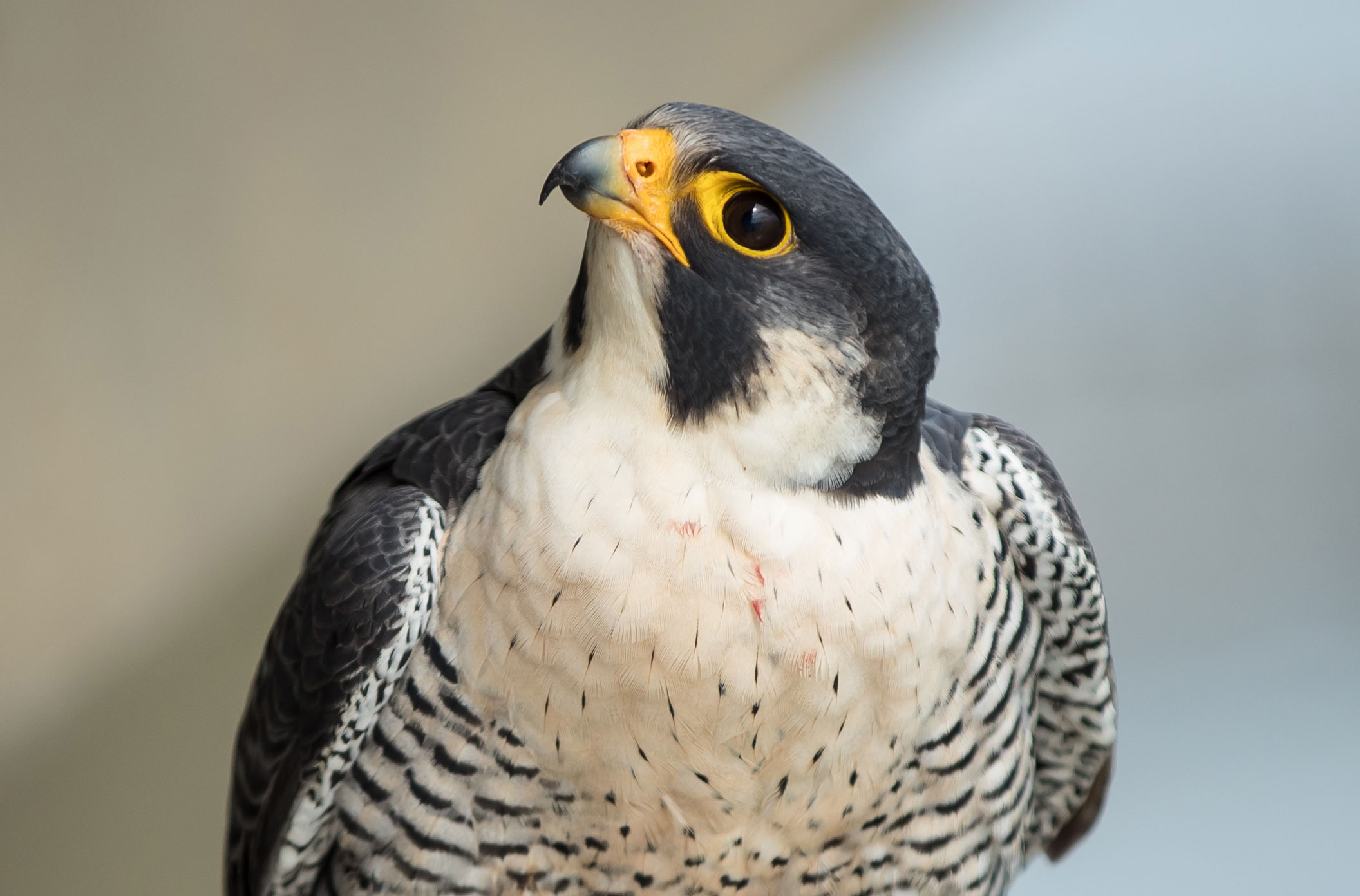
“It’s like watching one of my kids or grandkids making his own in the world,” he said.
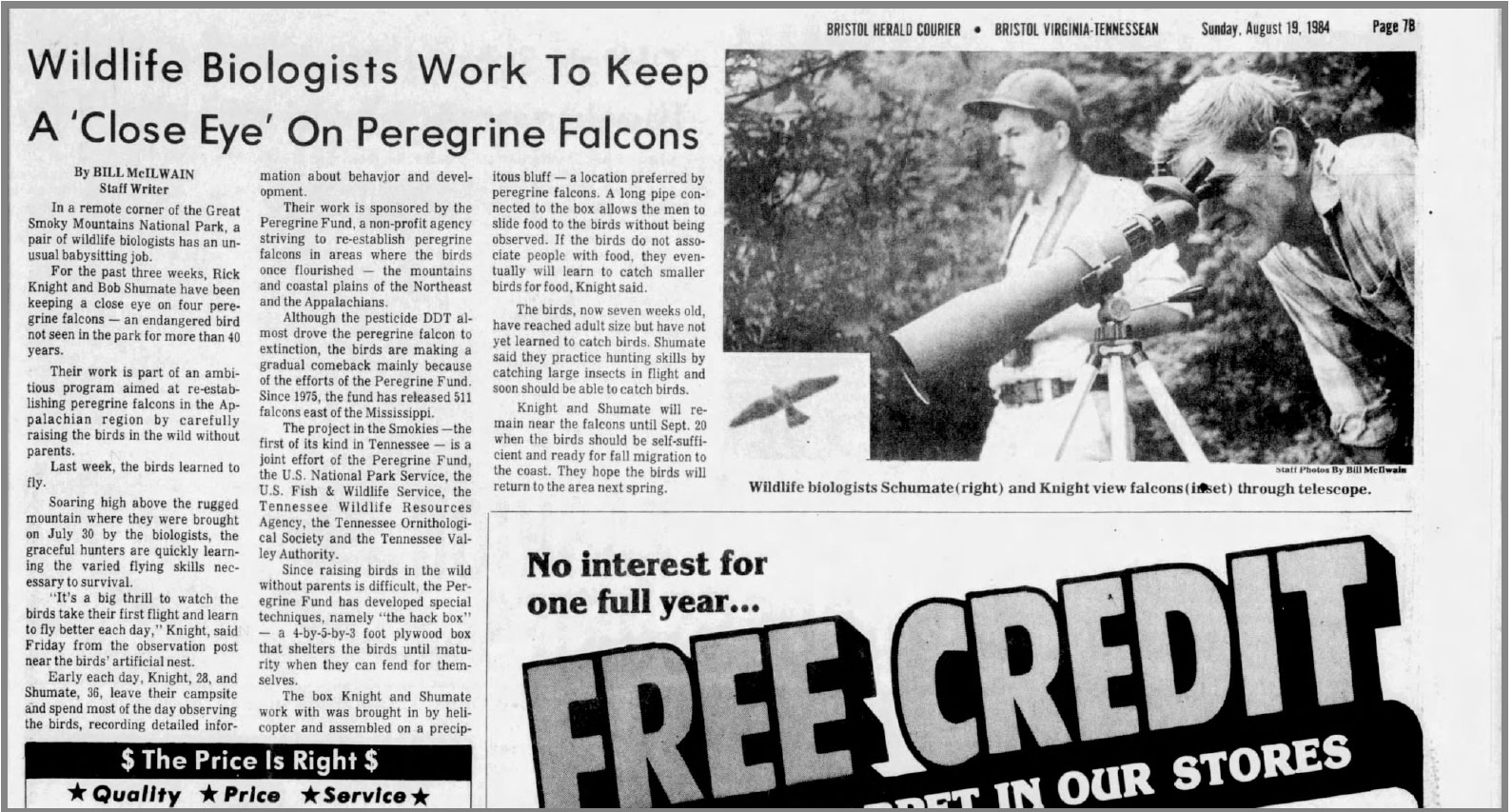
In the summer of 1984, Knight was 28 years old, an East Tennessee farm boy with a bachelor’s degree in biology and an abiding love for the outdoors. When he learned about an opportunity to get paid to spend all summer camping in Great Smoky Mountains National Park, he jumped at the chance.
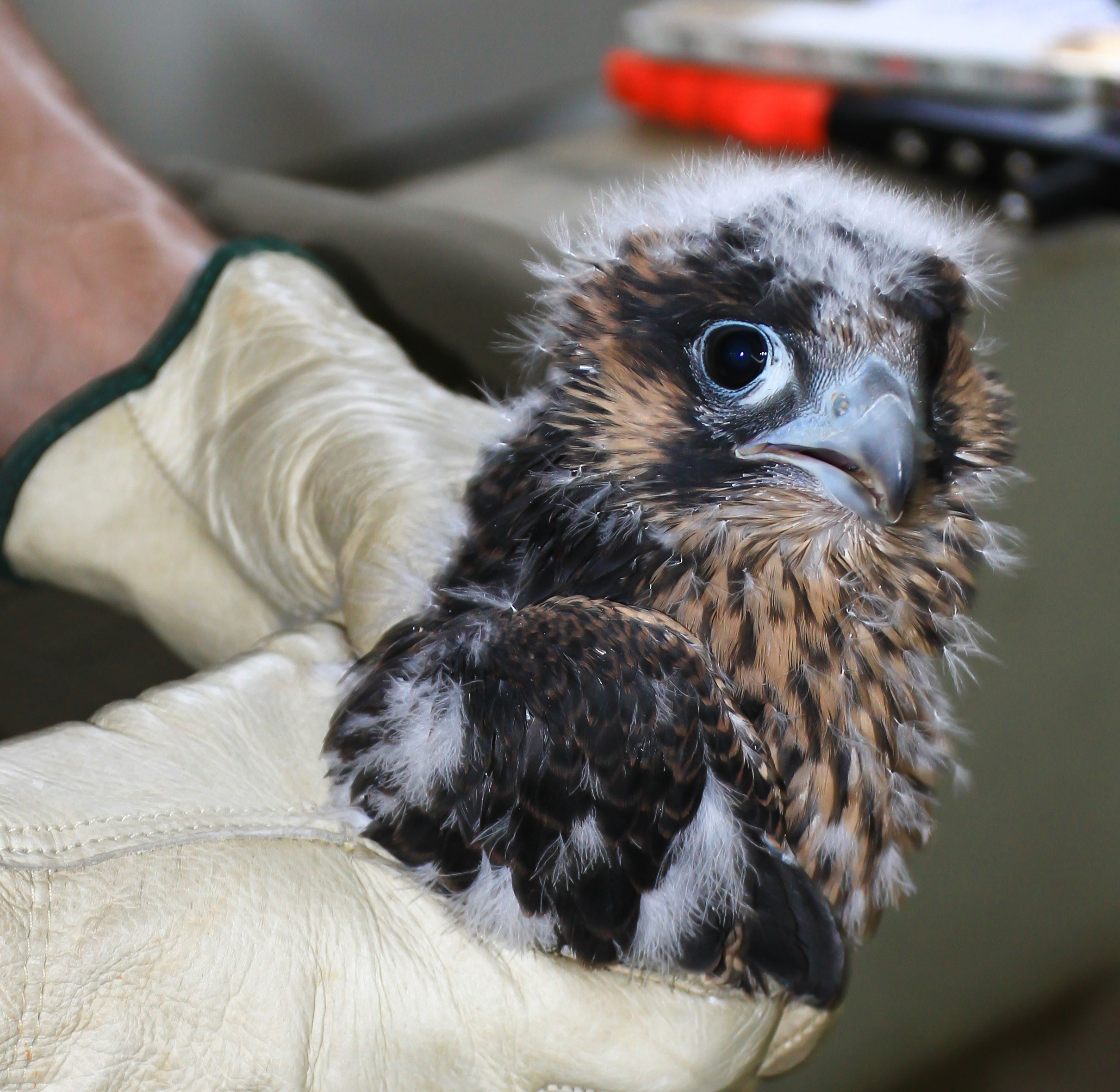
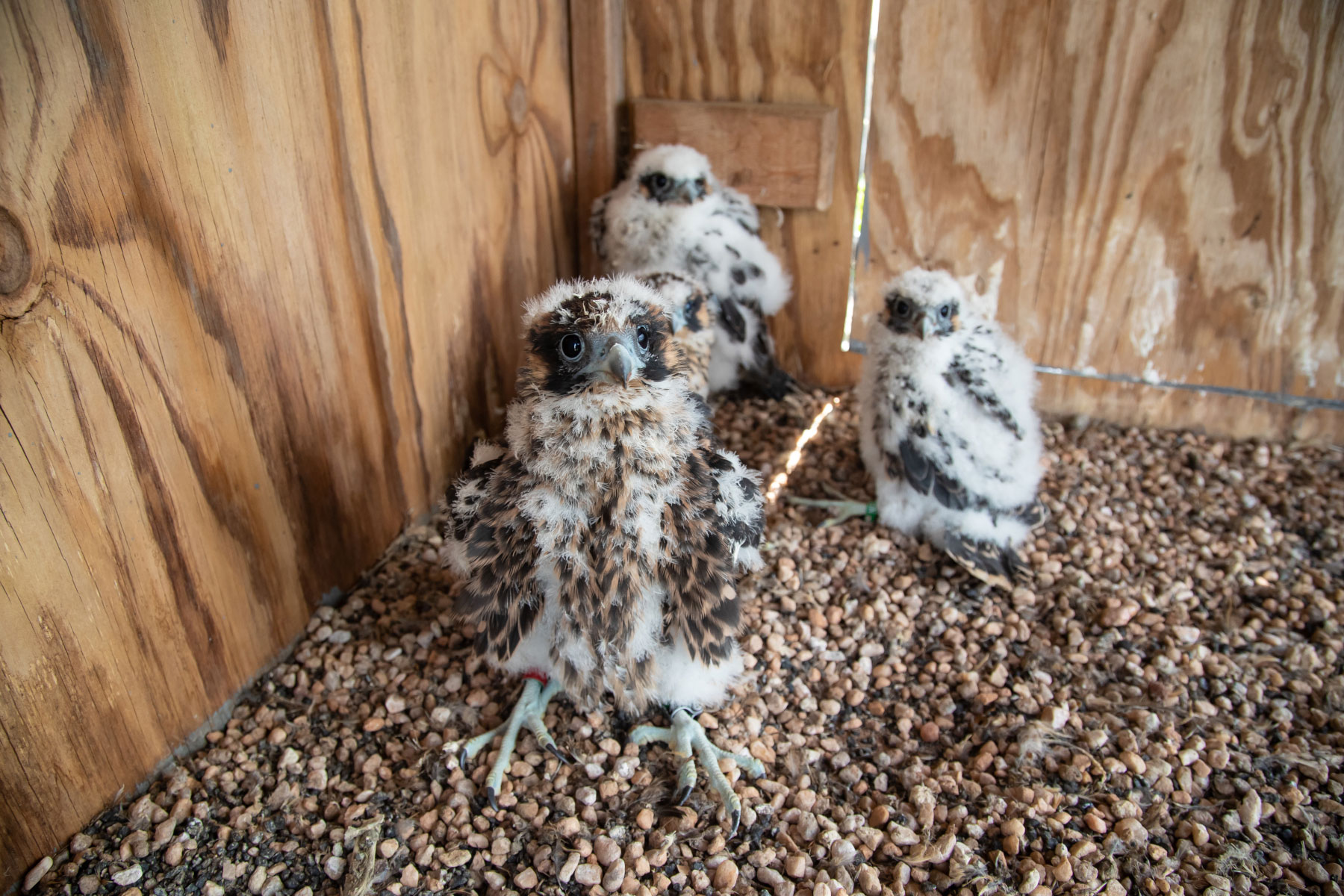
The job revolved around four fluffy peregrine falcon chicks, which wildlife managers hoped would become the first wild peregrines to soar over the Smokies in decades. The Smokies reintroduction was a joint effort of the National Park Service, US Fish and Wildlife Service, Tennessee Valley Authority, Tennessee Wildlife Resources Agency, and The Peregrine Fund.
Due to the insecticide DDT, peregrine populations in the eastern United States began crashing in the 1950s and had vanished by the mid 1960s. The small birds that peregrines preyed upon began accumulating the chemical in their bodies when they consumed contaminated foods. When peregrines ate the birds, they also ate the built-up DDT. At such high levels, DDT disrupted the peregrine’s ability to create strong eggshells, resulting in weak-walled eggs that would inevitably be crushed during incubation.
DDT was banned in 1972, and when the Endangered Species Act passed the following year, the peregrine falcon—by now gone from the eastern US and suffering heavy declines in the West—was on the list of protected species. Meanwhile The Peregrine Fund, founded in 1970 by Cornell University ornithology professor Tom Cade, developed a process, called hacking, for releasing captive-bred chicks into the wild. In the Southeast, Great Smoky Mountains National Park was critical to the falcon’s resurgence, the release site for 13 of the 44 falcon chicks hacked in Tennessee.
“The overall plan was to saturate the region of Southern Appalachia with young falcons and hope they would return to the general area when they grew up to start nesting,” Knight said.
Knight and fellow “falcon-sitter” Bob Shumate hiked up to the hacking site on Greenbrier Pinnacle with their food and gear, together with National Park Service employees bearing the birds. A helicopter delivered the plywood box that would shelter the chicks over the coming weeks, as well as a long pipe that Knight and Shumate would use as a chute to deliver food unseen—secrecy necessary to ensure the birds would eventually start catching their own meals. For more than two months, Knight and Shumate lived at the release site, spending their days feeding the chicks and watching them from a nearby observation post, where they meticulously recorded notes about their behavior and developmental progress.
“It was a lot of fun,” Knight said. “I was sort of roughing it like one of the pioneers up in the mountains, getting to do something in the park that a lot of people aren’t able to do.”
For two weeks, the box stayed shut, protecting the birds while they were still too young to fly and teaching them to think of it as their homebase. Within a couple days of representatives from The Peregrine Fund opening the box, the young falcons had taken their first flight, instinctually learning how to hunt on the wing.
“I guess it was sort of like a parent watching their kids taking their first steps,” Knight said. “It was very gratifying. They were amazing flyers. Especially after a couple of weeks they were very fast, very maneuverable.”
Initially, the birds still came back to the box for food, testing their skills chasing insects and other birds. But within a few weeks, they were catching their own meals.
“After about the eighth or ninth week,” Knight said, “they would disperse from the site, and we wouldn’t see them anymore. We assumed they were on their own and hoped they would make it.”
It was a magical experience, so much so that Knight spent two more summers hacking subsequent clutches of peregrine chicks on Greenbrier Pinnacle.
Between 1984 and 1993, 44 peregrine chicks were released at four sites in Tennessee. The last of the 92 birds to be released in North Carolina were hacked in 1997, and the state documented its first territorial peregrine falcon pair in 1986. Knight, under contract with TWRA to monitor the region for returning peregrines, recorded Tennessee’s first successful breeding pair in 1997 near Alum Cave Bluff. Nationwide, The Peregrine Fund bred and released more than 4,000 falcons between 1974 and 1997.
By 1999, populations had recovered so well that the peregrine falcon was removed from listing under the Endangered Species Act. Today, it’s considered a species of “least conservation concern,” equally at home on sheer, rugged cliffs as on urban bridges and skyscrapers.
“They made a remarkable comeback,” said retired migratory bird biologist Keith Watson, who spent much of the late ’80s and early ’90s helping to hack falcons in Shenandoah National Park before moving to the Smokies in the early 2000s.
In Great Smoky Mountains National Park, Inspiration Point on Alum Cave Trail is the best place to see a peregrine falcon. They’ve been nesting in that area “pretty much nonstop” since their reintroduction, said Paul Super, who recently retired as the park’s science coordinator. Peregrines mate for life; likely, it’s the same pair returning year after year to raise their chicks.
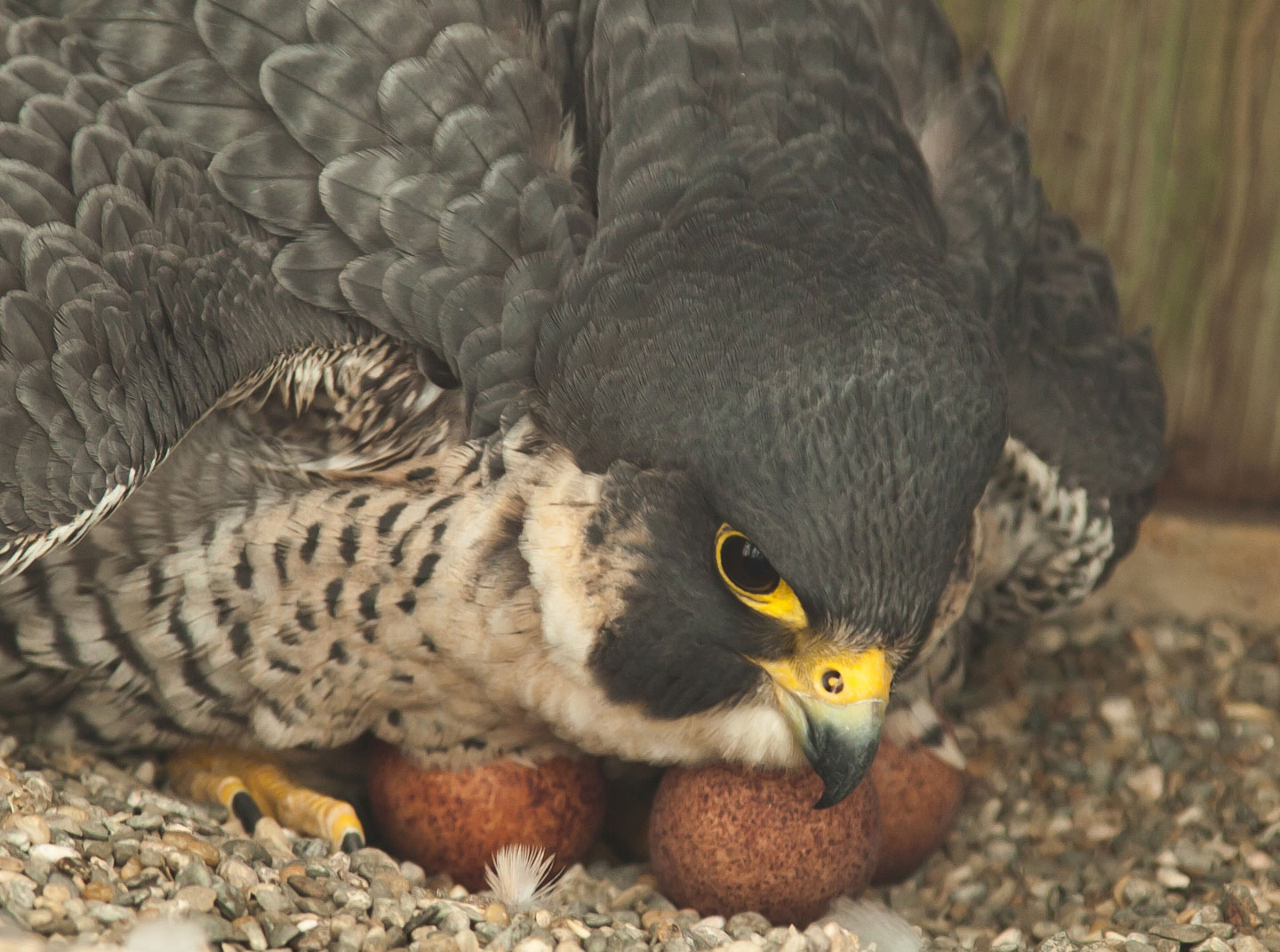
“They don’t really build nests,” said Watson. “They just kind of scrape out a place on a ledge that they can drop a couple of eggs and then tenaciously defend that area. It’s pretty amazing to watch. Sometimes when we go up there in June, especially after the young ones have fledged, you can see the parents out teaching them how to fly and how to catch things in the air, and all kinds of aerial acrobatics. It’s a lot of fun.”
Though peregrine falcons aren’t apex predators—great horned owls will prey on them—they’re close to the top of the food chain. Their success indicates a harmonious ecosystem that’s functioning largely as intended.
“You need predators to keep your ecosystem healthy and keep biodiversity going, and so they’re serving that purpose,” Super said.
The peregrine’s comeback is a dramatic success story, paralleling that of other species whose populations were decimated by DDT, such as bald eagles, ospreys, and brown pelicans. These birds have all since shed their endangered species status and achieved stable populations.
But peregrine genetics still bear the marks of the past. Prior to the 1950s, three subspecies of peregrine falcon lived in North America—Falco peregrinus anatum in the east, Falco peregrinus pealei in the northwest, and Falco peregrinus tundrius in the north. DDT reduced anatum falcon populations so much that the captive breeding program used to produce chicks for reintroduction had to crossbreed the remaining anatum falcons with pealei and tundrius falcons, and, to a lesser extent, peregrine subspecies from other continents.
“The bird we have in the East now is not really the bird that was here before,” Watson said. “It’s a mix of genetics.”
It’s a similar story to that of the eastern elk (Cervus elaphus canadensis), the subspecies that was native to the Appalachians before being hunted to extinction. Several successful elk reintroductions have since taken place—including in the Smokies—using the closely related Manitoban subspecies (Cervus elaphus manitobensis). The reintroduced animals are extremely similar to the original inhabitants, but the population’s genetic makeup is forever changed.
“It’s easier to save something when they’re still relatively common than when they’re critically endangered,” said Knight. “There’s a lesson there to be learned if we take the opportunity to learn that lesson.”
While peregrine falcons are doing quite well these days, many other bird species are not. A startling study published in 2019 found that nearly 3 billion fewer birds exist in North America today than in 1970.
“We’ve had some successes, but we can’t rest on our laurels,” Knight said. “There’s still work to be done for other species. We need to continue educating the public that conservation is a valuable issue and something that we can’t ignore. We need to continue pressing forward to make sure the world is a healthy place for all organisms, including ourselves.”
Keith Watson will lead a hike to Inspiration Point on Thursday, May 21, to search for migrant songbirds and nesting peregrine falcons. The hike is one of the many Branch Out events available to members of Smokies Life. Find out how to join at SmokiesLife.org/membership.
Subscribe to get the latest posts sent to your email.