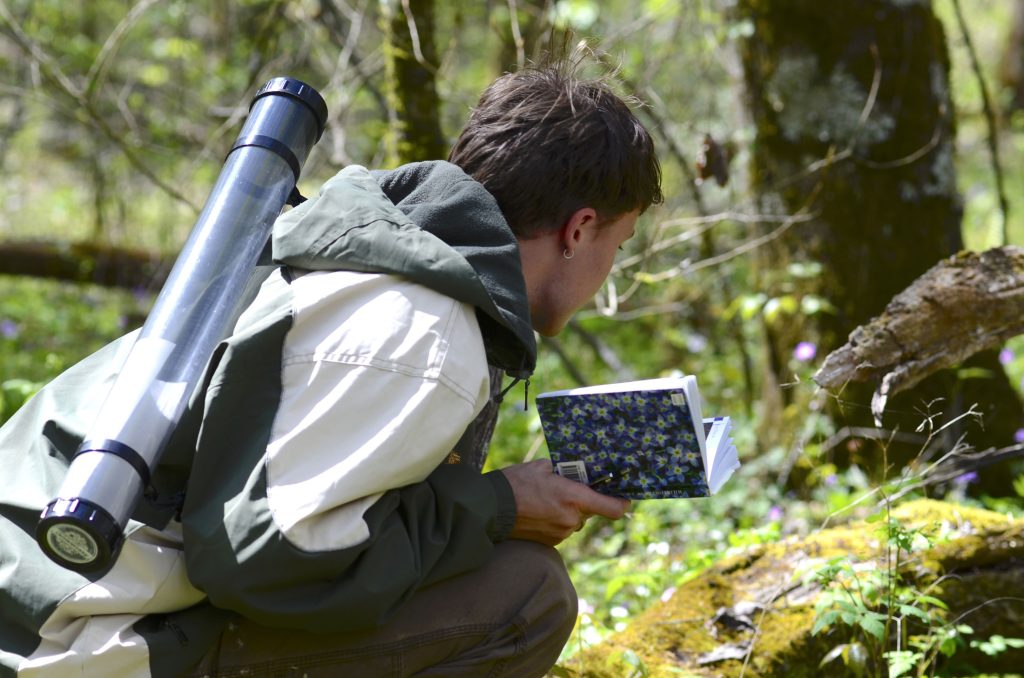

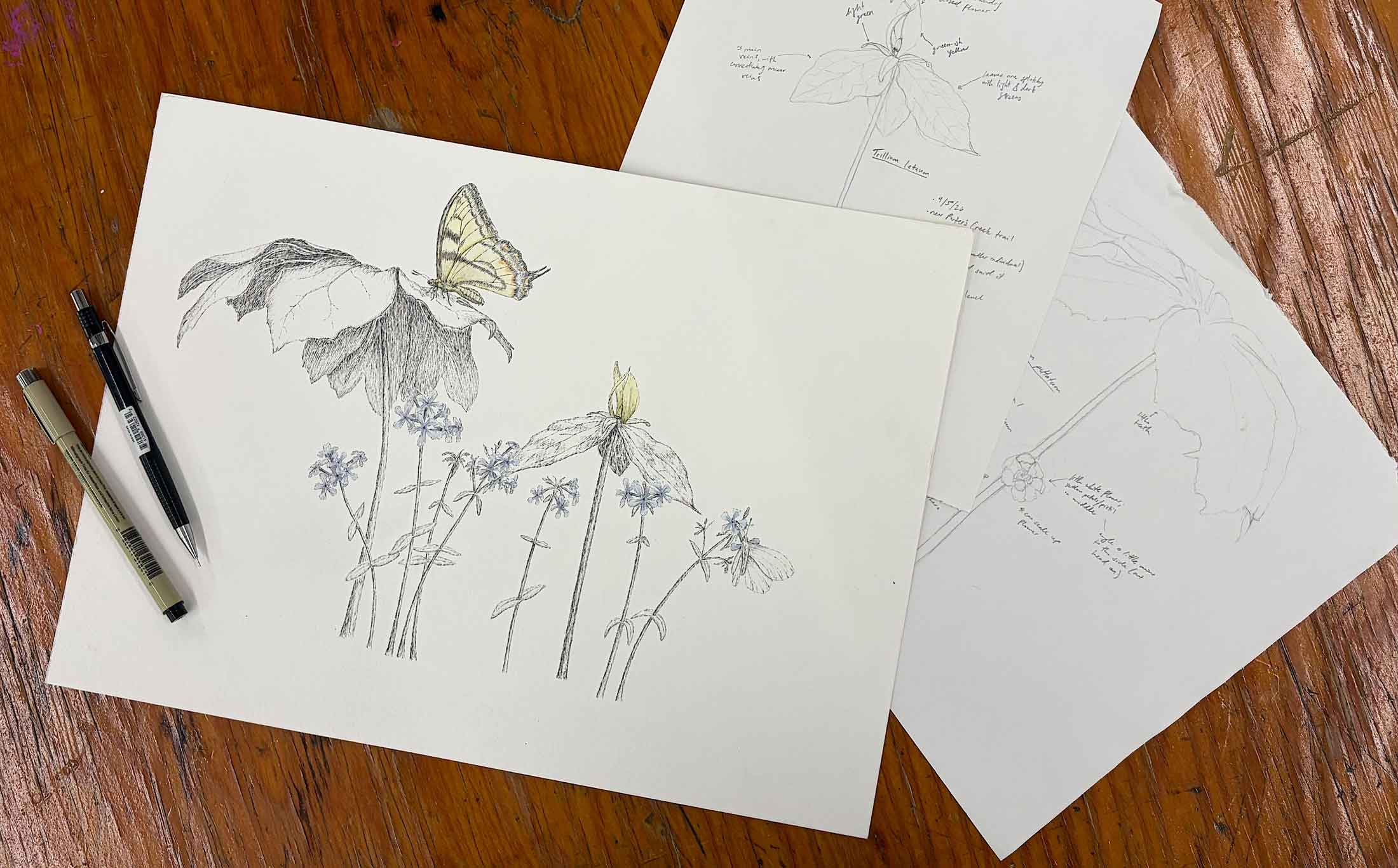

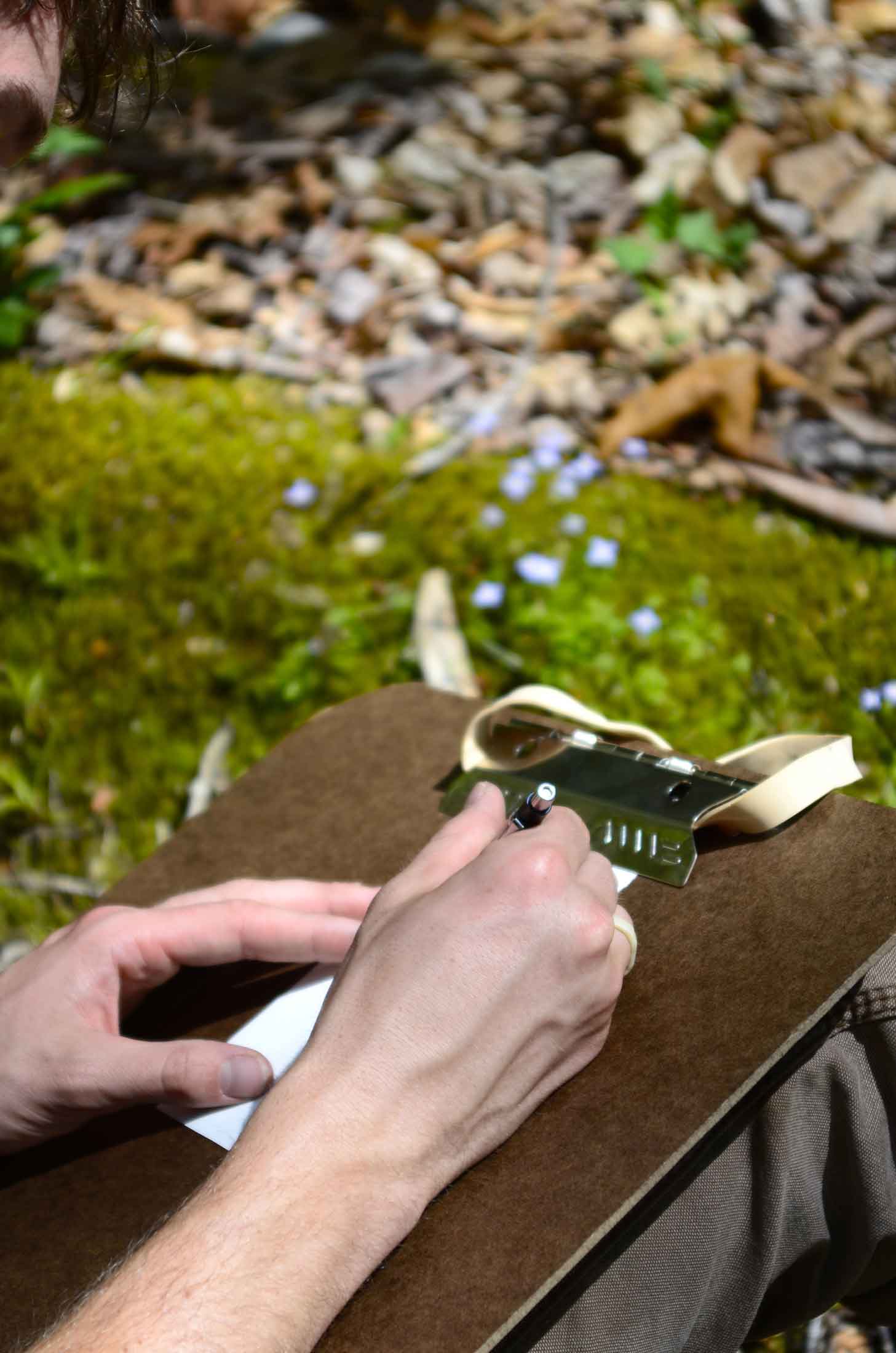
When Laurie McDowell begins a wildflower sketch, he always starts with the base, getting a feel for the curve and shape of the stem before exploring the contours of the leaf. Finally, he reaches the bloom. “It’s like an interview,” he said, glancing up from his sketchbook along Kephart Prong Trail—you start with the basic questions and build your understanding to get to the essence.
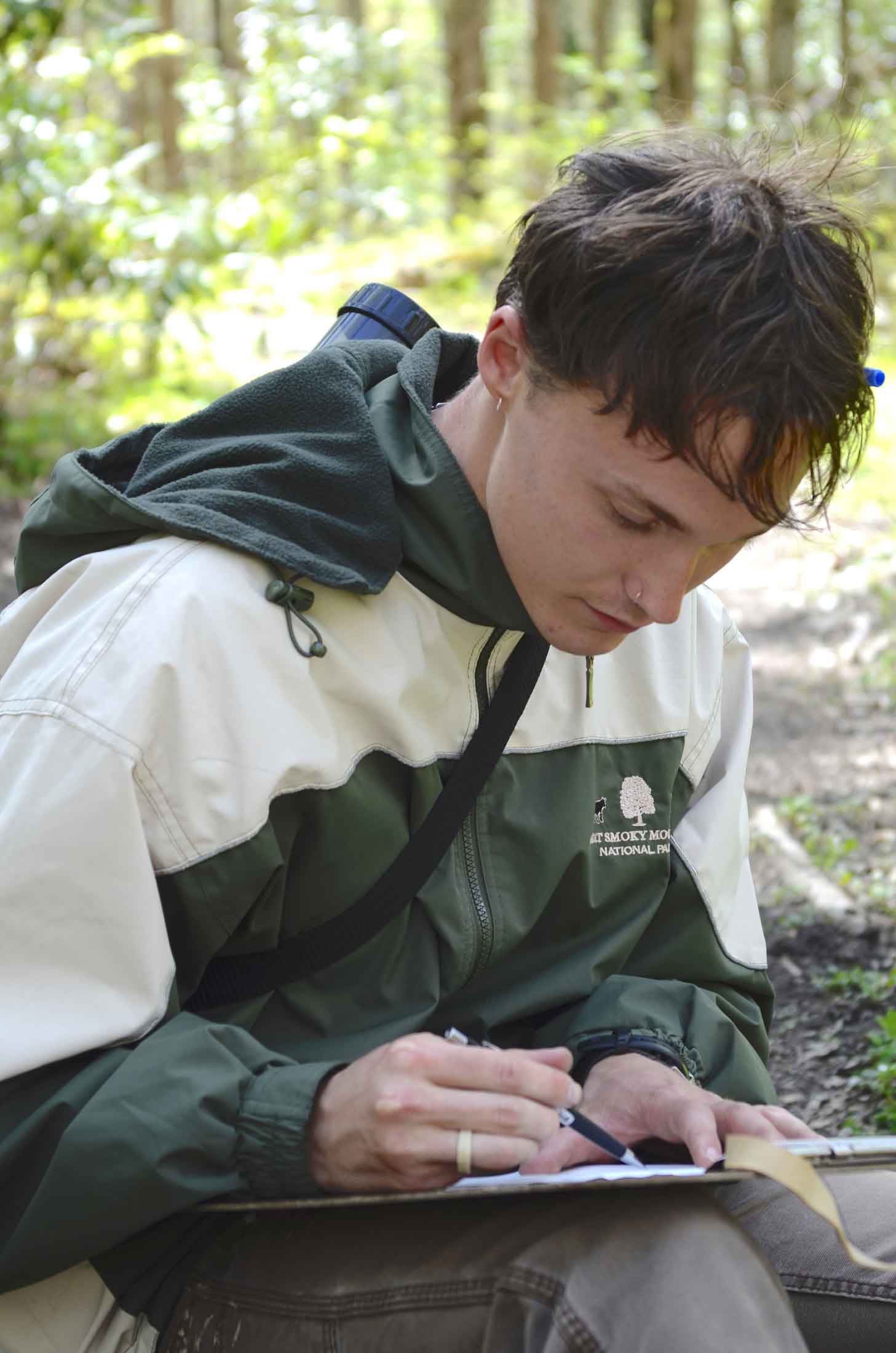
McDowell, 25, is all about getting to know the people, plants, animals, and landscapes around him a little bit better. As the 2026 recipient of the Steve Kemp Writer’s Residency offered by Smokies Life, he’ll have plenty of opportunity to do that during his six weeks in Great Smoky Mountains National Park this year. McDowell will use the time to learn about the Smokies’ natural and cultural history and render that experience in two mediums: poetry and illustration.
“In illustration, I get to meet the plant and get to know them as an individual and as the species, build an appreciation for them, pick out details and learn how to see them a bit better,” he said. “With the poetry, it’s like zooming out. I can pull in a little bit more of the ecological history, the cultural context, the social context, and then blend that with my experiences in a way that helps me fit myself into the broader landscape.”
The Smoky Mountain landscape is one that holds special meaning for McDowell. Born in Ashland, Kentucky, he graduated from high school in Asheville, North Carolina, after moving there as a 12-year-old. Growing up, he was often outside—playing in the woods behind his parents’ house in Kentucky with his older brother and running almost daily through the NC Arboretum as a member of his high school’s cross-country team—but didn’t start learning about ecology, taxonomy, and land stewardship until after college.
“I didn’t have any ecological knowledge growing up, so being able to come back and re-meet all of these plants and do sketches and just walk along the trails has been so beautiful,” he said.
McDowell’s interest in drawing and poetry grew up alongside his love of nature, and he can trace all three back to a Literature of the Environment class he took in high school, taught by his cross-country coach Andrew Devine. The class required him to keep a nature journal, making entries while perched on his “sit spot” atop a culvert in a forgotten corner of the school grounds.
“I think that was the first time someone had told me to just go outside and sit down and you don’t need to be doing anything while you’re out there,” McDowell said. “Just look around.”
Since then, McDowell has sought out opportunities to sharpen his skills: poetry and drawing classes in college, as well as a five-week drawing program in northern Italy. He has put those skills to use during his career in conservation, creating sketches for an exhibit during a previous position at Presquile National Wildlife Refuge in Virginia. In his current job as an ecological horticulturist for the Randall’s Island Park Alliance in New York City, his sketches are framed as wall art for the alliance’s annual fundraising auction.
McDowell didn’t set out searching for a career in conservation. He began his college career at the University of Virginia as an architecture student but soon realized he didn’t want his life’s work to revolve around buildings. He shifted his focus to landscape design, and after graduation he found a job at a nearby native plant nursery in Afton, Virginia.
“That was my first really tangible experience of having that reciprocal relationship with the land that you’re on, using your skills and observations to figure out where you can ‘slot in’ to the landscape and be of help,” he said.
His manager liked to say that their job was to “scratch the land’s back in the place it can’t reach,” an idea that captivated McDowell’s imagination and “really kickstarted” his desire to continue a career in ecology. He’s been in his position at Randall’s Island Park since January 2025. The city’s Department of Parks and Recreation website describes the island as a 480-acre “oasis.” In addition to tennis courts and recreation fields, the park is home to more than 15 acres of wetlands, 500 species of plants and animals, an urban farm, meadows, and forests—all at the center of the nation’s most populous city.
Though Randall’s Island is more than 700 miles distant from the Great Smoky Mountains, McDowell has found familiarity between the flora and fauna he’s meeting in the Smokies and those he interacts with at work each day. He enjoyed getting into a detailed conversation with Park Entomologist Becky Nichols on the finer points of swallowtail butterfly identification—“I think maybe I surprised her a little bit with those questions,” he laughed—and his knowledge of Latin species names has revealed a multitude of connections between the plants he knows in New York and the native diversity of the Smokies.
As an example, he pointed to a yellow-centered aster whose common name is Robin’s plantain. That moniker would indicate that it’s somehow associated with species like the common and narrow-leaf plantains, both members of the Plantago genus of the Plantaginaceae family. But the Latin name for Robin’s plantain is Erigeron pulchellus, making it a close relative of species McDowell knows well on Randall’s Island.
“I saw this plant, learned about it, identified it, and was able to make that connection across 700 miles to these plants that I help take care of and steward at Randall’s Island,” McDowell said. “Somehow those Latin names are able to communicate that in a really beautiful way, where just from the name you can know that familial connection and connect those ecosystems across so many miles. But common names have so much cultural value to them that I really can’t make a case for either-or. It’s just both.”
To maximize his acquaintance with Smoky Mountain plants, McDowell is dividing his residency into three parts. He recently concluded his first two-week stay in April and will return for additional two-week segments in July and September. This spring he focused on wildflowers; he expects his summer stint to be full of meadow blooms and leafy trees, with a vibrant transformation in fall.
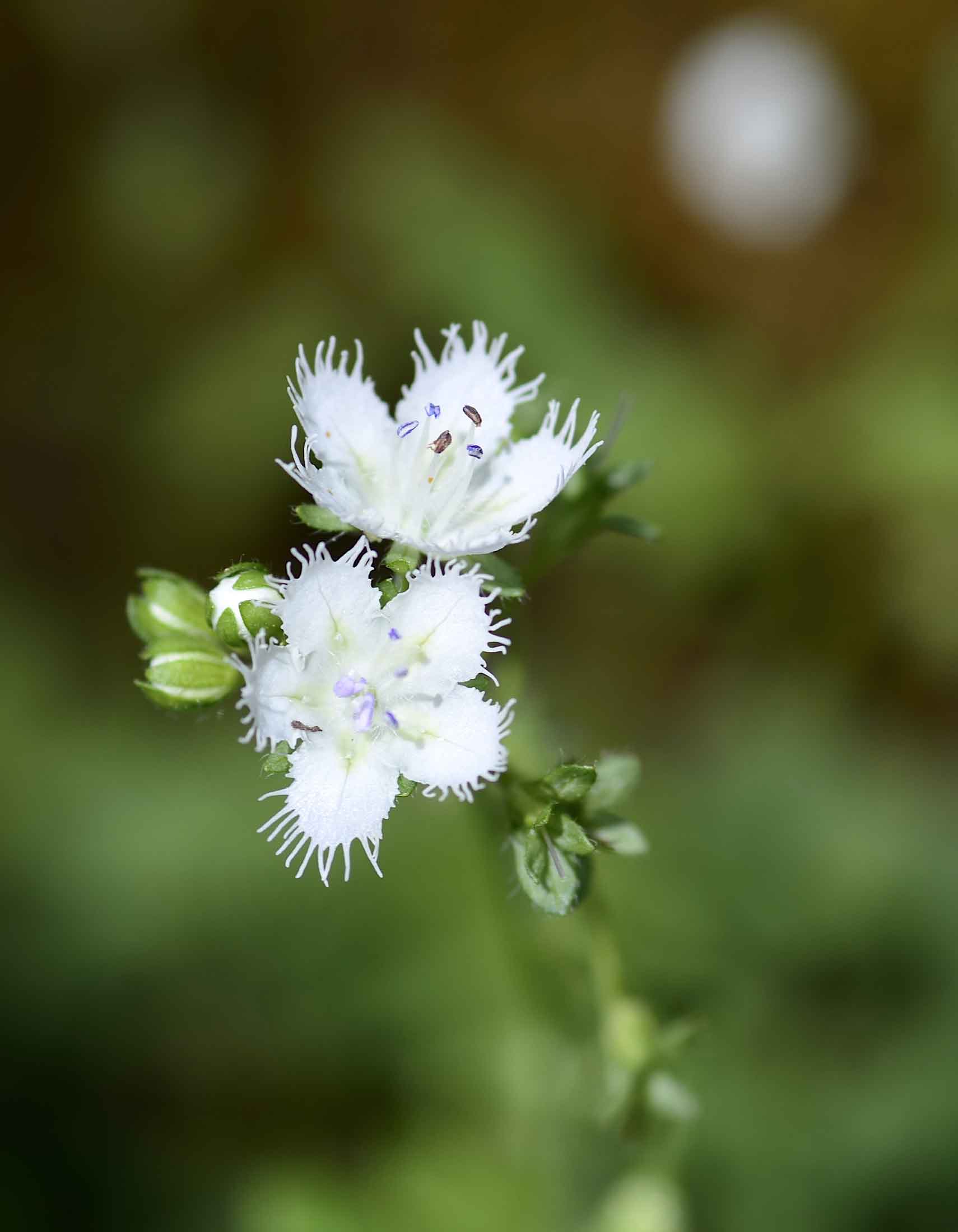
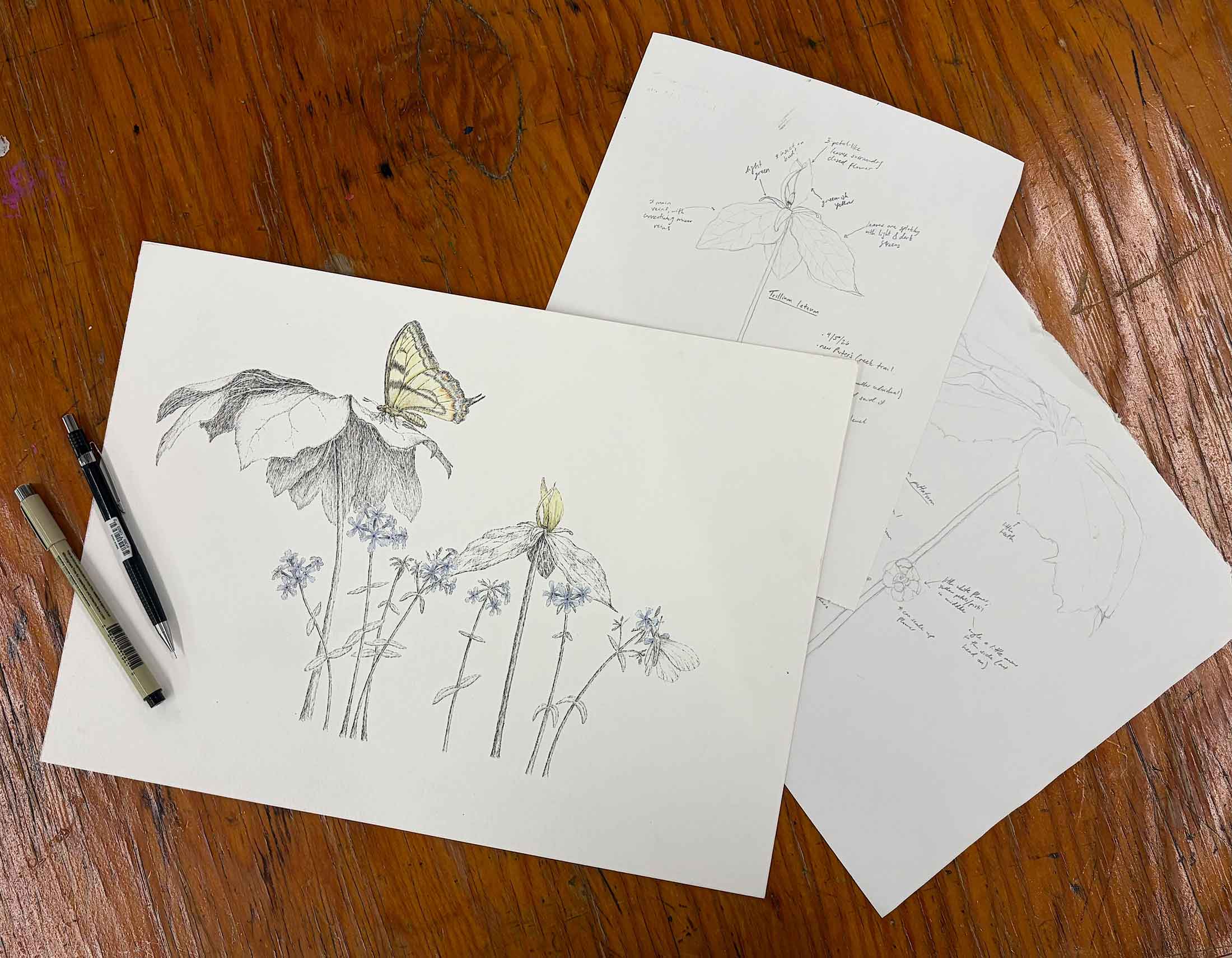
“One thing I’ve really been enjoying since being here is documenting plant communities,” he said. “So when I find fringed phacelia, and it’s next to a species of phlox, and then also maybe there’s Trillium ludium here, I have been documenting that so I can represent the whole family that’s gathered together rather than just individual plants.”
Coming out of the residency, he hopes to produce a collection of drawings and poems that showcase his experience in the Smokies.
“I’m really excited to have the space to write, because it’s not something I often give myself time for,” he said.
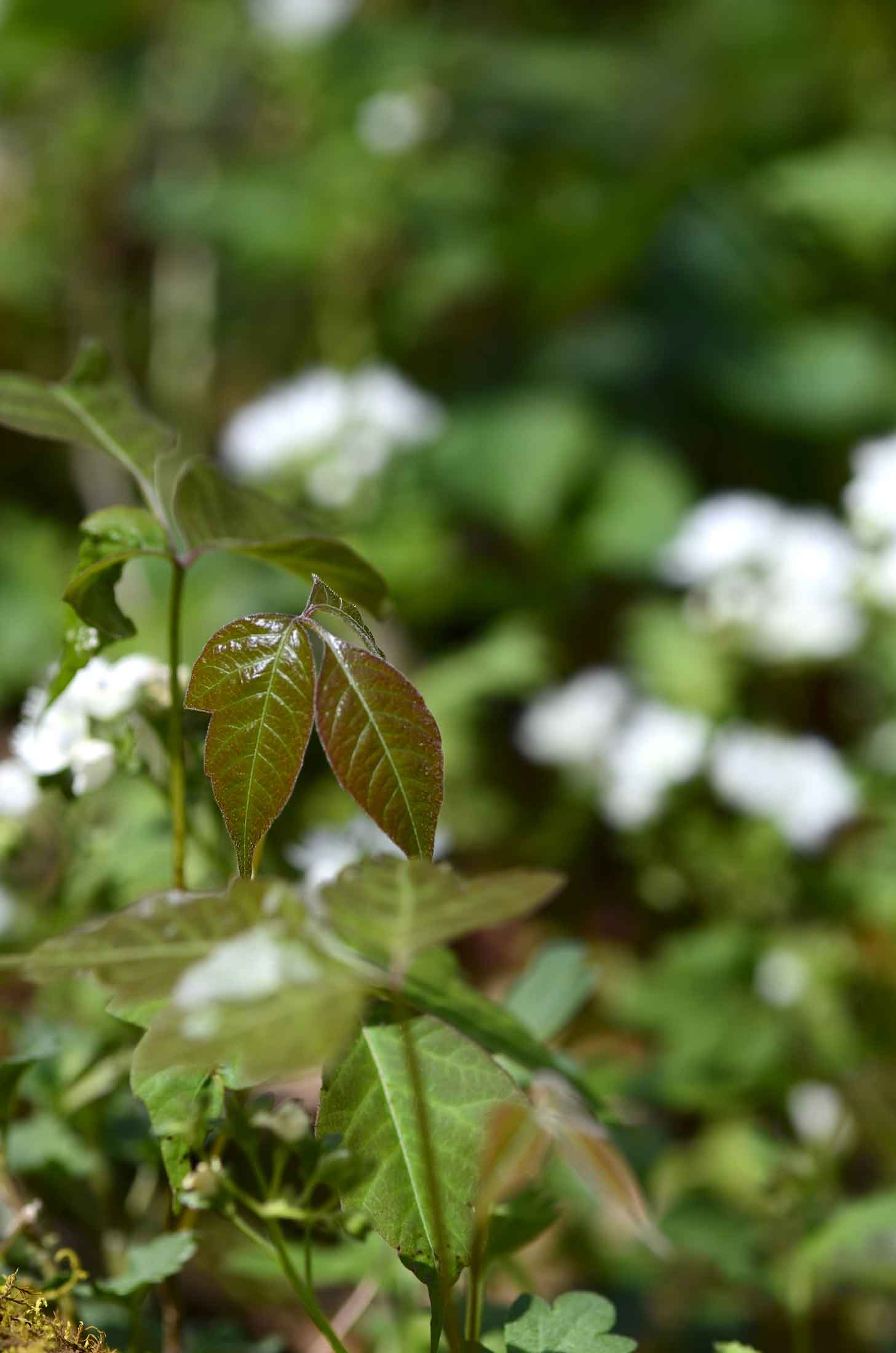
Time is perhaps the residency’s biggest gift. McDowell’s steps are slow and loping as he walks Kephart Prong Trail, stopping frequently to sketch and building space to see, appreciate, and reflect. A helicopter-like bumble bee flies low over the ground, kicking up flurries of dust in its wake. An army of tiny pollinators flits between blooms on a carpet of fringed phacelia, searching for nectar. New poison ivy shoots punctuate the pattern, their oily beauty undeniable, as is the danger that awaits those who get too close. And on the way out, a trio of elk bed down among the rhododendrons, nearly invisible against the backdrop of the still-brown forest floor.
“Sometimes hiking, I don’t really need to ‘go on a hike,’” he said. “I just want to exist on a trail somewhere.”
Laurie McDowell will lead an ecological illustration workshop 9–11 a.m. Saturday, September 19, meeting participants at Sugarlands Visitor Center. Registration is open to Smokies Life members. Watch for a sign-up link at SmokiesLife.org/branch-out-events.
Subscribe to get the latest posts sent to your email.