




“Nature . . . invites us to lay our eye level with her smallest leaf, and take an insect view of its plain.” ~Henry David Thoreau
Early fall in the Smokies is a season to savor. It’s that in-between time, past summer and not fully fall, when most trees and shrubs, especially at lower elevations, are still mainly green but showing plenty of signs of the spectacle to come. That time when the feast of seasonal color is not yet overhead but down low, as trails, roadsides, wood margins, and meadows are splashed with the colors of our late-season wildflowers—the varied purples of ironweed and asters, the gleaming yellow of goldenrod and pendant touch-me-nots, shining white shaggy-topped snakeroot, and in wetter spots the bluest blue lobelias intermingled with their scarlet red cardinal flower cousins.
The park’s celebrated fall wildflowers can be enjoyed from afar, in broad brushstrokes of color, or up close to better admire their intricate beauty. We’d like to invite visitors to lean in and take an even closer look—let’s “lay our eye level” with the leaves and flowers, as Henry David Thoreau urged, and “take an insect view.” From that point of view the late-season wildflowers resolve into vegetal villages bustling with activity—and underscore the essential ecological interconnectedness of insects and kin with wildflowers, birds, and so much more.
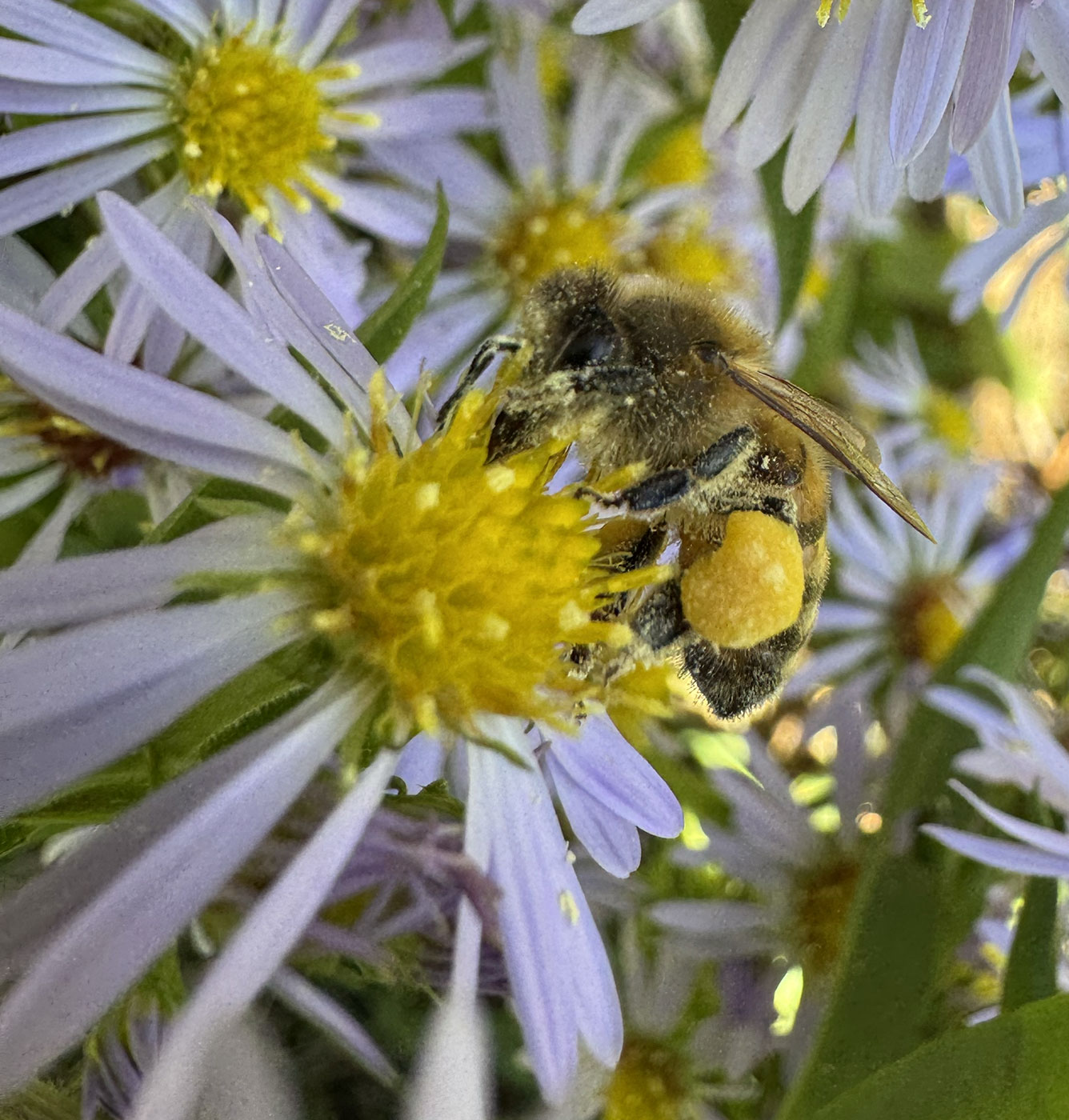
One bright early October morning, toward the conclusion of our final stint (alas!) as this year’s Steve Kemp writer and illustrator in residence, we took Thoreau to heart and “lay our eye level” in wildflower patches from Newfound Gap to Oconaluftee. Goldenrod (Solidago spp.) abounds—several species grow prolifically in the park, among them wreath-like blue-stemmed goldenrod (S. caesia) bearing flowers all along the stem at every leaf axil, and stately tall goldenrod (S. altissima) topped with a pyramidal mass of flowers.
Look closely at the golden flowers: a great many insects come to feast on the abundant pollen and nectar they produce, while others, such as yellow crab spiders and the aptly named (and equally well-camouflaged) ambush bugs, lie in wait to prey upon the pollen feeders. One of those pollen feeders, a fall favorite, is the striking half-inch-long yellow-and-black locust borer (Megacyllene robiniae), of the “long-horned beetle” family (Cerambycidae), so named for their long-segmented antennae. This handsome beetle spends its larval career in darkness, making long galleries in the heartwood of black locust trees (often visible when splitting locust logs for firewood). The fall-emerging adults are regulars on goldenrod flowers, where they feed and mate.
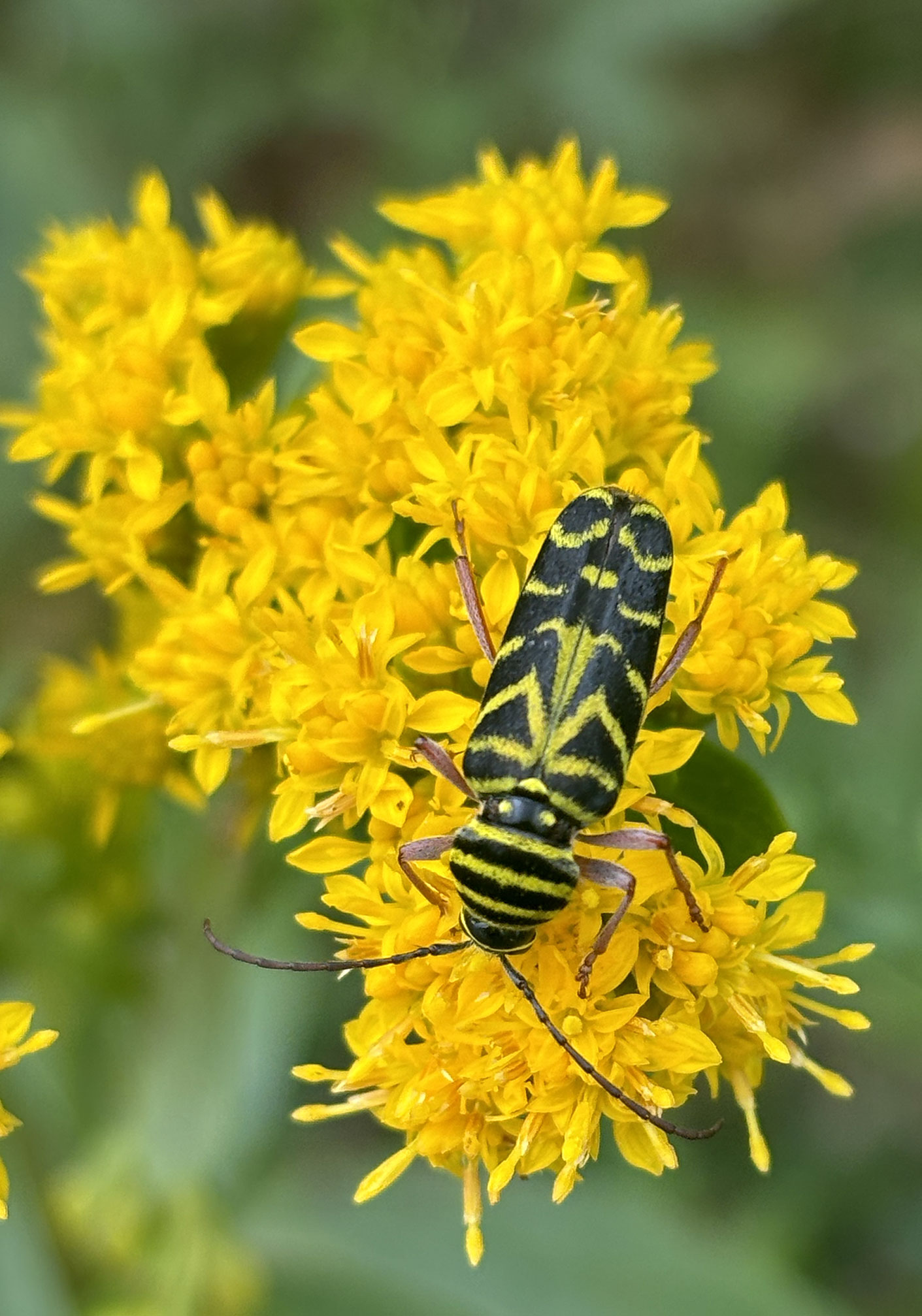
Such bright contrasting colors typically signal a warning to predators, and while these beetles are not toxic or venomous, bearing the colors of dangerous wasps and bees likely gives them protection. They do have another defensive trick up their tarsi, however, one that you can hear: carefully hold one close to hear a series of high-pitched squeaks—these beetles “stridulate,” a fancy term for making sound by rubbing body structures together, and they seem to rely on their irate squeaks to startle would-be predators, if their colors weren’t off-putting enough. We scanned for other goldenrod feeders, spotting paper wasps and skippers at the flowers, a few leaf miner tracings on leaves, spittlebugs sucking sap, and the telltale sign of a bunch-gall maker: tiny flies that co-opt the plant’s normal growth pattern to sprout a dense bushy mass of leaves bunched atop the stem.
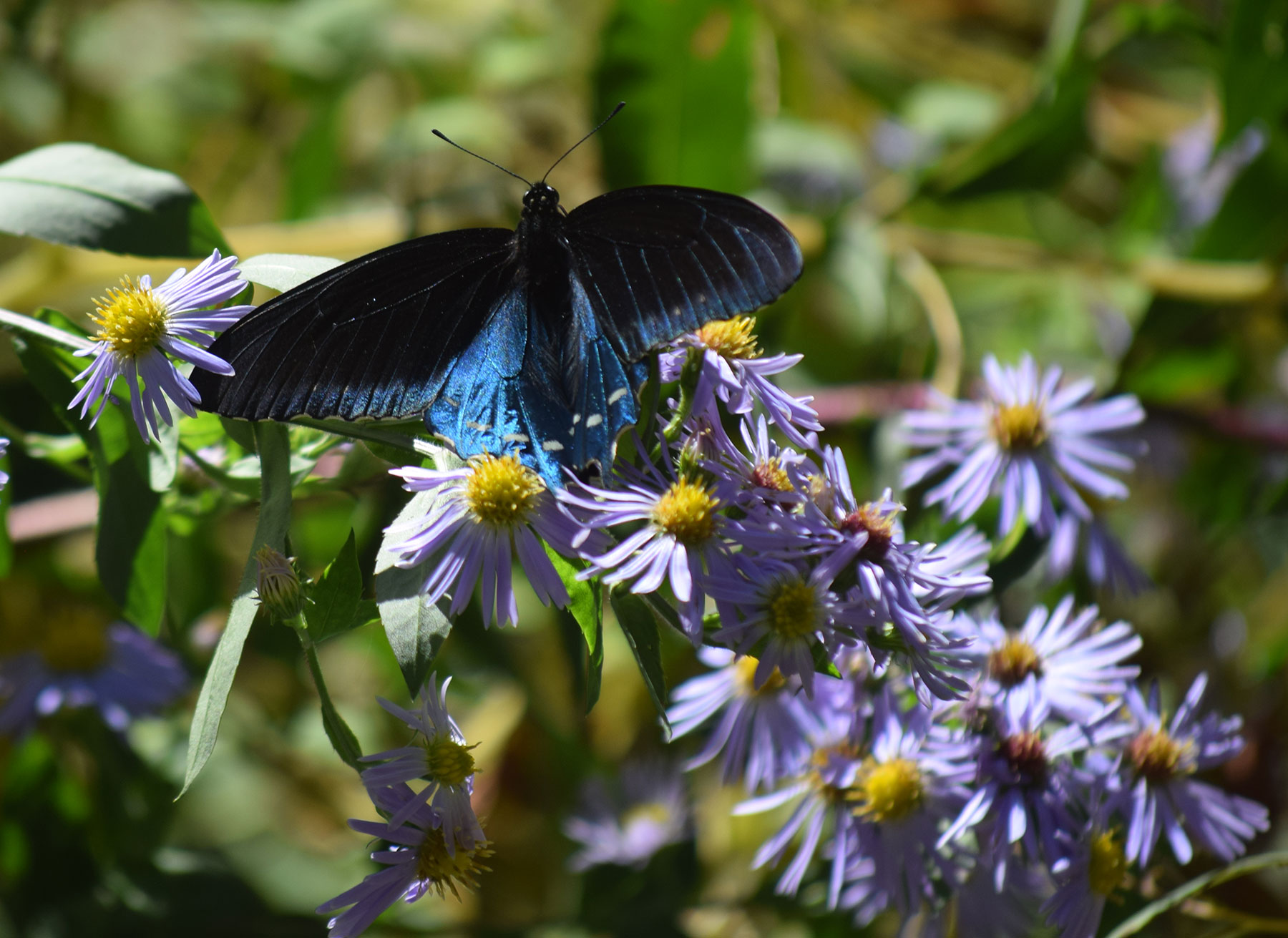
Movement in the abundant, purple-flowered asters mixed in amid the goldenrod caught our attention, alive with fluttering nectar-sipping butterflies as a host of bees coursed back and forth gathering pollen. But look more closely—what bees? Honeybees and bumblebees are the most obvious, but there are also diminutive jewel-like halictid bees of shining metallic green and orange, fuzzy big-jawed leaf-cutter bees, handsome digger bees, and more buzzing from flower to flower. And what butterflies? A great many were dark-colored with iridescent blue above and large orange spots on the hindwings below. Two species in the Smokies, the pipevine swallowtail (whose caterpillars feed on Dutchman’s pipevine, Aristolochia macrophylla), and the spicebush swallowtail (which feed on spicebush, Lindera spp.), are quite toxic, and these colors advertise the fact, assiduously avoided by birds for that reason.
But there are other swallowtails, such as black swallowtails of both sexes and female tiger swallowtails, that are harmless masqueraders relying on resemblance to their toxic cousins for protection. A few other Smokies butterflies get in on the act too, notably the gorgeous red-spotted purple and females of the Diana fritillary: casual human observers and (otherwise) keen-eyed birds alike are hard-pressed to tell them from the poisonous ones. Which is precisely the point.
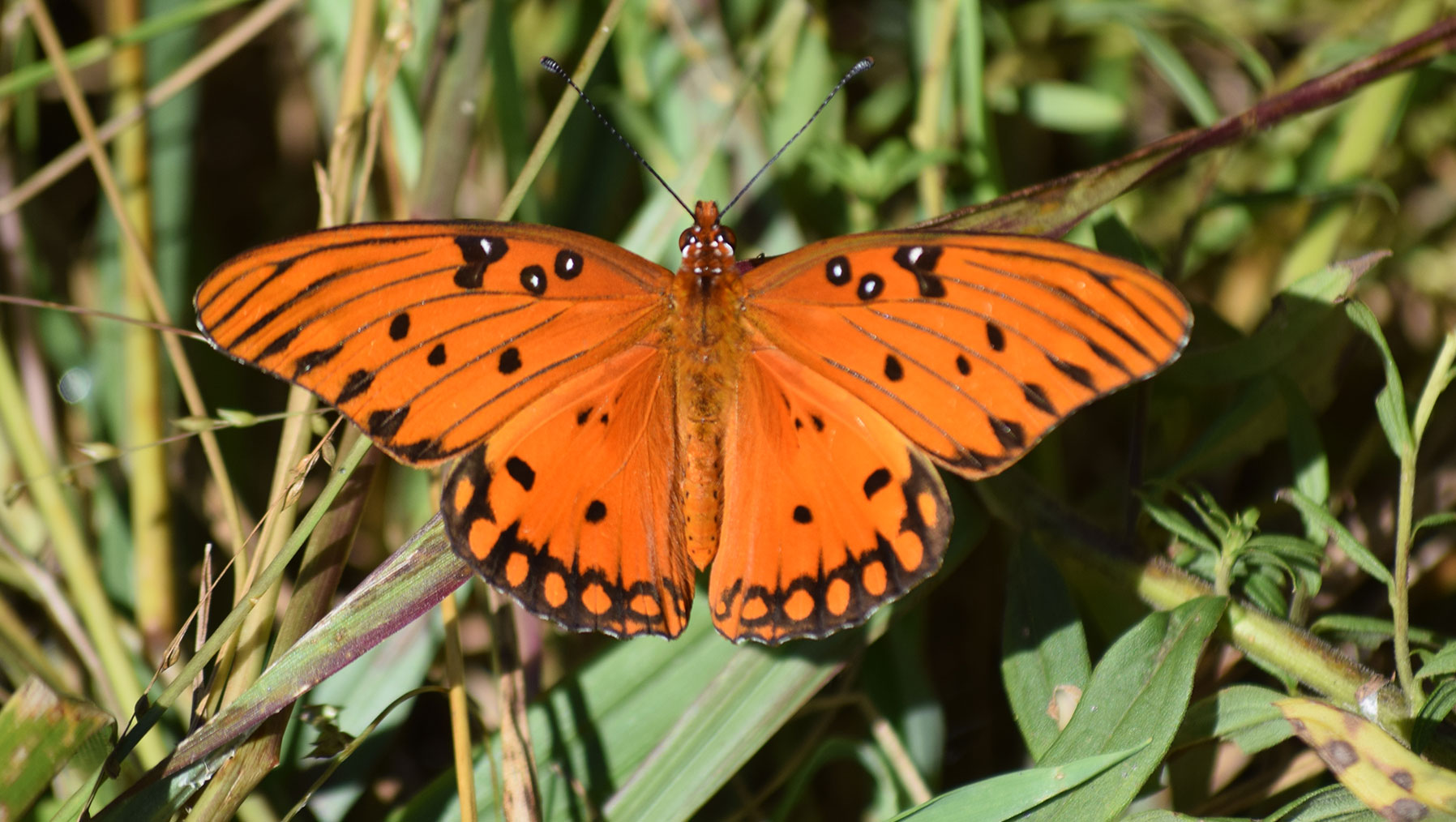
We were treated to a host of other butterflies and their close relatives the skippers at Oconaluftee: common buckeyes sporting large eye spots on their wings; diminutive blues slowly rubbing their hindwings (bearing false antennae and eyespots) as they paused between short fluttering flights; darting silver-spotted skippers, flashing large white patches with each rapid wingbeat; handsome red admirals, decorated with a bold red stripe on each wing. And our favorite find of the day: the fabulous Gulf fritillary (Agraulis vanillae), large vibrant-orange butterflies bearing three small black-and-white spots on the upper-side of each wing and silvery patches below. (Incidentally, this species was placed in genus Agraulis in 1835 in a publication by Jean Baptiste de Boisduval and John Eatton LeConte, uncle of physicist John LeConte who is the namesake of the Smokies’ third-highest peak.)
The Gulf fritillary is noteworthy in several respects. For one, it is one of North America’s few migratory butterflies, undertaking seasonal north–south migrations (rather like monarchs, but going shorter distances), spreading through the southeast in spring and summer, and heading south in the fall to overwinter in the balmy climes of Florida. Unlike the caterpillars of other fritillaries, which feed on violets, those of the Gulf fritillary specialize on passionflower (Passiflora spp.), a plant group known to be chemically defended. As one might expect of any insect specializing on a toxic plant, both caterpillars and adults pack a punch, their colors truth-in-advertising: the distasteful orange caterpillars are armed with black spines, and brilliant orange adults with black markings secrete a cocktail of repellant chemicals from special glands in their abdomen as a backup to their warning colors.
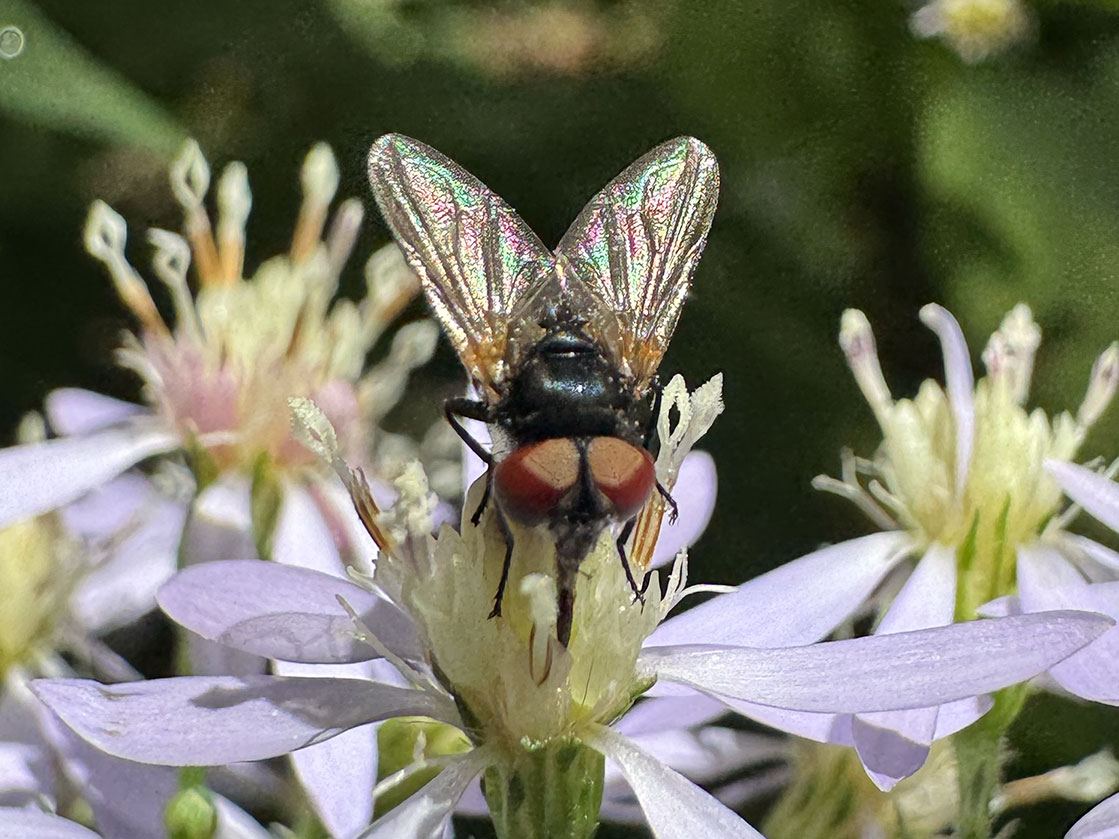
Yes, viewed in one way the shimmering fields and meadows of the park seem timeless, peaceful in the bright early fall sunshine, while they come alive on closer inspection: fluttering, buzzing, teeming, bustling. Every sunny patch of late-season wildflowers—goldenrod skyscrapers, open-air aster markets, joe-pye villages—supports a multitude of beautiful and fascinating six- and eight-legged critters going about their business. Take a moment to “lay your eye level”—drop in and enjoy an insectan view of the Smokies.
Smokies Life is now accepting applications for its sixth annual Steve Kemp Writer’s Residency, designed to help the next resident meaningfully connect with the park’s beauty and inspirational qualities while focusing on the craft of writing. The application window closes November 1, 2025
Subscribe to get the latest posts sent to your email.