

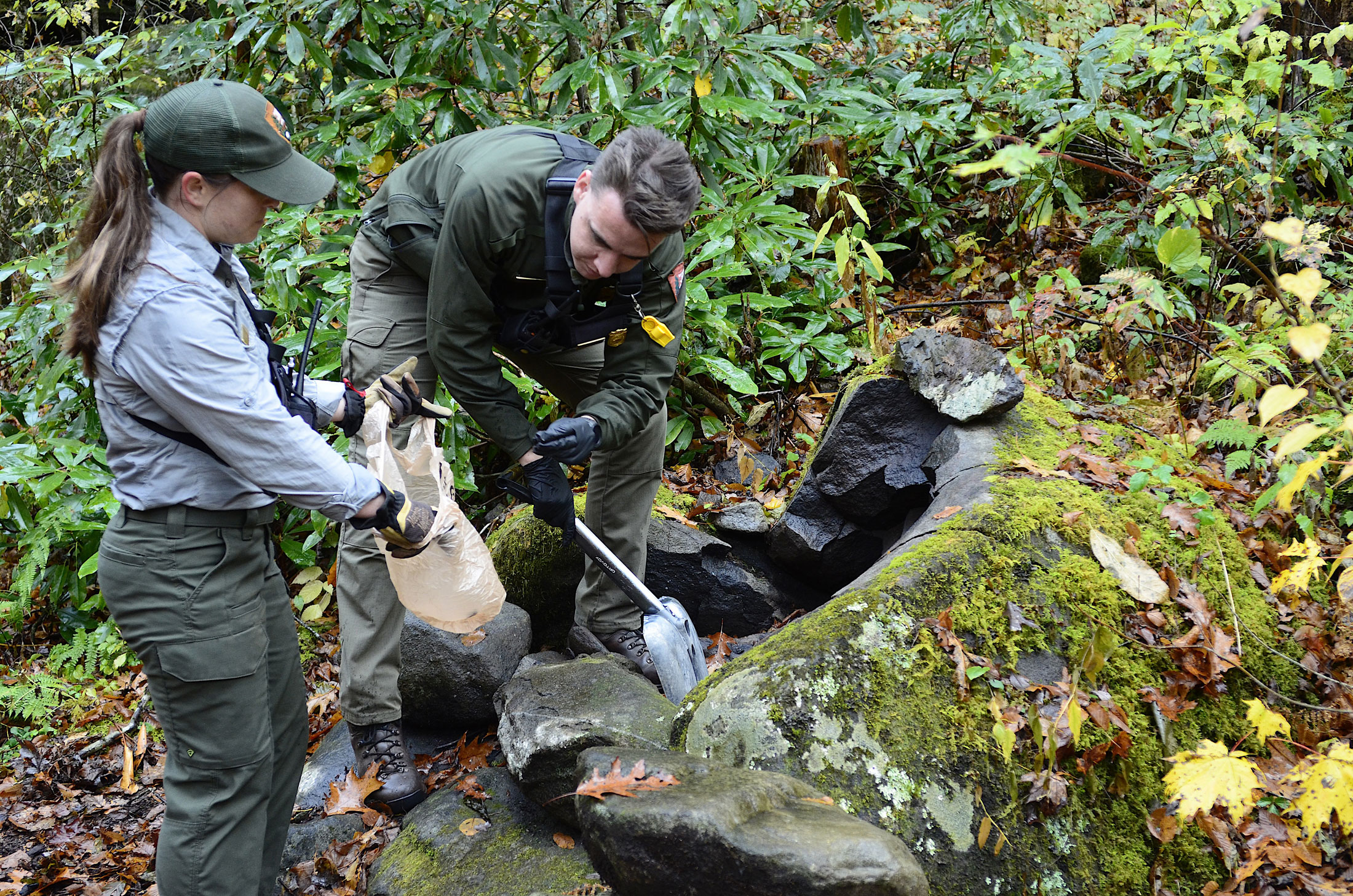
Backcountry rangers Lydia Williams and Jordan Gibeault have almost reached their destination, Kephart Prong Shelter, when they purposefully veer off-trail. They descend a slight hill, emerge into a small creekside clearing, and immediately turn their attention to a rocky outcrop protruding from the hillside. It’s ringed with stones and filled with ash.
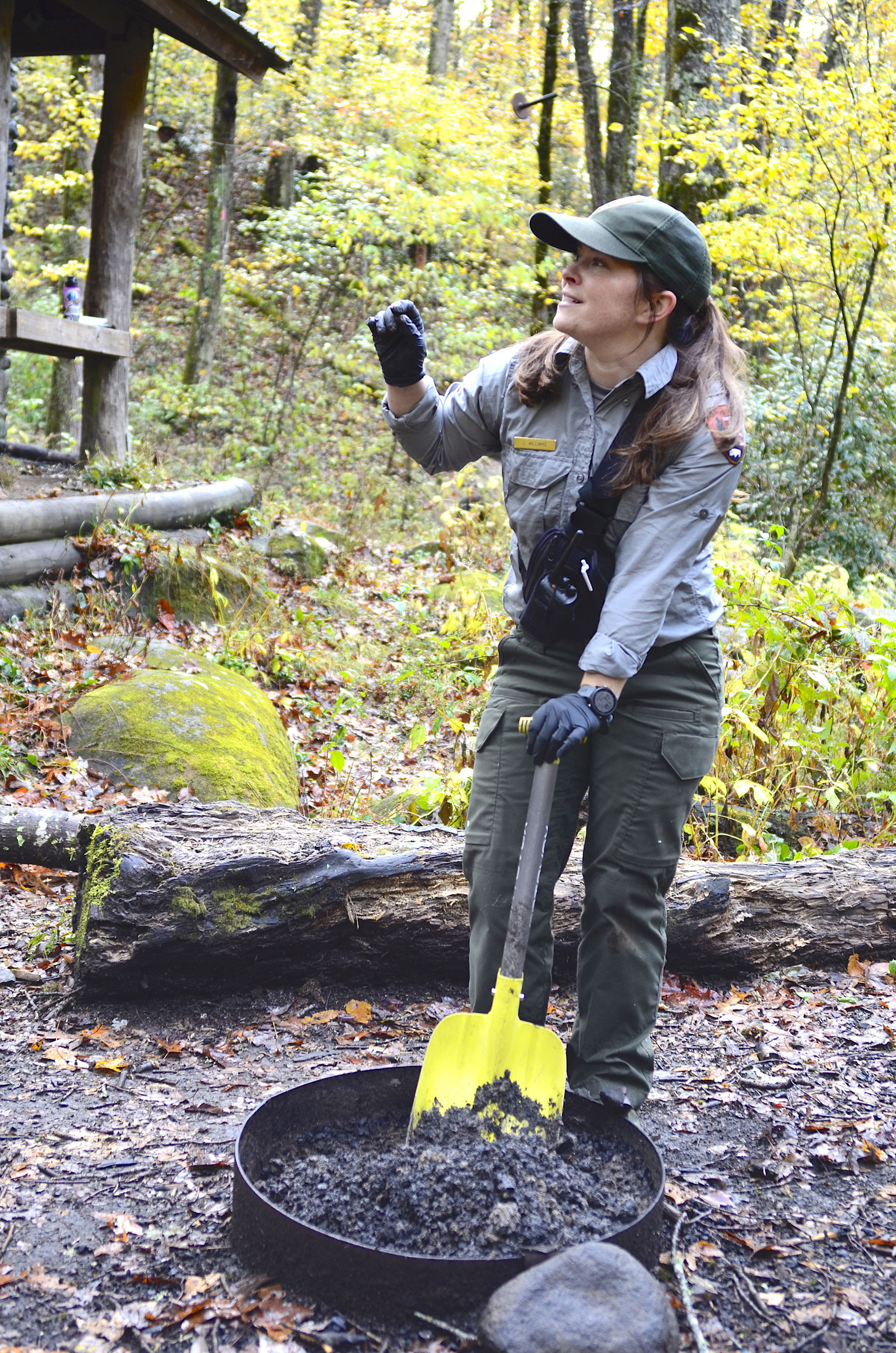
“This is a great example of an illegal fire ring,” Williams says. “Every time we come here, we’re dealing with it again and again.”
Gibeault and Williams are two of the four rangers currently working in the park’s Backcountry Office. This tiny team bears the giant responsibility of patrolling the park’s 850 miles of hiking trails and monitoring its more than 100 backcountry campsites. Team members work four ten-hour days each week, typically spending two of those days in the Backcountry Office at Sugarlands Visitor Center near Gatlinburg and the other two out on the trail.
“This small but mighty team of backcountry rangers is essential to our efforts to care for trails, protect wilderness areas, and ensure the safety of our visitors,” said Acting Superintendent Charles Sellars. “They provide an invaluable service—helping people craft safe and enjoyable itineraries and maintaining backcountry sites for overnight stays.”
In 2024 alone, the park recorded over 71,000 overnights in the backcountry, and the Backcountry Office fielded more than 10,000 phone calls—an average of nearly 30 calls per day, a figure that doesn’t count foot traffic to the office located within the park’s busiest visitor center. People call seeking everything from general park information to backcountry permits and help with trip planning. With every contact comes an opportunity to convey important safety and resource protection information before visitors hit the trail. A lot of “really good conversations” happen in that office, said Williams, a native of Sevier County who has been a backcountry ranger since May 2020.
“It’s a really good balance,” she said. “It’s working with people, but also everything we do has a focus of resource protection, and that’s what I want to do. I want to protect people from the resource, and to protect the resource from people.”
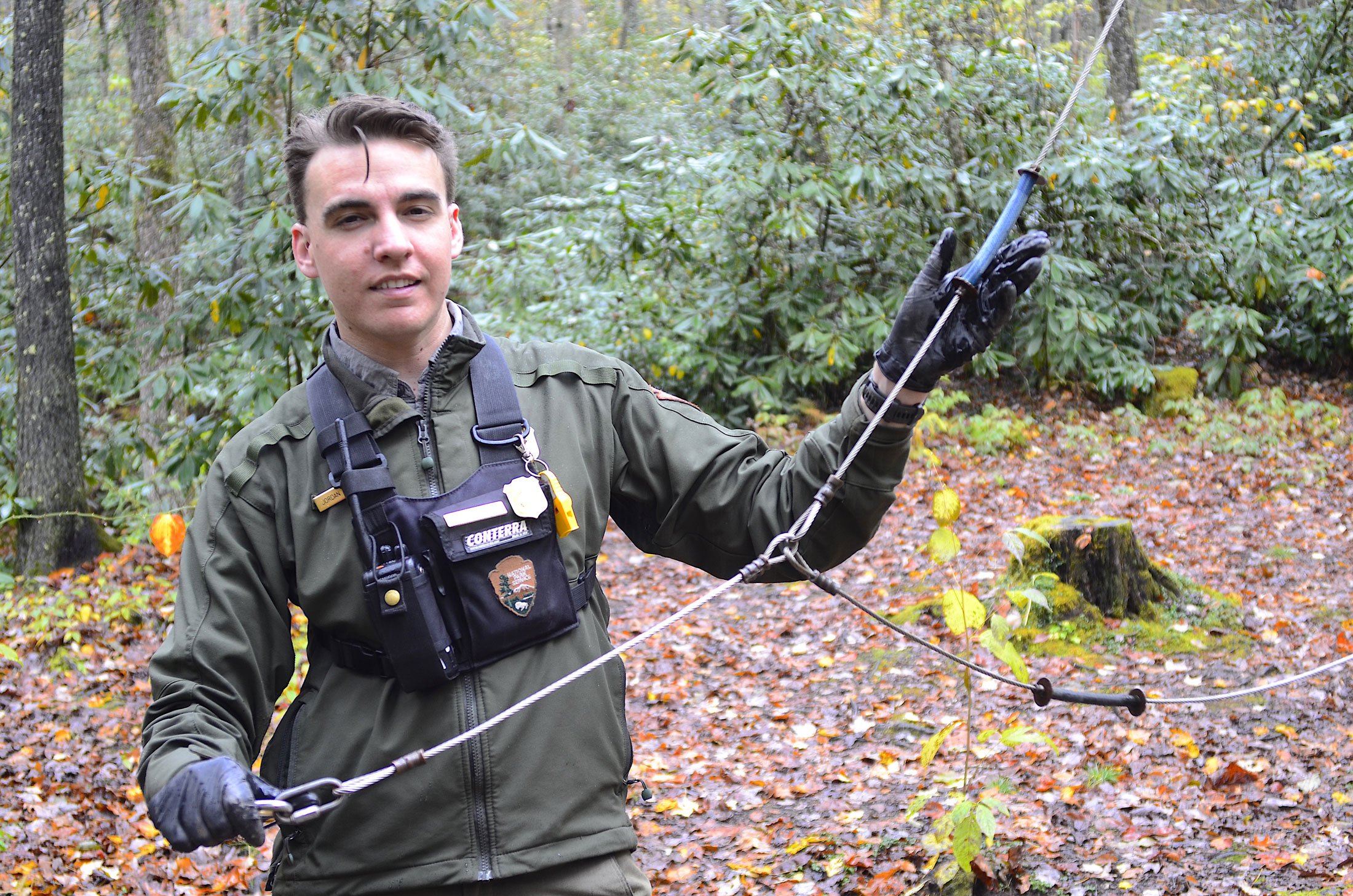
Williams and her colleagues report to Sugarlands every morning, either settling in for a day at the office, which is open every day but Christmas, or deploying toward their assigned on-trail mission. On a typical day, rangers might hike in to resolve a known issue, like a broken bear cable or full privy, or they might check in on a busy campsite like Kephart Prong, where they’re basically guaranteed to find trash in need of collecting or illegal campfire rings in need of dispersing.
Other times, a lengthy drive and long hike might be scheduled to visit one of the park’s more remote campsites, which also need regular maintenance. Visiting Kephart Prong Shelter requires a 45-minute drive from Sugarlands and four-mile roundtrip hike, making it one of the more accessible sites. At the other end of the spectrum are destinations like Tricorner Knob Shelter, which requires a 20-mile roundtrip hike, or backcountry campsites scattered along Fontana Lake, two hours away from Sugarlands and accessible only by boat. Those trips are now a bit easier than they used to be—Friends of the Smokies donated a boat earlier this year that the backcountry team uses to reach these sites.
“Having a boat allows us to get out there, educate folks, clean sites up, and assist visitors who are having issues,” said Williams. “So that’s been huge.”
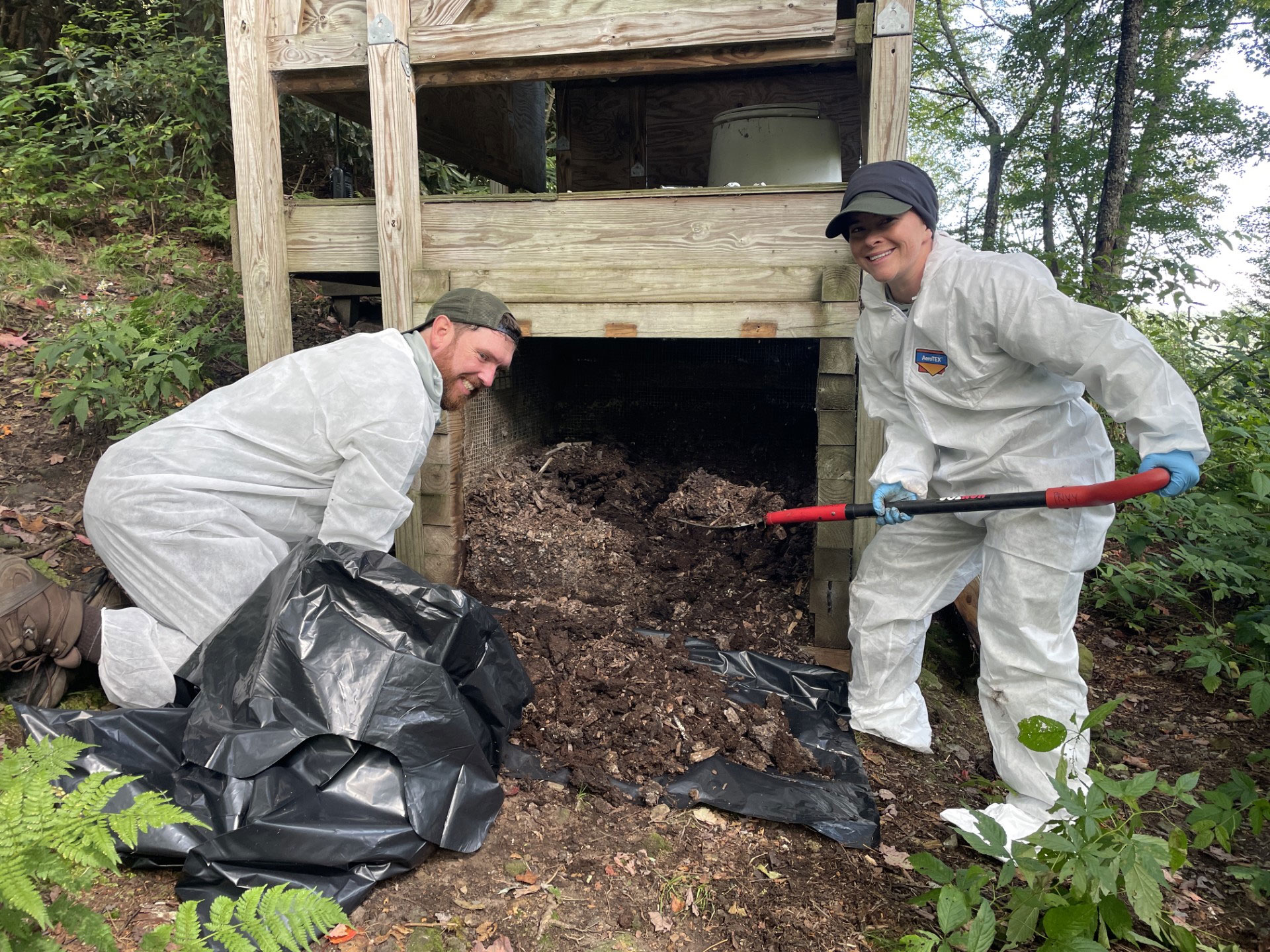
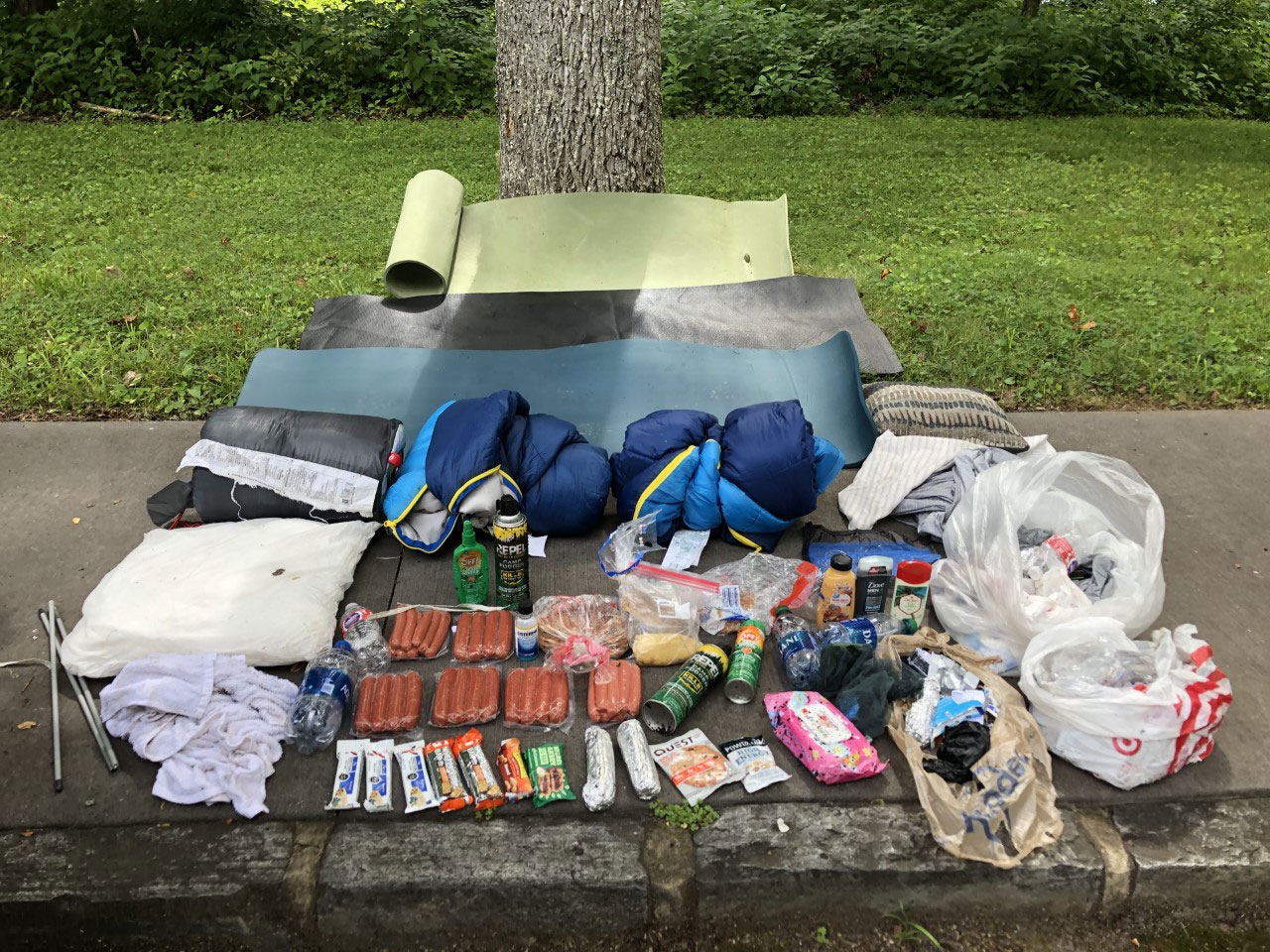
In 2024, the backcountry team hiked a cumulative 1,968 miles. They packed out over half a ton of trash and abandoned gear, dismantled 70 illegal fire rings, installed nine 35-pound metal fire rings, and emptied the waste from six privies.
“We’re almost like glorified backcountry janitors,” said Williams. “We’re the keepers of these facilities out here.”
It’s a description that is both apt and incomplete. Many backcountry ranger tasks could be considered janitorial, but these rangers are also highly skilled in the outdoors. They have an intimate knowledge of the park’s terrain, trails, and weather patterns—and a willingness to put their skills to use for anyone in need.
“You’re usually rolling into the shelter and there will be four or five backpackers sitting,” said Gibeault. “So that always evolves into something else.”
Rangers carry radios with them that they can use to contact the Backcountry Office even when they’re out of cell phone range, so when they encounter a backpacker who is behind on their intended itinerary or needs to change their plan due to incoming weather, they can check availability, suggest route adjustments, and issue permits accordingly.
“That, to me, is our most valuable service,” Gibeault said. “You’ll go up on the AT some days at peak season and change ten itineraries, that had they not run into you, they may have gone on ahead anyway and gotten hurt, or they may have gone to a different shelter out of compliance, and then the shelter’s overfull, so that’s dampening the visitor experience for others who are within compliance.”
On a cold, rainy Tuesday morning, full shelters are not a problem on Kephart Prong Trail. The area is deserted when we arrive, and Williams and Gibeault lose no time in getting to work “brushing out” the illegal campsite. They use the avalanche shovels they’ve packed with them to dig ash from the campfire, scattering it in the nearby woods. Then they fill in the cavity with heavy rocks that had been used to ring the campfire. They sprinkle fallen leaves and branches over the rocks and bare earth nearby.
“A huge challenge of our job is just trying to change human behavior,” Williams says. “When we’re here cleaning up these spots that are not legal campsites, we’re thinking about, how do we train people away from this area? You’re just making it harder for them to do the wrong thing.”
Tent camping is not allowed at shelter sites in the park, and at all campsites, campers must use the facilities provided—campsites, fire rings, privies, bear cables—rather than establishing their own. Reservations and permits are required. There’s good reason for these rules, Gibeault said after he finished burying a wad of dirty toilet paper next to the site.
“These shelters are built strategically. Toilet areas have got to be 100 feet away from water sources. Of course, this is the water source,” he said, waving toward nearby Kephart Prong, “and when they’re camping down here, they’re using the bathroom there, and they’re not 100 feet away from the water source—so people are going to the bathroom essentially in the water source that people drink from. That’s pretty gross.”
Left unchecked, illegal sites tend to expand, causing ever-increasing environmental damage and wildlife conflicts. Overcrowded camping areas increase the odds that animals such as bears will be attracted by the scent of human food, perhaps bringing harm to themselves or their human neighbors.
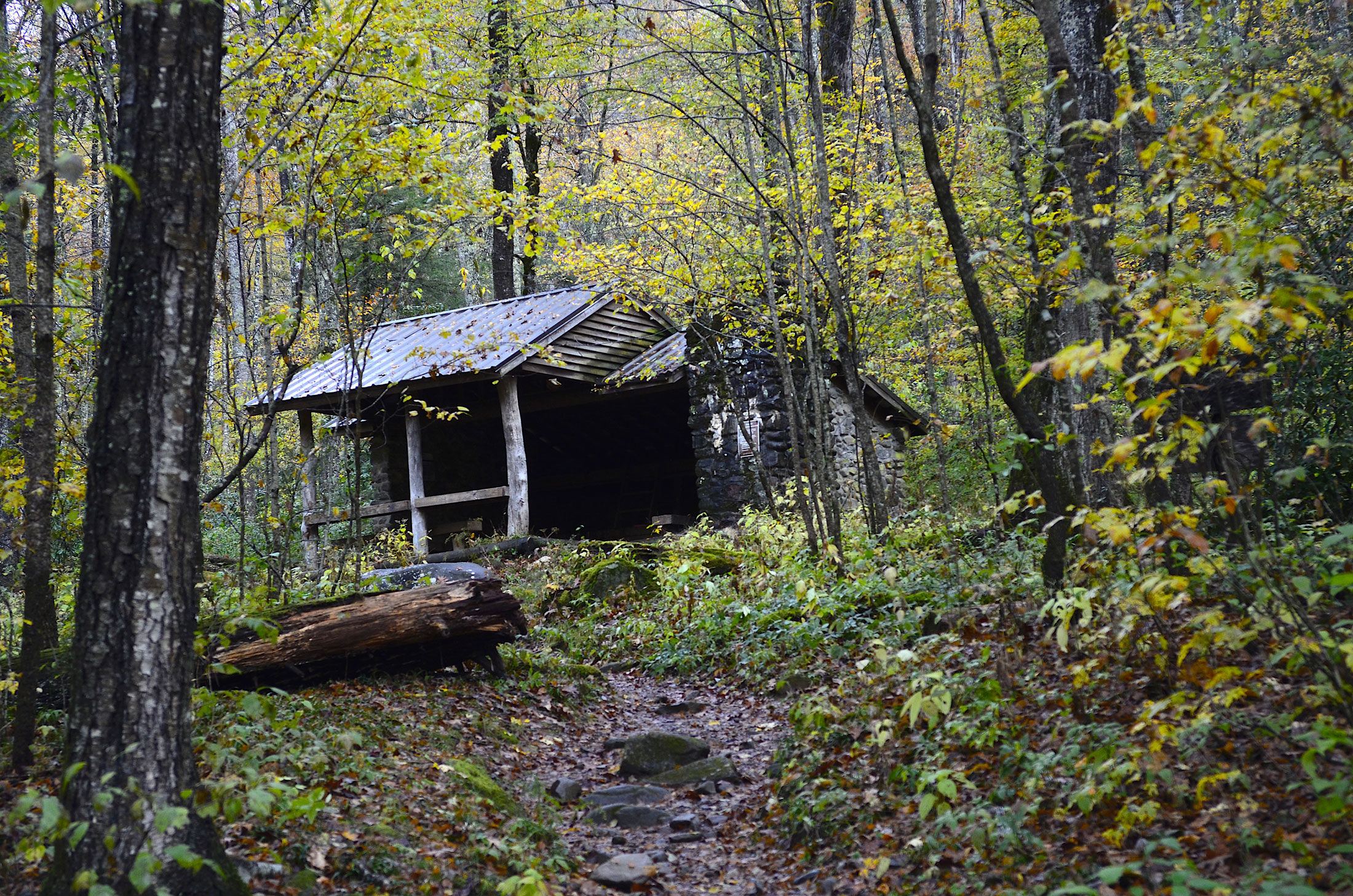
The rangers finish cleaning out the illegal site in about 15 minutes, but their work is far from over. Next up is the shelter itself. They shovel out the fireplace and outdoor fire ring, carefully picking out any pieces of charred trash before spreading the ash. They make sure the bear cables are operational and remove an abandoned tarp and large log. Then they don plastic gloves to collect the frayed pieces of toilet paper scattered atop the sleeping platforms, the result of a left-behind roll that got wet and was then chewed by mice. We’re just about to turn around when Williams finds a second illegal campsite. She and Gibeault repeat a now-familiar procedure—scattering ash, moving rocks, covering the area with leaves and fallen limbs.
Small spots of blue sky peek around the clouds as we descend, and by the time we reach the trailhead, the day hikers are out in full force. Williams and Gibeault greet everyone we pass, between encounters discussing where they might go next. It’s only noon, and they still have six hours left in their workday.
“It’s very rewarding work,” Williams said. “I feel very lucky.”
Salaries for backcountry rangers like Williams and Gibeault are paid using revenues from backcountry camping fees. Fees are currently set at $8 per person, per night. For more information about backcountry camping, including a reservation portal, visit nps.gov/grsm/planyourvisit/backcountry-camping.htm. Help support backcountry work by packing out what you pack in, minimizing your impact at campsites, and doing your research before hitting the trail.

Subscribe to get the latest posts sent to your email.