



From George Masa’s 1915 arrival in Asheville, North Carolina, until his death in 1933, the trailblazing Japanese photographer explored the Smoky Mountains, mapping trails and capturing the region’s grandeur and beauty in photographs that helped make the case for the creation of Great Smoky Mountains National Park. But Masa’s friends—and the researchers who followed—have long wondered: where did Masa’s love of the mountains originate?
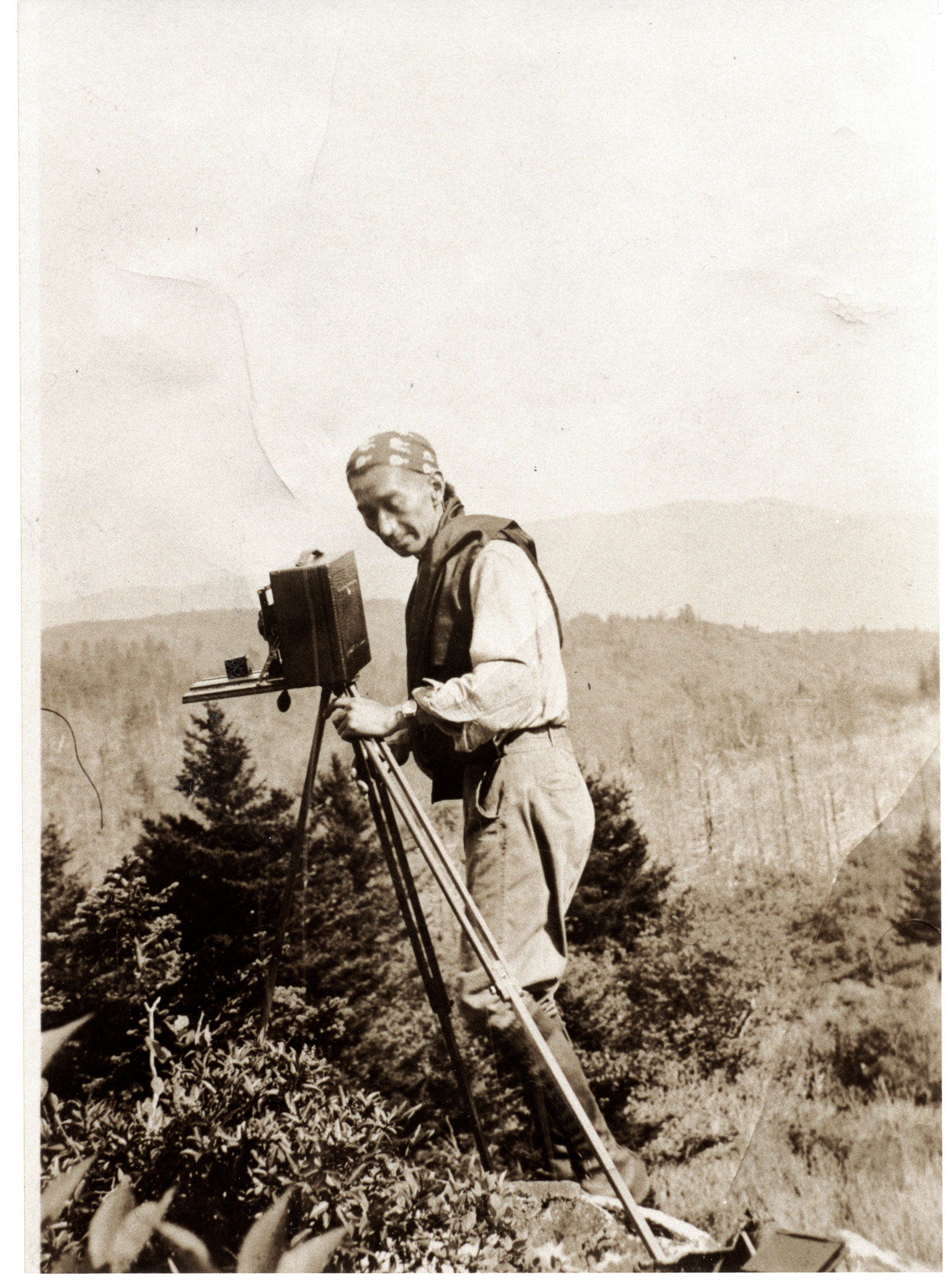
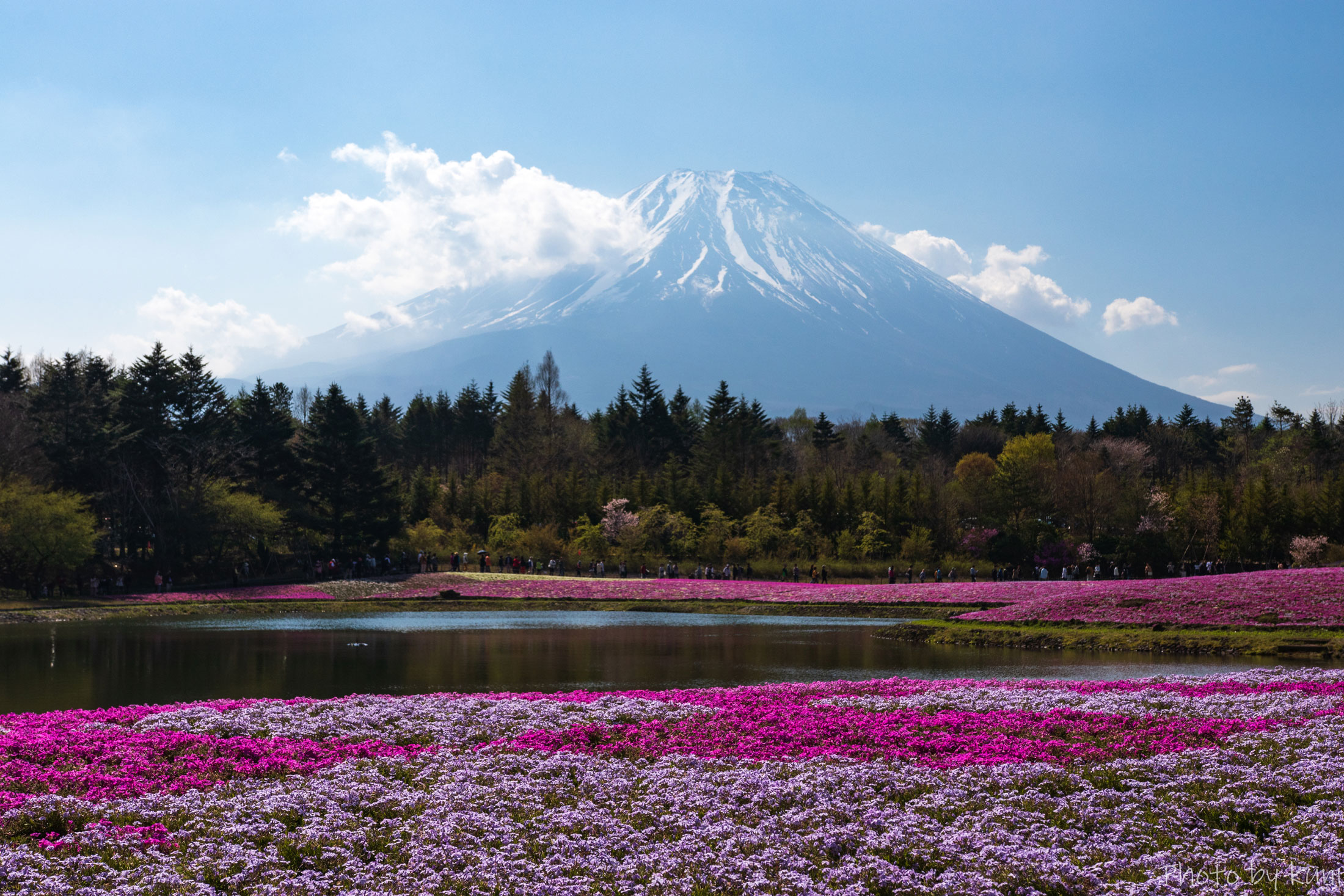
We now know that it started long before his arrival in Asheville. Growing up in Shizuoka, a prefecture on Honshu, Japan’s largest island, Masa—born with the surname Takahashi, becoming Shoji Endo (sometimes spelled “Endow”) when he was adopted following his mother’s death, and only later known as George Masa—would often catch glimpses of Mount Fuji in the distance. At 12,385 feet, it is the highest point in Japan. The southern portion of the Japanese Alps also stretches into Shizuoka prefecture. Today more than ten percent of the land in Shizuoka is protected. When he had time and money, Masa went mountain climbing.
“Appreciation of mountaineering itself was born among a small elite of Japanese youth,” wrote Yasuji Yamazaki in the British Alpine Journal v. 71 (1966). Masa was one of them. In 1905, at the age of 20, he joined the Japanese Alpine Club.
Such clubs often published periodic newsletters that included tidbits about their members. It was in one of these publications that we first learned new details about George Masa. The June 1906 journal of the Japanese Alpine Club reported that two of its members, Mr. Kiyosawa and Mr. Shoji Endo, left for Seattle, promising to research the Rocky Mountain Club and send reports home to the membership.
Masa had first tried to enter the US in 1904 but was turned away at the port of San Francisco due to a serious eye infection. He enrolled in Tokyo’s prestigious Meiji University, left after one semester, and tried once again to come to the States. This time, he succeeded.
Masa spent nearly a decade on the West Coast, mostly in Seattle and Portland, working a variety of jobs but playing hard in his spare time. Talented on the baseball field, he played, coached, and managed for various Japanese teams in the Pacific Northwest, and he also continued his mountain climbing pursuits.
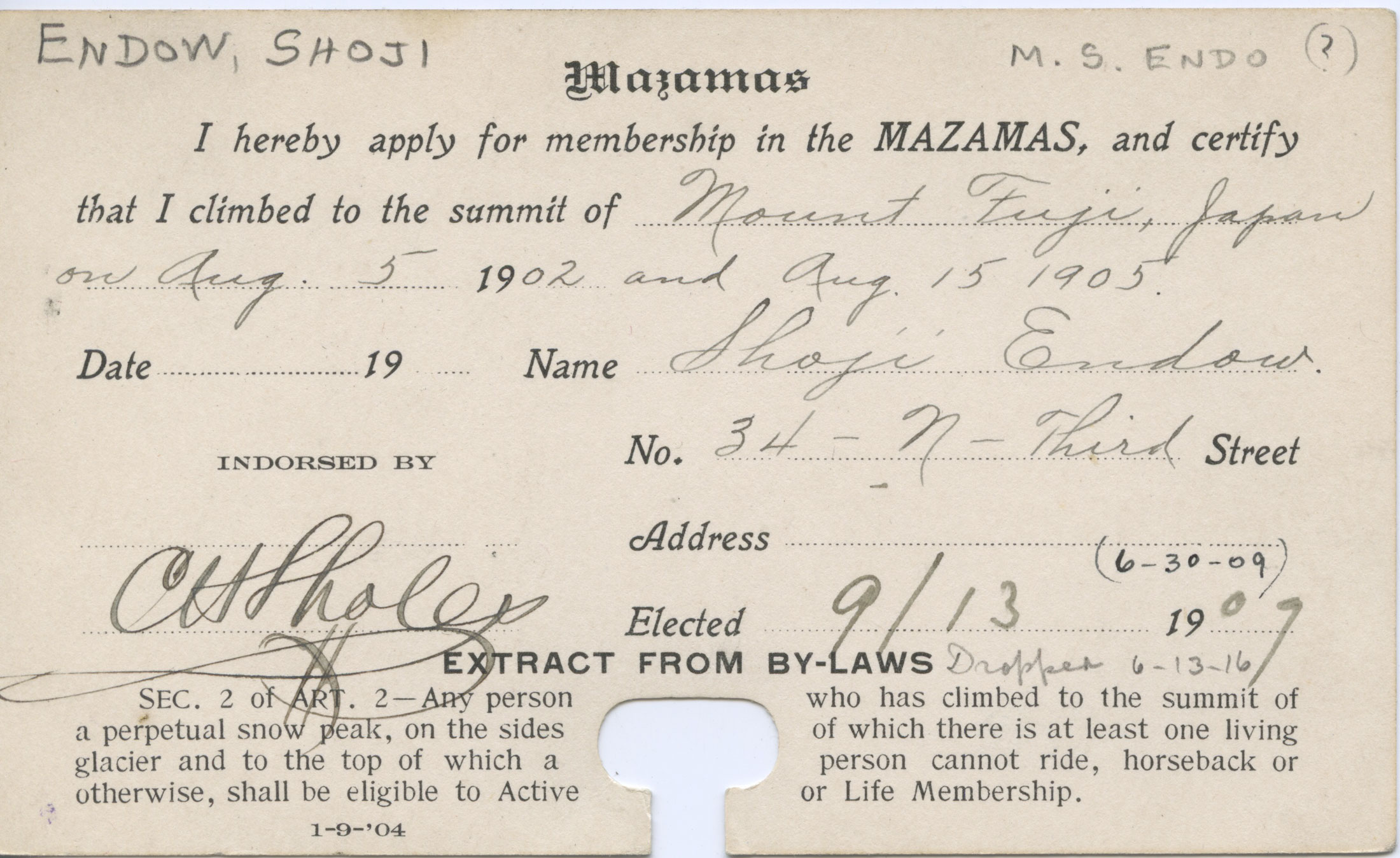
On September 13, 1909, Masa applied for membership in the Mazamas Club, an alpine club that had been established on the summit of Mount Hood in 1894. His application listed two ascents of Mount Fuji, made at the ages of 17 and 20. Rightly proud that one of its climbers was now a Mazama, the Japanese Alpine Club announced in its November 1909 journal that Masa was likely “the very first member of us who was allowed to join an overseas mountain club in our history.” In 1911 he and his climbing buddy Gaintsu Senow signed the summit register on 11,249-foot Mount Hood, the highest mountain in Oregon. In addition to their names and club affiliations, the two friends added their signatures in Japanese. Masa remained on the Mazamas membership roster through 1916.
We also learn through the journal of the Japanese Alpine Club that Masa climbed Mount Rainier, the highest mountain in Washington State at 14,410 feet in elevation. Although the early summit registers for Mount Rainier are not in any archive, both the newsletter of the alpine club and the History of Japanese Mountain Climbing (1969) assert that Masa was the first Japanese man to climb Mount Rainier.
“What a spectacular glacier,” Masa exclaimed in a letter home to the Japanese Alpine Club. Apologizing to his climbing community for not writing a full report, he confided that a recent baseball injury prevented him from submitting one. Hit in the chest by a pitch, Masa had been laid low with an infection and a fever. Eager to explore again, he reluctantly conceded in his November 1910 update that he wouldn’t be able to “climb mountains this summer with this physical condition.” Likely his injury knocked out his baseball season as well.
The setback did not prevent Masa from encouraging others to climb Mount Rainier, however. He reported in his letter that he had “urged the Asahi newspaper to recruit a climbing party … of 15–16 people.” Photographs preserved in a photo album now held by the Nippon Kan Heritage Association and once owned by Juichiro Terusaki, who ran the Asahi News in Seattle, chronicle an expedition of a 12-person climbing party from 1910.
It was not easy to summit these peaks. Although both the historians’ reports in the Mazamas journal and the club’s 75th anniversary history, We Climb High: A Thumbnail Chronology of the Mazamas, 1894–1964, provide stories of the camaraderie and triumphs, they also offer glimpses of the harrowing experiences climbers faced—lightning storms on the summit, blind crevasses, limbs crushed by rolling boulders, rescue teams transporting injured or dead climbers off the mountains. We don’t know the route Masa used on his ascents, but we do know there were no highways or well-worn trails leading to the summits.
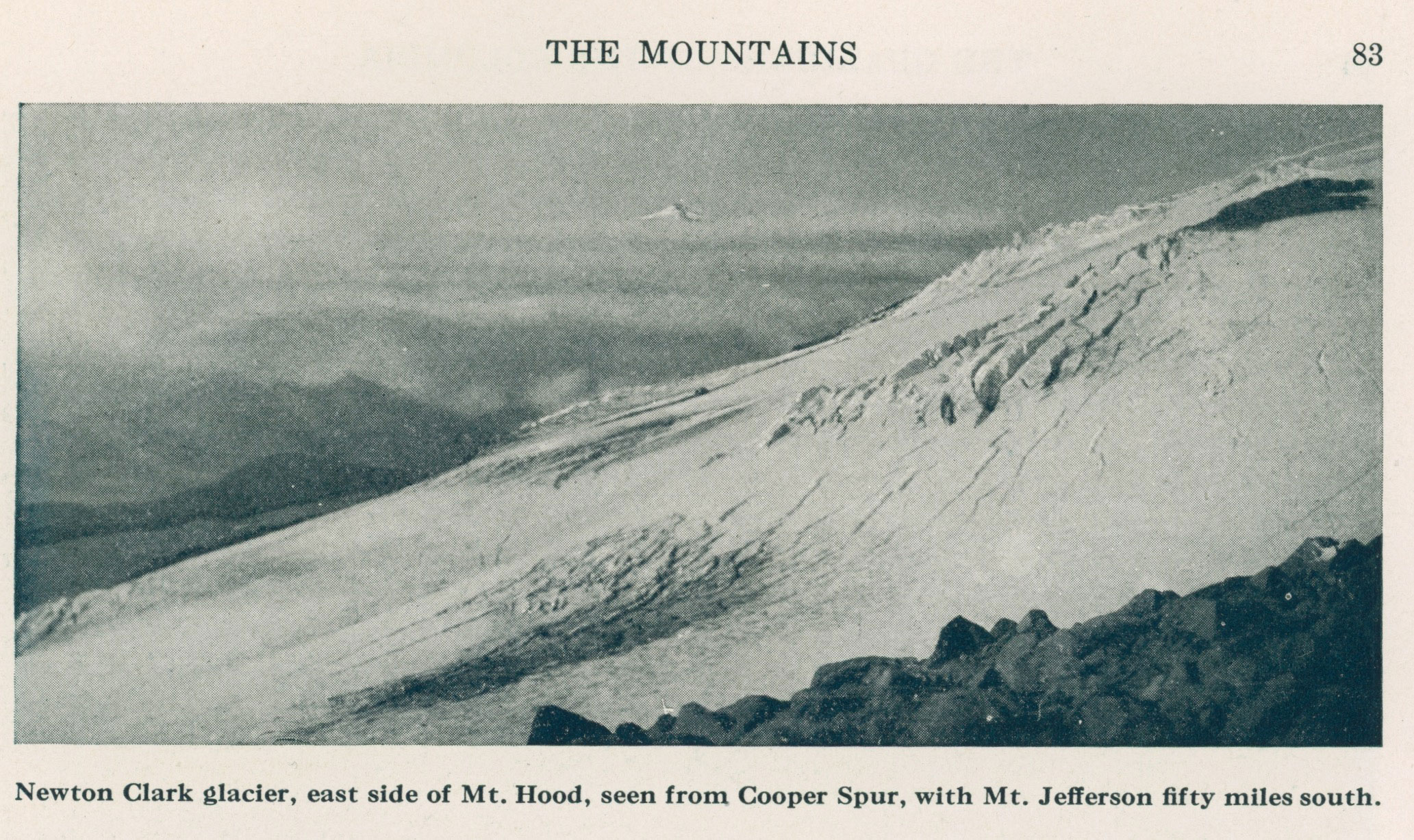
What’s more remarkable is learning that Masa was photographing some of his own climbing trips—evidence found in John H. Williams’ book, The Guardians of the Columbia (1912), now available digitally through Project Gutenberg. Williams focuses his book on three snow-capped peaks in the Cascade Range: Mount Hood, Mount Adams, and Mount St. Helens.
Shoji Endow is credited with six of the 200 photographs featured in the book, including a striking photograph of storm-swept white-bark pines, a sharp image of Newton Clark glacier on Mount Hood, another of Eliot Glacier taken from near the summit of Mount Hood, and a cluster of three climbers approaching the summit of Mount Adams, at 12,281 feet the second-highest peak in Washington state. A surprising photo of a butterfly poised slightly above its shadow is captioned “a butterfly on the summit of Mt. Hood.” While some of the other photographers in Williams’ book were using larger-format cameras, Masa was likely carrying a smaller Kodak #2 or #3 Brownie on these climbing trips. He had clearly gained enough experience to produce quality photos, proving an early interest in photography along with budding technical skills.
Masa’s passion for mountains also gave him a new nickname, according to the November 1909 Sangaku, the journal of the Japanese Alpine Club. Writing back to his friends in Japan, he explained, “As I am so obsessed with mountains, my friends call me ‘Yama’ instead of my real name. Therefore, I’ve started to use ‘Yama耶麻’ as my penname.”
The word “yama” means “mountain” in Japanese.
When Masa arrived in Asheville in 1915, Fred Seely, his boss at the Grove Park Inn, had no idea that the “ironing man” he’d just hired for his laundry was both a talented mountain climber and an experienced photographer. Neither did his hiking friends from the Carolina Mountain Club who arranged his funeral 18 years later know of his early experiences with climbing and photography.
And, until recently, neither did we. We do understand, however, that we will never be “finished” with George Masa. Masa’s West Coast life provided the scaffolding for his work in the Smokies. We are the beneficiaries … and now, the guardians.
Paul Bonesteel’s documentary film, A Life Reimagined: The George Masa Story, will be released nationally on PBS in May via broadcast and streaming. For information about public screenings leading up to the world premiere and additional background on the making of the film, visit GeorgeMasa.com. Smokies Life is proud to be a supporter of the film.
An expanded version of this story was originally published in the fall 2025 issue of Smokies Life Journal, a twice-yearly magazine that is the primary benefit of joining Smokies Life. The piece follows the 2024 publication of the award-winning biography George Masa: A Life Reimagined, coauthored by Jane McCue and Paul Bonesteel and published by Smokies Life. To read more stories like this while supporting Great Smoky Mountains National Park, visit SmokiesLife.org/Membership and become a Park Keeper.
Subscribe to get the latest posts sent to your email.