


Every morning, Kimberly Baxter leaves her home in Pigeon Forge, Tennessee, long before most of its residents have hit their first snooze button. She’s on the road toward Cades Cove by 5 a.m., reaching her first stop of the day in the Cable Mill area by 6:30 a.m.
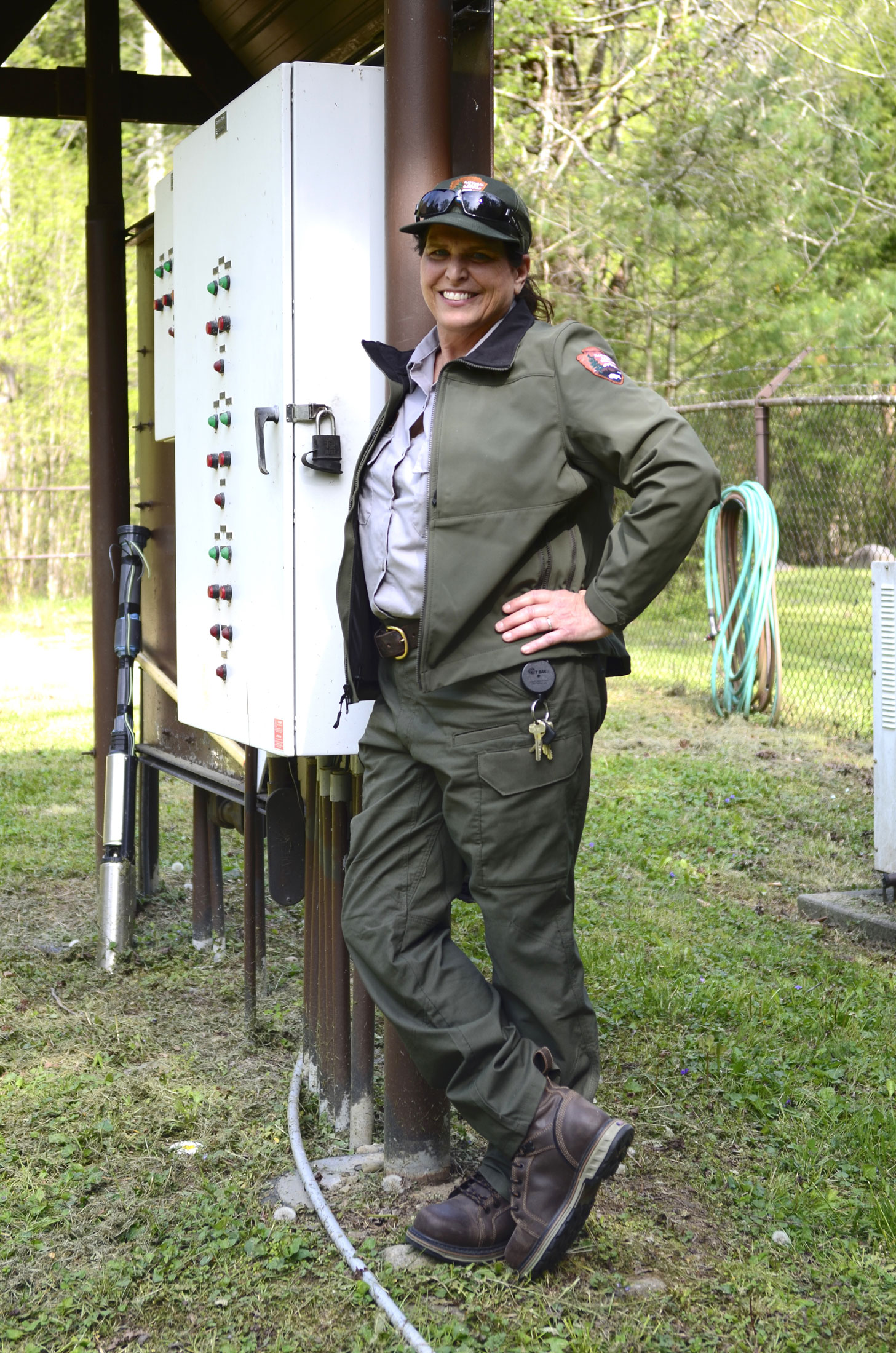
“I feel like I’m doing something that’s important, you know?” she said. “I just feel like I’m helping people.”
As the water operator for Cades Cove and nearby areas in Great Smoky Mountains National Park, Baxter is rarely in direct contact with the millions of people who visit the Smokies each year. Yet everyone who flushes a toilet, washes their hands, or fills a water bottle during their visit benefits from the efforts of Baxter and the four other operators who manage the park’s 28 water and 27 wastewater systems. The 12-person utility crew these operators belong to is also entrusted with managing the park’s heating, cooling, electrical, and emergency communication infrastructure.
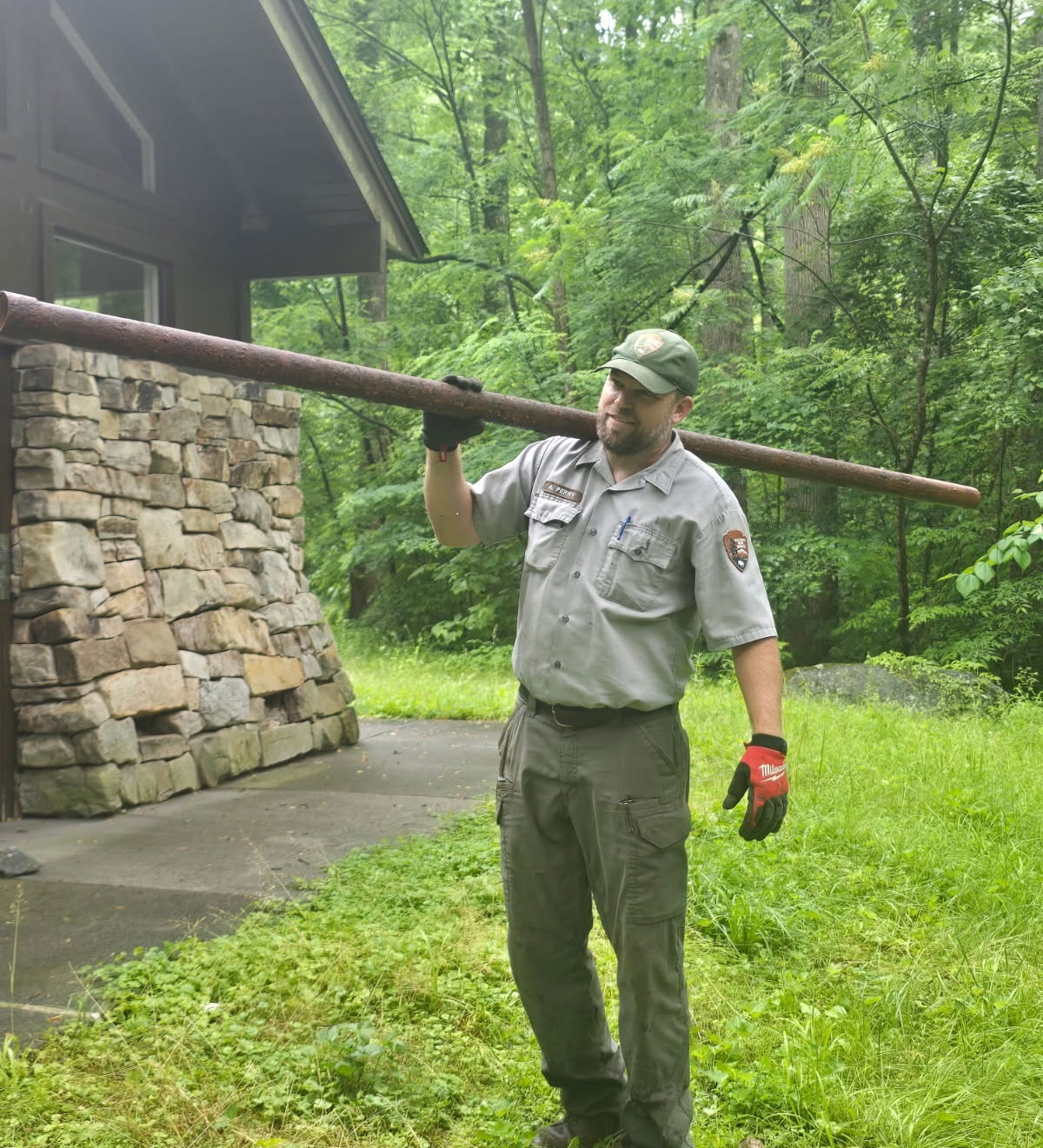
“I tell a lot of the new people we hire in that if you want a job where you’re getting recognized for everything you do, this is not the one you want,” said team lead Ashley Perry. “But if you want a job where people let you just do your job and keep things going, you got the right job for that. I don’t like any attention anyway, so it works perfect for me.”
Before joining the National Park Service in 2008, Perry was a plumber, a trade he’d pursued since working in the family business as a teenager. It was hard work, but with predictable problems and planned schedules. In the Smokies, he’s learned to expand his skill set and think on his feet, seeking creative solutions to issues as they arise.
“I get here at 6:45 and I plan out the day, and sometimes by the time I’m done with my staff meeting I’ve already changed it up and we’re doing something completely the opposite of what I’d planned,” said Perry, who is also licensed to operate water and wastewater systems. “You try to plan out your day, but things change so fast around here it’s almost impossible.”
For new hires, Perry isn’t necessarily looking for people with polished skills. They can learn those on the job. What he needs are hard-working problem solvers. Team members often work alone in remote areas—they have to be okay with getting dirty and comfortable with thinking outside the box.
“After a year or two, you should be picking up how we do things around here and should be able to figure it out,” Perry said. “It comes down to, do you want to do it, and are you somewhat mechanically minded to figure out how to do it?”
Baxter knew nothing about water treatment systems when she started working for the park service in 2012. She was hired as a seasonal custodian stationed at Elkmont Campground but quickly became fascinated with the water treatment systems. Mike Townsend, who operated them at the time, was a willing teacher, and Baxter learned how microorganisms break down organic matter as it enters the wastewater plant, how to monitor water quality, and how water is filtered, treated, and ultimately returned to the environment.
Later obtaining Tennessee and North Carolina state licensures in water and wastewater management, Baxter landed her first water operator position in November 2018. She worked closely with Perry, who had more experience, to operate seven systems in the park’s north district, and has since worked with every water system in the Smokies at some point. She’s been at her current post since March 2025, responsible not only for the Cades Cove campground and visitor center but also for Tremont, and the seasonal Abrams Creek and Look Rock campgrounds.
“Most water operators are very passionate about water,” she said. “There’s so many different aspects—I could talk all day long about water.”
If passion is the main ingredient in the motivation, precision is the main ingredient in the execution. Every day during her five-day work week, Baxter checks in on each system in her jurisdiction. To do her job well, she must be attentive, clear-headed, and detail-oriented at each stop.
“It’s not rocket science,” she said, “but you have to follow the rules. And there’s a lot of rules.”
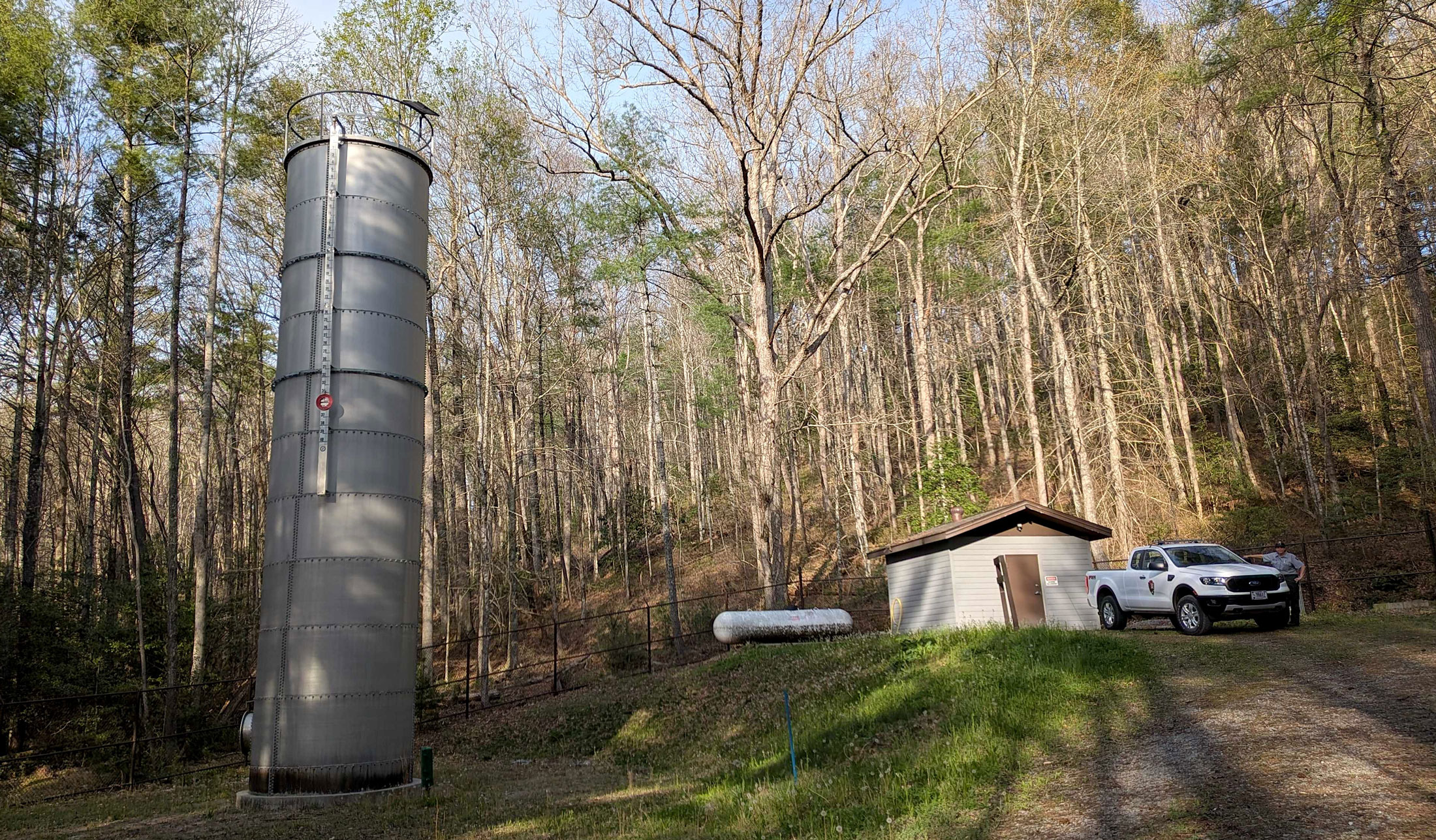
Every water system has its own pumphouse, which is divided into two rooms: one where the water comes up from the well and one where it is chlorinated and pumped to a water tower. Holding it in the tower helps kill some of the tougher microorganisms, and the tower’s height supplies the water pressure needed to push it through the pipes.
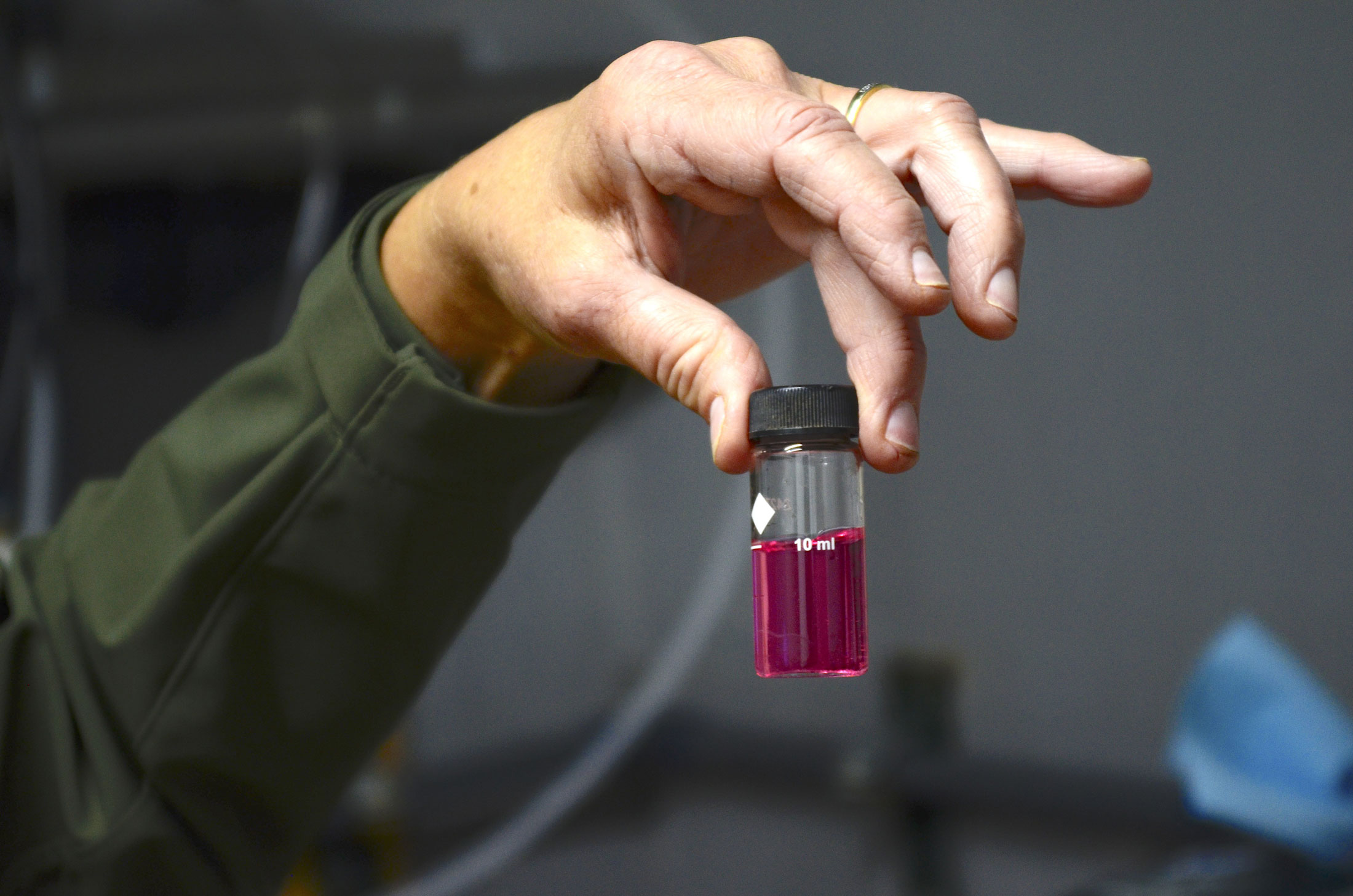
Baxter tests each system’s chlorine levels daily, refilling chlorine barrels as needed and inspecting the system for potential issues in need of fixing. One of her rules? Anytime you use a chemical, read the label beforehand—even if you feel sure of what you’re grabbing by appearance and location alone. Another one? Ensure important actions, like switching a pump back on, are marked in your memory.
“I would get up in the middle of the night and think, ‘Did I turn that pump back on?’ And I would get in my vehicle and drive into the park,” she said. “We all have, because we’re so passionate about our jobs, and I still would, but I found tricks so I don’t forget. I tell myself three times before I leave, ‘I turned that pump on.’ I’m visually looking at that switch. I can see the pump pumping. I turned it on.”
Once water is flushed down the toilet or washed down the drain, it enters the wastewater system, also Baxter’s purview. Each of her water systems has a corresponding septic system that treats the water in multiple stages, eventually releasing it into the soil through a network of small pipes spread through a nearby drain field.
“At this point, they say it’s so clean that you could almost drink it, because it’s been through the whole process,” Baxter said. The park’s water utility team consistently exceeds the standards state and federal regulators set for its water and wastewater systems.
The heroes in this transition from waste to clean water are millions upon millions of microscopic animals that eat the toxic and disease-causing components of the wastewater and allow clean water to separate from the sludge. Baxter finds these creatures fascinating—so much so that her daughter has taken to purchasing various items featuring her favorite microorganism, the microscopic eight-legged tardigrade, affectionately known as a water bear, for every gift-giving occasion.
At Tremont, Cable Mill, Look Rock, and Abrams Creek, the microorganisms do their work in below-ground septic tanks, but Cades Cove Campground is unique in that its wastewater system uses three lagoons, which are open to the air but surrounded by fencing and locked gates, keeping both unauthorized people and destructive wild hogs from entering.
The three lagoons work in a series, with the water becoming progressively cleaner as it moves from one to the next. This is due to the fresh microorganisms the wastewater encounters in each new pond.
“When it comes to microorganisms, the young workers are real light and they’re small,” Baxter explained, “but as they get older, they get kind of fat and lazy. And those microorganisms, since they’re heavy, sink to the bottom.”
After working its way through the trio of lagoons, the water enters the drain field, which is like a plus-sized version of a home septic leech field. While home systems can typically discharge a maximum of 120 gallons per day, per bedroom, the field at Cades Cove, the largest of the water systems for which Baxter is responsible, has a daily limit of 30,000 gallons. The field has meters monitoring how much water is flowing into and out of the lagoons each day. If the inflow is higher or lower than expected, Baxter investigates the cause: a pipe could have sprung a leak, a faucet could have been left on, or a broken toilet could be running endlessly. Any of the above could place undue strain on the field’s capacity. She also assesses the ponds’ outflow to the drain field, adjusting it based on seasonal demand.
Baxter carries a radio, but although she’s able to call for help when she needs it, she and her colleagues have become expert in specialized tasks like rebuilding water pumps, fixing broken plumbing, and adjusting septic flows. Backup could be an hour or more away, so the ability to deal with an issue in the moment carries immense value.
“You’ve got to be a jack of all trades, just for the fact of being spread out,” Perry said. “If she’s there and it’s something she can handle, she just goes ahead and takes care of it.”
Subscribe to get the latest posts sent to your email.