


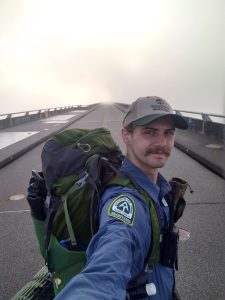
There are many jobs that contribute to the preservation of Great Smoky Mountains National Park for future generations, like rangers who oversee backcountry campsites, park biologists who study the flora and fauna of this amazing region, or support staff who work with the park’s nonprofit partners. In my view, however, one of the most interesting jobs—and certainly one of the most colorfully named—is that of “ridgerunner.”
Ridgerunners are employees of the Appalachian Trail Conservancy, the nonprofit organization whose mission is “to protect, manage, and advocate for the Appalachian National Scenic Trail.” There are three ridgerunners who maintain the 70-mile stretch of the Appalachian Trail (AT) in Great Smoky Mountains National Park: two who work a shorter season from February through the end of May, and one “long-season” ridgerunner whose job lasts from February through November 1.
Ricky Vandegrift, who thru-hiked the AT in 2017, currently serves as the long-season ridgerunner in Great Smoky Mountains National Park. Many of his day-to-day responsibilities include checking overnight permits at shelters and explaining backcountry protocol to less-experienced hikers. Vandegrift, however, sees his primary role as that of an educator.
“The AT is a super-visited trail in a super-visited national park, and for many hikers, it’s their first and only time on trail,” he said. By engaging in friendly, informative conversations with the hikers he encounters, Vandegrift hopes “to get everyone to step back and look at the 30,000-foot view and see how their one experience can make a huge impact” on maintaining the trail and contributing towards a positive experience for future hikers.
According to Vandegrift, even small changes in a hiker’s behavior, such as drinking your “gray water” (water used to clean out cooking pots) or swallowing your toothpaste after brushing, helps prevent the accumulation of all those interesting odors that could attract pests or bears to a campsite.
Vandegrift also worked a season as a ridgerunner in New Jersey. One of the differences he noted about working in the Smokies is that thru-hikers’ attitudes are more flexible at this point in their journey. He finds northbound thru-hikers in the Smokies more open to suggestions about how to change and improve their hiking habits.
Promoting Leave No Trace (LNT) principles is one of the greatest satisfactions of Vandegrift’s work. “It’s inspiring because you can give nuggets of LNT advice that hikers will carry for the rest of their lives,” he said, “and that will make a difference on all of their future hikes.”
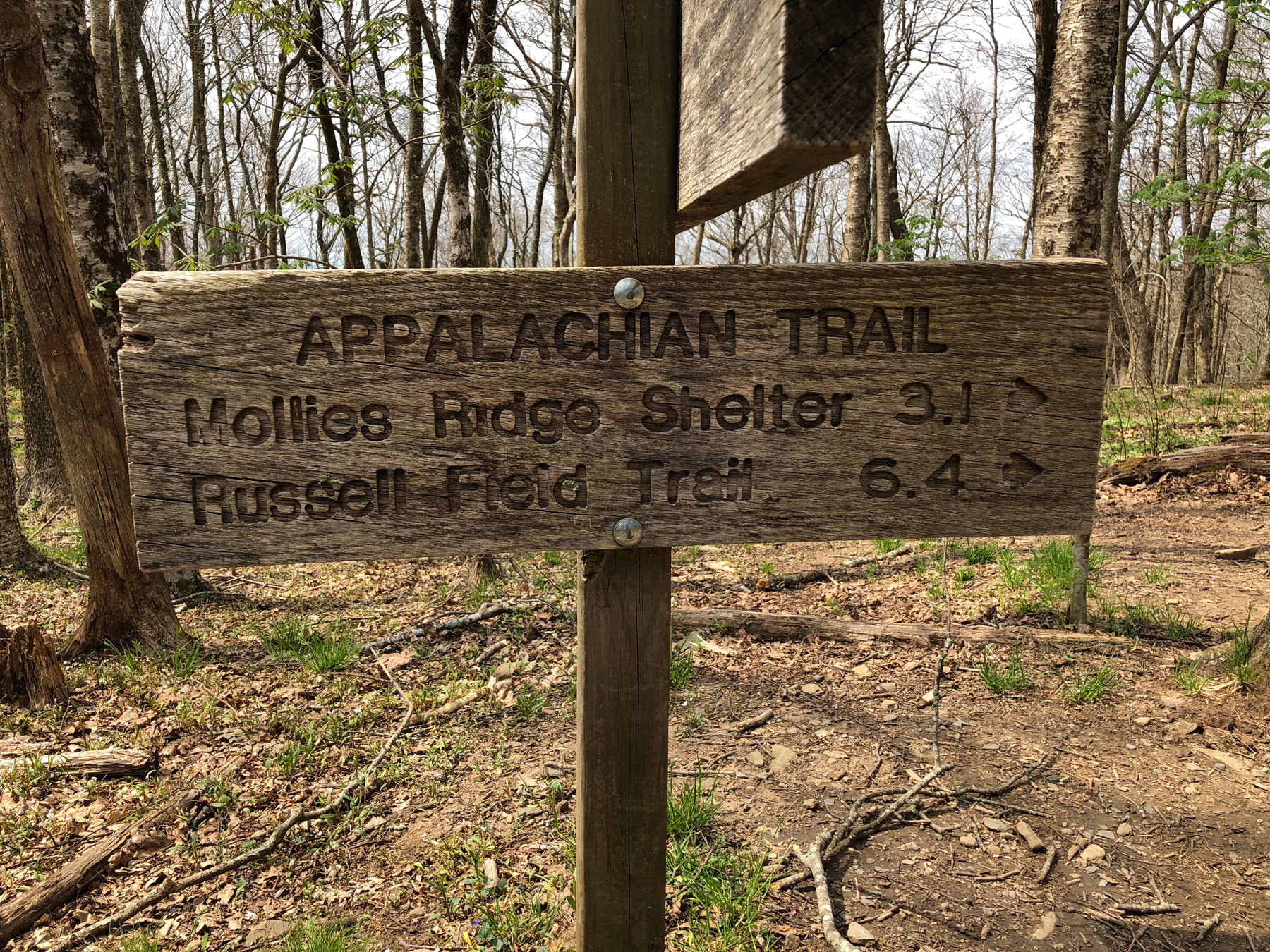
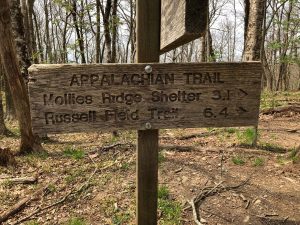
I asked Vandegrift, who has spent so many days and nights in the Smokies backcountry, if he has a favorite section of the AT in the park. He responded that the area around Mollies Ridge Shelter is a very special place for him. It was there, early in his northbound thru-hike in 2017, where he encountered a ridgerunner for the first time. He remembers thinking that it was a cool job but that it might never work out for him. Now, however, Vandegrift has come full circle: caring for the same stretch of trail where he first met a ridgerunner.
To help maintain the AT, and all backcountry trails in Great Smoky Mountains National Park, please review Leave No Trace principles before you set out for your next hike. You can also visit the website of the Appalachian Trail Conservancy to learn more about the important work they do to maintain America’s oldest national scenic trail.
Subscribe to get the latest posts sent to your email.