

Glow-in-the-dark isn’t a phenomenon reserved for Fourth of July parties and laser tag games. Smokies species ranging from fireflies to flying squirrels have natural adaptations that allow them to emit light, bringing a whole new world to life when the sun goes down.
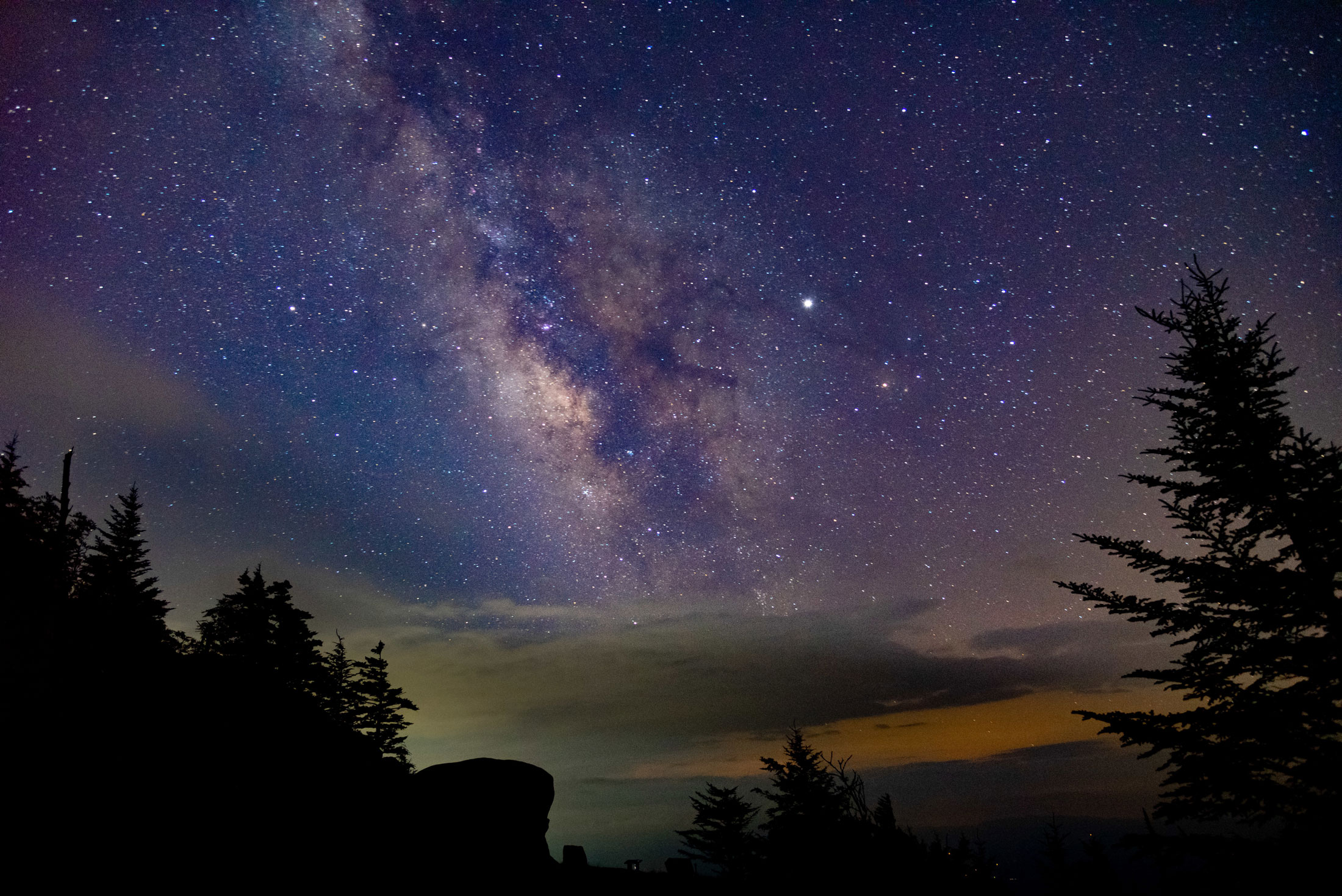
“There’s magic in the dark,” said Will Kuhn, director of science and research for Discover Life in America, a partner of Great Smoky Mountains National Park.
For these species, glowing is an adaptation that allows them to survive and reproduce more successfully. It can help them hide from predators, find mates, protect themselves from harmful radiation, lure in prey, or even navigate.
The world of glow life is divided into two different categories: bioluminescence and biofluorescence.
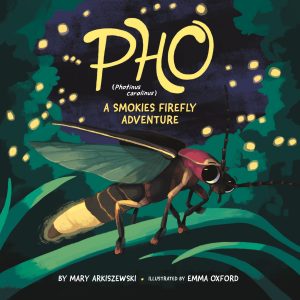
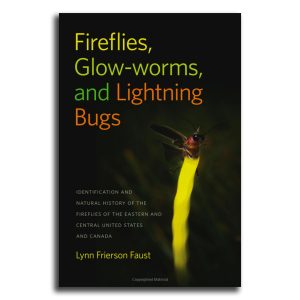
Bioluminescence—the ability to produce light by combining chemicals called luciferin and luciferase—is probably the most familiar. It includes the park’s most well-known glowers, fireflies.
The Smokies is home to at least 19 different species of bioluminescent firefly. They all glow during the larval stage, but only 13 of them emit the showy flashing courtship displays as adult males for which fireflies are most noted. Each of these species has a slightly different preferred habitat, seasonality, and time of night for this display, creating the opportunity to see a variety of treetop twinkles and field flashes throughout the summer.
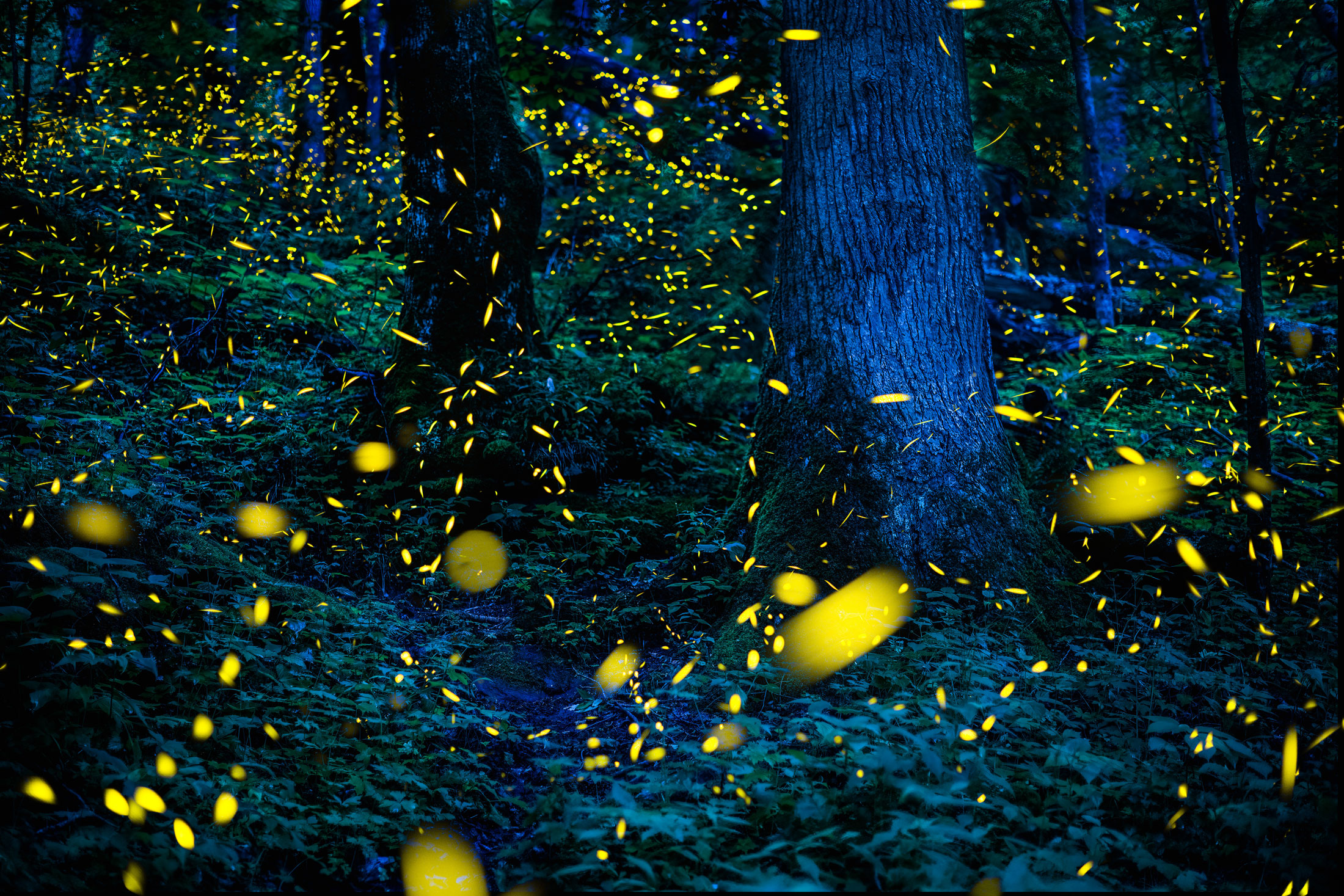
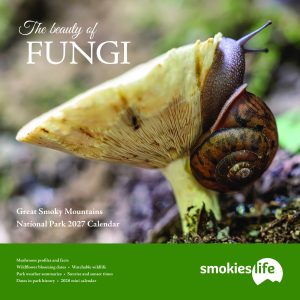
But fireflies are far from being the only organisms that bioluminesce. The Smokies contains at least three other types of insects and 19 different fungi species that emit their own light, Kuhn said.
Biofluorescent species make up an even larger category of light-emitting creatures, and they rely on an entirely different set of mechanisms to glow.
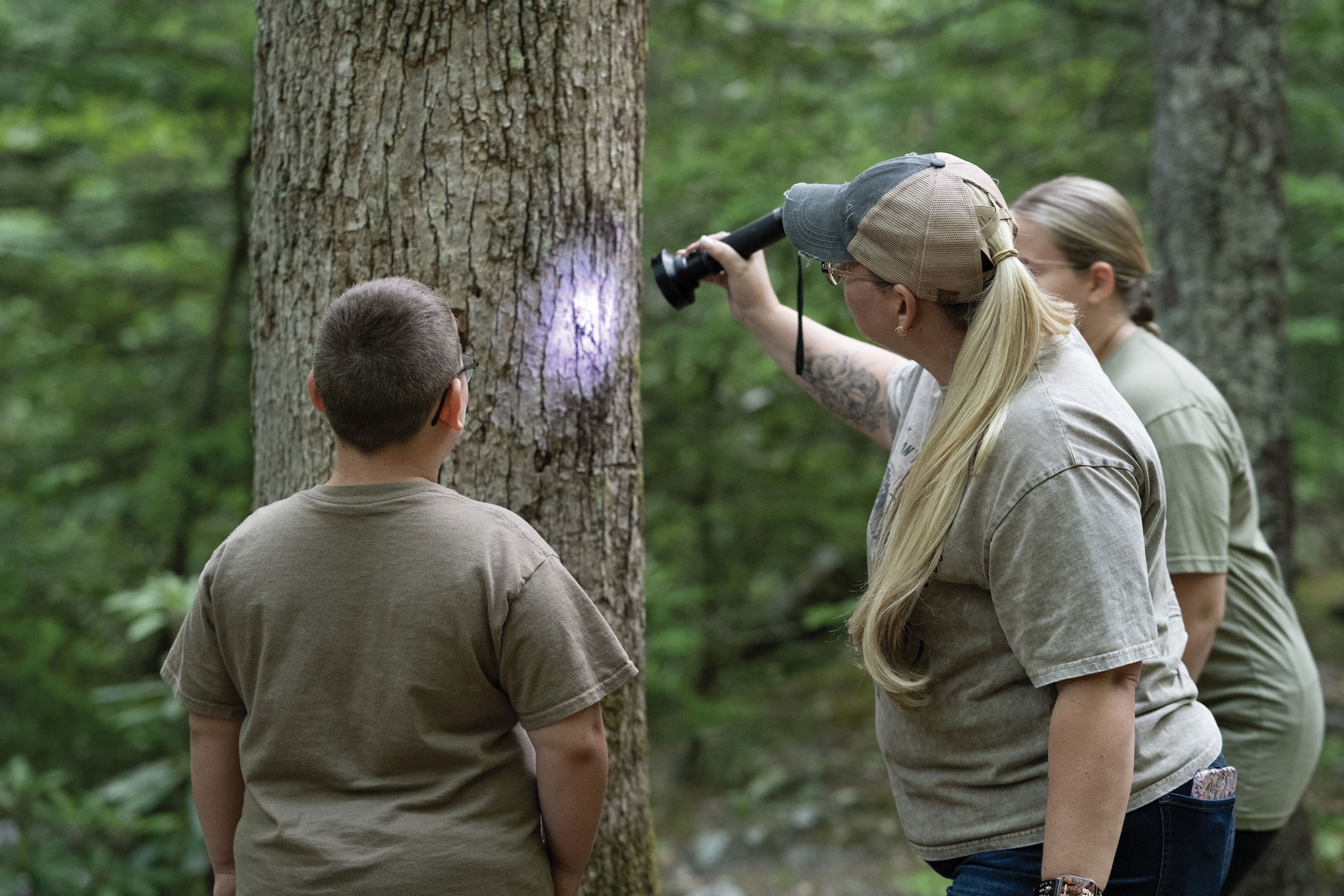
“They don’t create their own light, but they glow by changing light from outside sources like the moon,” Kuhn explained. “Humans can’t always see this biofluorescence, but if you hike outside after dark with a black light flashlight, you’ll be amazed at how many different organisms glow.”
Black lights emit ultraviolet light, which has longer wavelengths and lower energy than the spectrum visible to human eyes. Daylight washes out the glow from biofluorescent organisms, but shining a black light in the dark provides the wavelengths these species need to create their own colors and allows humans to see the show.
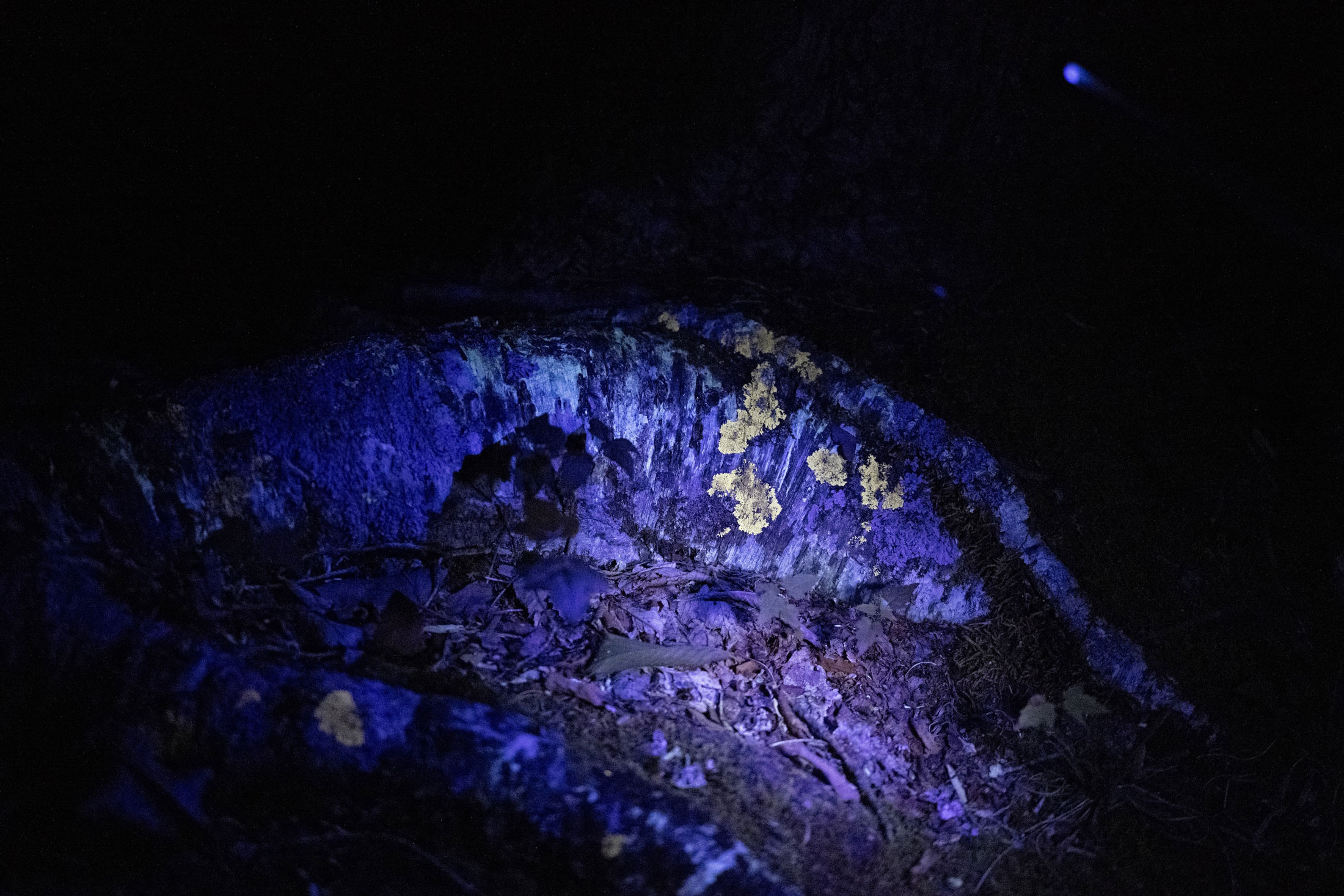
Inspired by this idea, Smokies Life Graphic Designer Miranda Bemis and her family recently took to the woods in search of biofluorescence. They started the hunt in a patch of woods close to their house. Shining the black light on sticks and tree trunks, they saw various patches of lichen leap to life, emitting vibrant colors far removed from the subtle shades of green visible during the daytime.
“After seeing small-scale what we could do here, it was time to go into the park,” Bemis said.
Next, the family set out for a nighttime trip to the Tremont area. At first, the kids, ages 9 and 12, were nervous about being in the woods at night. But helping them to get over that fear to see the beauty in the dark was part of the goal.
“There’s a lot more beyond what you can see in the daylight,” Bemis said, “and yeah, things can look creepy and scary, but they’re still really cool.”
They shined the black light on tree trunk after tree trunk, sometimes finding nothing of note and other times gasping as large swaths of lichen leapt out in neon colors. It was surprising how much the forest transformed under UV light, even things that weren’t technically biofluorescent—anything white, for instance, is going to glow under UV.
It was a fruitful adventure, but for Bemis and her family there is still more to see. The list of biofluorescent creatures in the Smokies includes a variety of species they have yet to spot: salamanders, birds, millipedes, scorpions, insects, various plants, and even mammals like flying squirrels.
“I just find beauty in things that are not always what they seem,” Bemis said.
Whether day or night, always stay safe when venturing into the park. Risk of falls and wildlife encounters is higher at night, so when visiting in the dark, stay close to your car, wear good shoes, and bring a flashlight.
Subscribe to get the latest posts sent to your email.