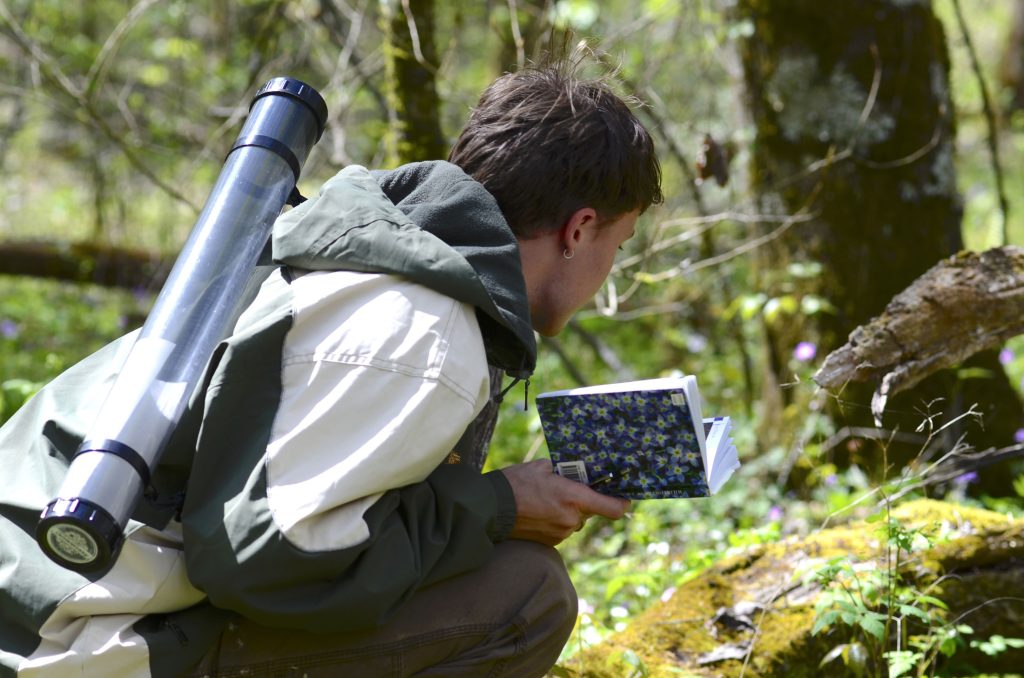
On a crisp October morning in 2024, our team of Discover Life in America staff, volunteers, and local fungi experts—called mycologists—set out to go “mushroom hunting” at Twin Creeks in Great Smoky Mountains National Park. The adventure was part of a MycoBlitz community science survey, with participants working to spot as many fungi species as possible. We had no idea that we would be stumbling onto anything extraordinary, and we wouldn’t learn how “fruitful” the day had been until almost a year later.
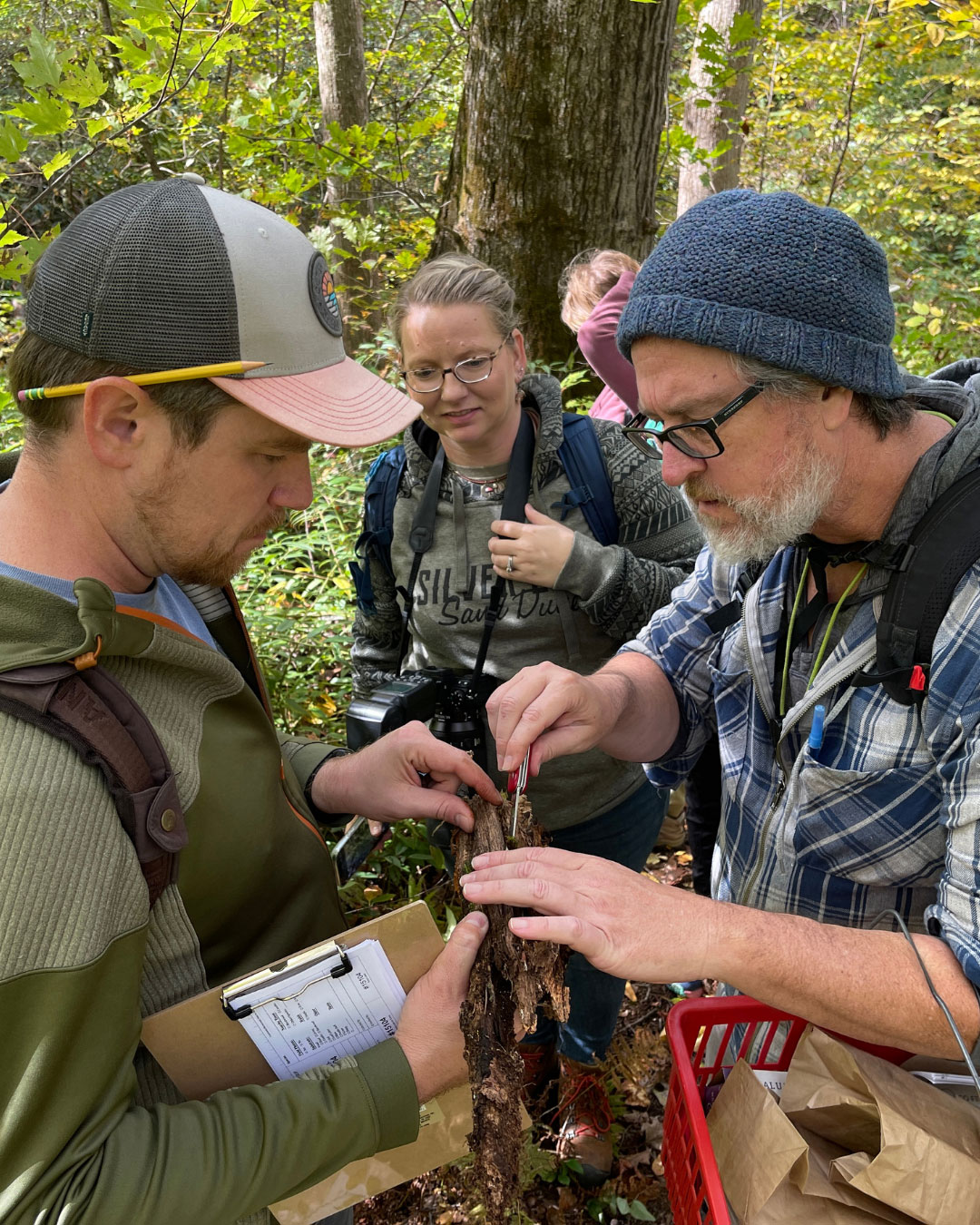
Recent rains had created ideal conditions for mushroom growth, causing an abundance of colorful fruiting bodies of all shapes and sizes to poke out of the leaf litter and emerge from trees and rotting logs. Watching the group excitedly scatter along the trail, scouring the ground for mushrooms, was reminiscent of watching children searching for little treasures at an Easter egg hunt. “Ooohs” and “ahhhs” could be heard echoing through the woods, each discovery met with excitement.
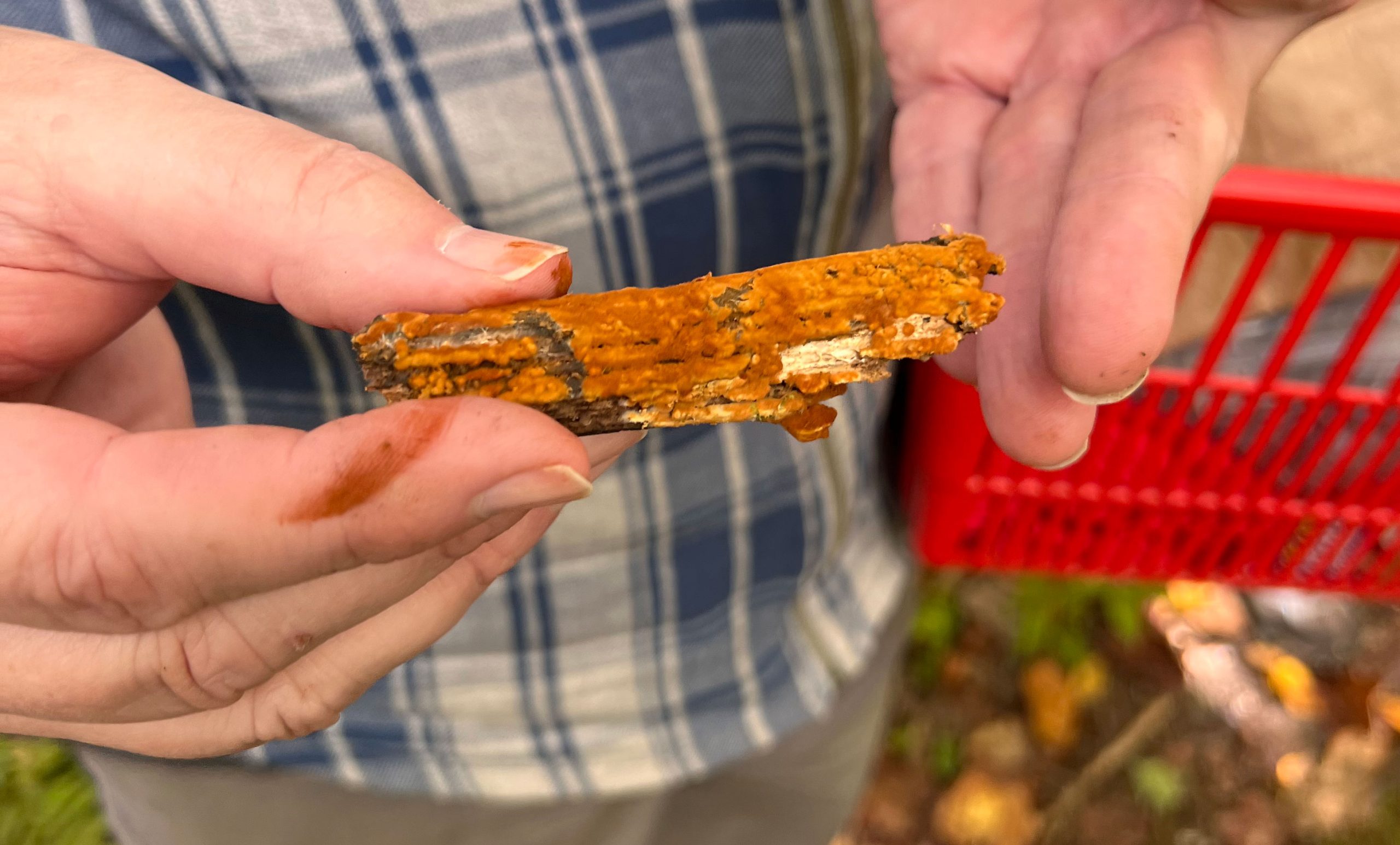
We barely covered half a mile of trail, yet within a couple of hours we had collected dozens of specimens. The group returned to the DLiA office in Gatlinburg, Tennessee, with a large array of fungi and data sheets. We took photos and organized the specimens, designating which ones would require DNA sequencing to accurately identify them to species.
Often, even after a thorough examination, the most knowledgeable mycologists can’t identify a given specimen to species. Many of the volunteers who have joined DLiA’s MycoBlitz events have been surprised to learn this.
“Fungi are really, really hard for anyone who is not intimately familiar with the minute characteristics that distinguish them,” said Will Kuhn, DLiA director of science and research. “Even for experts though, you need the mushroom or other fruiting body in hand to make an identification. Then there’s the issue of cryptic species that look identical but are biologically distinct.”
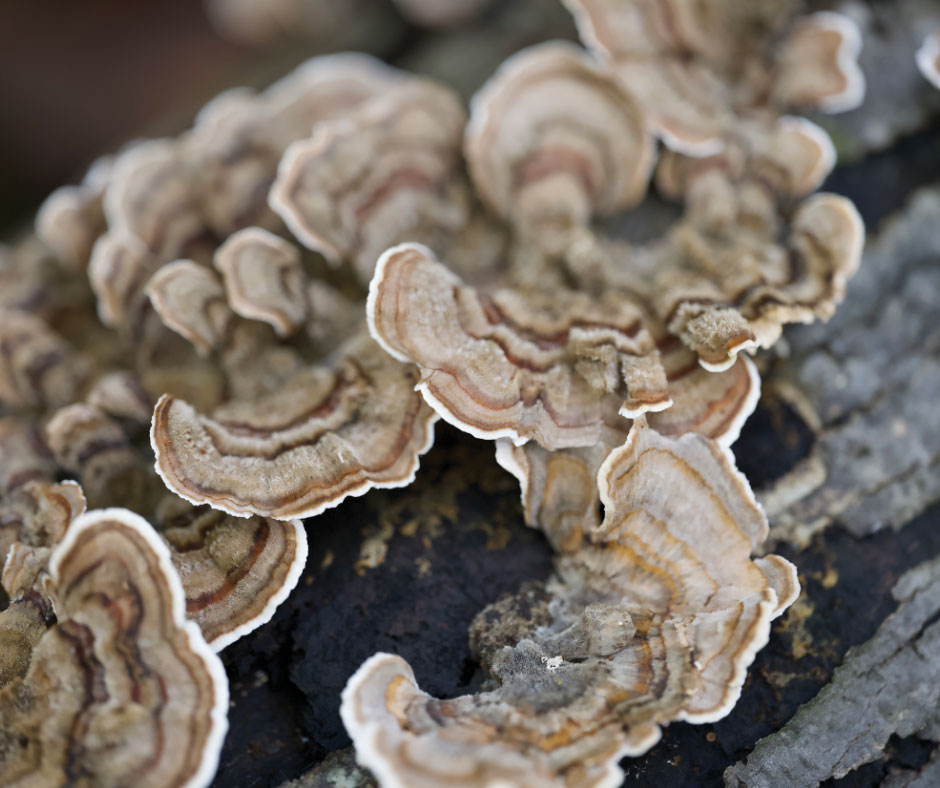
DNA barcoding—the process of reading a short piece of an organism’s DNA and using it for identification—is a technique that’s commonly used to reduce these problems. It allows non-experts to participate in the process of identifying fungi and even in detecting new and sometimes cryptic species.
The complexity involved with fungi identification can be overwhelming, which is why learning directly from experts is such a valuable experience. Miranda Bemis, graphic designer at Smokies Life, was surprised how much she learned as a volunteer at DLiA’s first MycoBlitz in 2023.
“The MycoBlitz turned out to be even more eye-opening than I expected,” said Bemis. “I’ve always thought fungi were fascinating, but walking through the forest with such a knowledgeable team brought that wonder into sharp focus. DLiA’s experts were incredibly informative, pointing out subtle features on each mushroom, explaining ecological roles, and guiding us through the forest with an infectious sense of curiosity.”
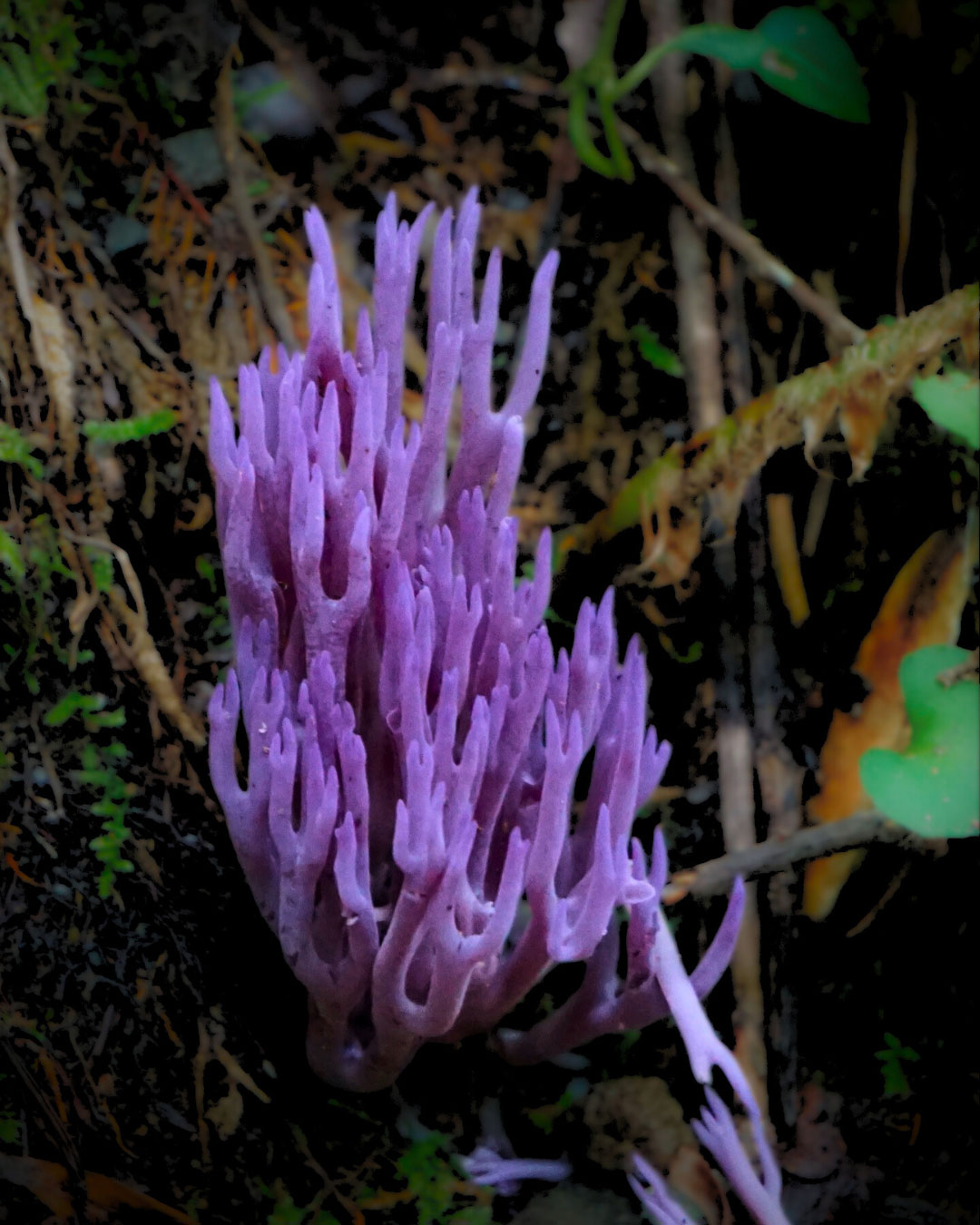
MycoBlitzes help us tackle the difficult task of cataloguing fungi in the Smokies as part of the All Taxa Biodiversity Inventory, but there’s more to them than that. These volunteer-driven events bring the public into the scientific process to work alongside scientists, help collect data, and learn about understudied groups of organisms, like fungi. Many people still confuse fungi with plants, and scientists once did too. It wasn’t until 1969, when advances in microscope optics revealed fungi’s unique traits, that they were classified into a separate kingdom of life. Fungi lack chlorophyll and do not make their own food like plants do. To obtain nutrients, fungi release enzymes to digest organic matter around them through decomposition. We now know that fungi are not only essential decomposers but create a complex network of root-like mycorrhizae that share and distribute nutrients to surrounding plants and trees in their community.
Brandon Matheny, a mycologist who holds a PhD and is a professor at the University of Tennessee, co-led the 2023 MycoBlitz. Not only is his knowledge impressive, but his enthusiasm for fungi is contagious. After studying fungi diversity for over 30 years, Matheny believes that, in addition to the organisms’ complexity and immense diversity, one of the biggest barriers in mycology is awareness. Few people enter the field or participate in community science to teach others.
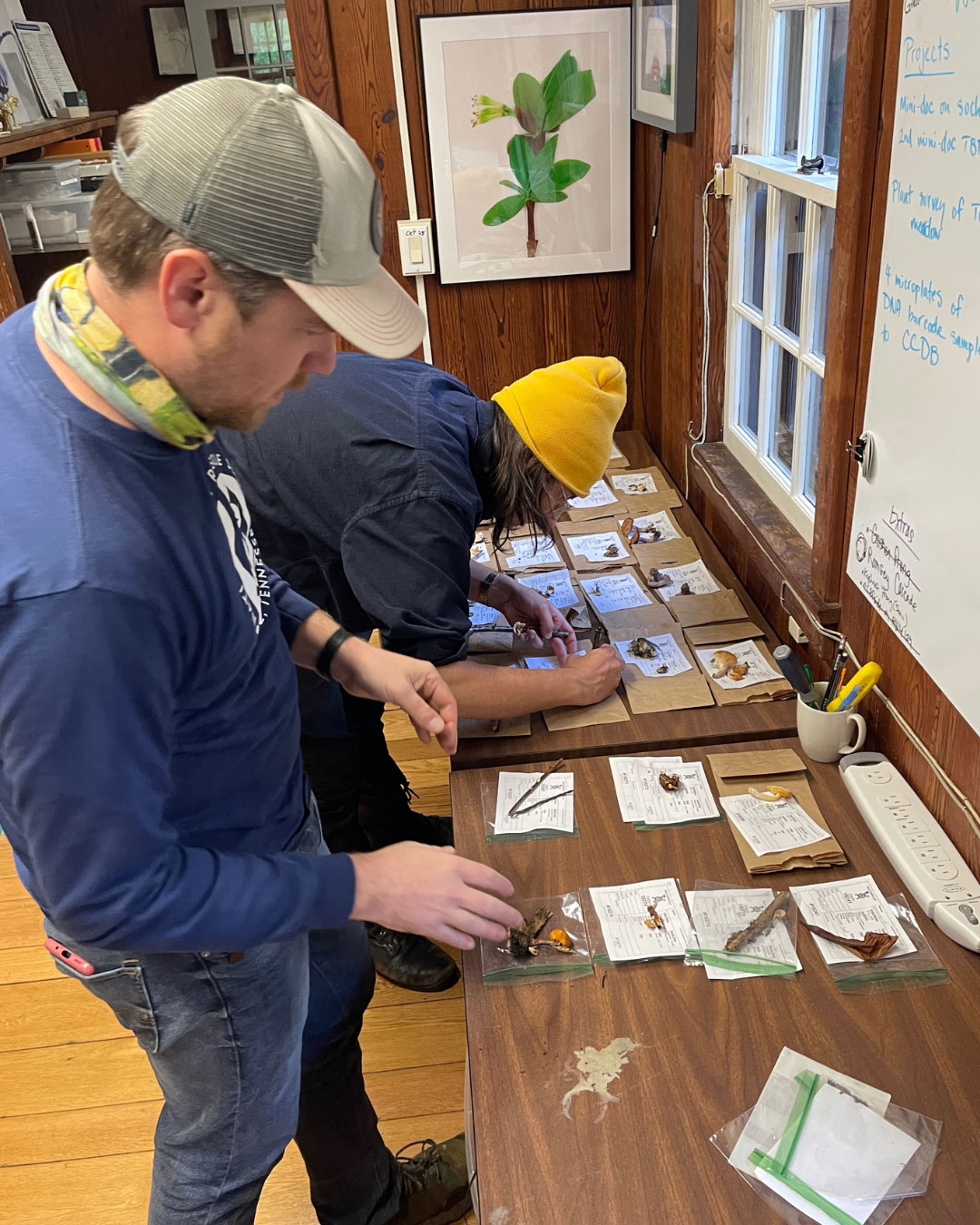
“People don’t become curious about things that they have literally no understanding of or connection to,” Matheny said. “I think for that to change in academia, it needs to change in elementary school. Kids need to learn from a young age, not just about plants and animals, but fungi as well. They get really excited about mushrooms and what they can understand by just going outside, collecting, and learning about them. Like, wow, you know, these things are different. They look different. They feel different. They are weird and interesting.”
To get DNA results for the mushrooms collected at the MycoBlitz, Kuhn dehydrated the specimens and submitted them to the Mycota Lab. This nonprofit laboratory based in Plymouth, Michigan, seeks to build a comprehensive biodiversity survey of all macro fungi in North America. In September, results from MycoBlitzes in 2023 and 2024 began trickling in. They confirmed that our specimens included 16 fungi species that had never been found in the park before, and—and even more exciting—ten of them are considered “undescribed” by scientists.
“Some of these undescribed fungi have been recorded outside of the park, but we know next to nothing about them—so much so that they don’t even have names yet,” said Kuhn. “It’s exciting to collect and sequence these ‘mystery’ fungi because we’re not only learning about fungi diversity in the park, but we’re contributing to a collective understanding that will hopefully help protect these species wherever they occur.”
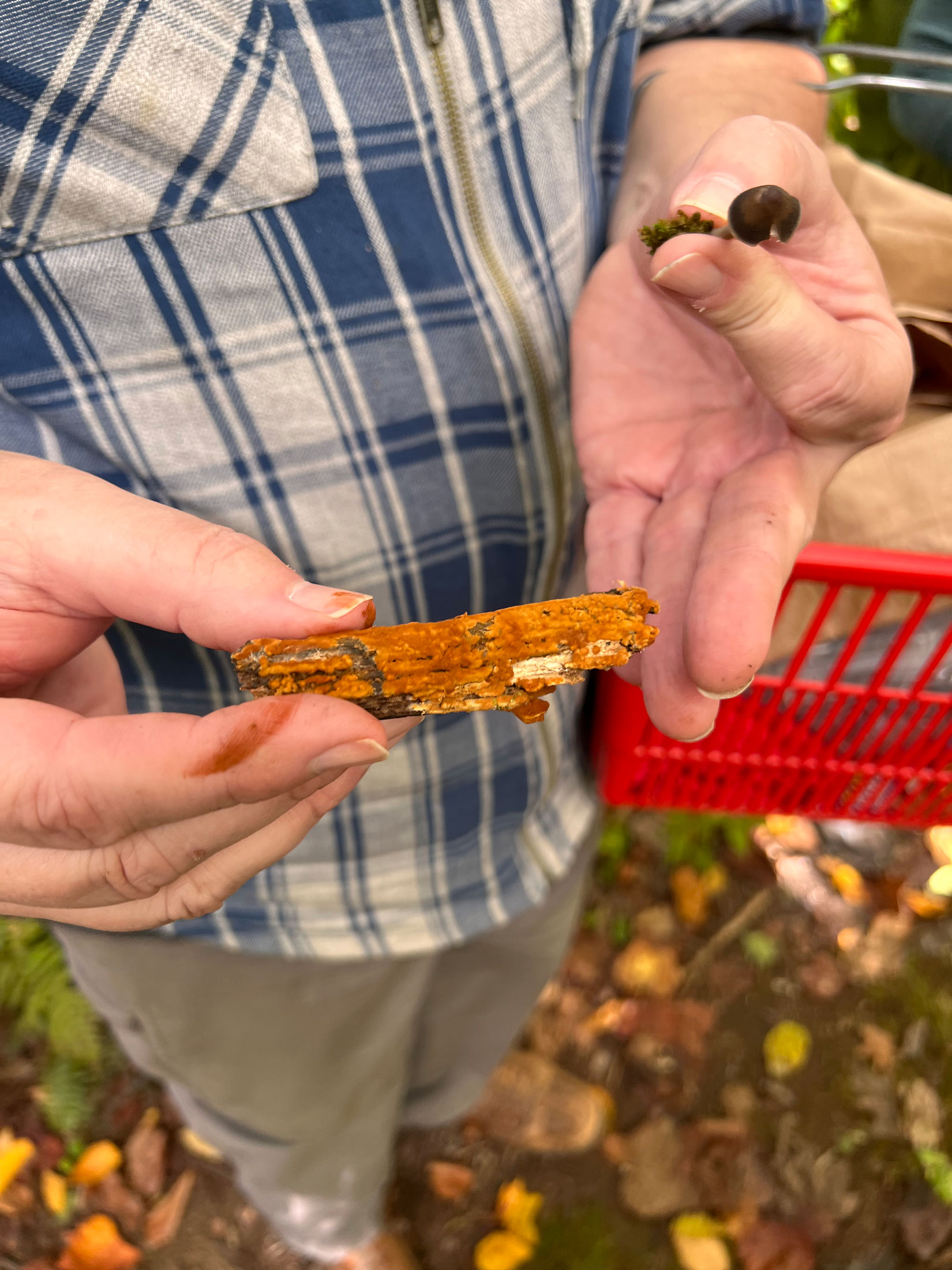
The most notable results revealed that one of the specimens collected at the 2024 MycoBlitz is new to science. From its appearance, this webcap mushroom (Cortinarius sp. ‘TN02’) could easily be confused with typical grocery store fare. Its DNA, however, tells a different story. Its sequence is unique enough that it appears to represent a new species that has not been found anywhere else, so far.
The emergence of DNA barcoding technology has further revealed the complexity of fungal diversity, genetics, and cryptic species. Though over 4,000 fungi species have been cataloged in the park, it is estimated that there are likely 17,000 or more! These DNA results offer a powerful reminder that we still have much to learn about fungal diversity and its vital role in ecosystem health in the Smokies.
“Fungi are the unsung heroes of our ecosystem, connecting our web of plant life, helping to recycle nutrients in the forest, and interacting with flora and fauna in ways that we don’t yet understand,” said Kuhn. “Most of what fungi are doing is invisible to our eyes, and yet we couldn’t survive without them.”
Want to learn more about mushrooms and fungi in the Smokies and contribute to park science? Get the iNaturalist app, snap some photos, share, and repeat! Fungi can be tricky to identify, so make your observations stronger by uploading photos from every angle (including underneath), adding a note explaining the habitat where the fungus was growing or what type of leaves or trees it was associated with, and logging any unique smell or texture you notice. Learn more about recording life in the Smokies at DLiA.org.
Subscribe to get the latest posts sent to your email.